Potato Cyst Nematode
The Potato Cyst Nematode (Globodera rostochiensis and Globodera pallida) is one of the most destructive pests of potato crops worldwide. These microscopic soil-dwelling roundworms attack potato roots, reducing water and nutrient uptake while causing significant yield losses. Because they remain hidden beneath the soil surface, infestations often go unnoticed until crop performance declines or laboratory testing confirms their presence.
Potato Cyst Nematodes are regulated quarantine pests in many countries due to their ability to survive in soil for decades and spread through contaminated soil, machinery, and planting material. Effective management depends on prevention, regular monitoring, and integrated pest management (IPM).
What Is the Potato Cyst Nematode?
The Potato Cyst Nematode is a microscopic plant-parasitic nematode belonging to the family Heteroderidae. The two economically important species, Globodera rostochiensis and Globodera pallida, infect potato roots by penetrating young root tissue and establishing permanent feeding sites. Female nematodes eventually develop into protective cysts that contain hundreds of eggs capable of surviving in soil for many years.
Identification
Eggs
Eggs are microscopic and protected inside brown cysts that develop from mature female nematodes. Each cyst may contain 200–600 eggs depending on environmental conditions.
Juveniles
The second-stage juvenile is the infective stage. These transparent microscopic worms hatch from eggs and actively invade potato roots.
Adult Females
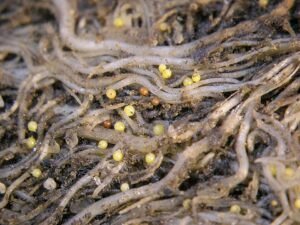
Adult females become swollen and spherical. Initially white or cream-colored, they gradually turn golden yellow (G. rostochiensis) or remain pale before eventually becoming brown protective cysts attached to the roots.
Adult Males
Adult males are slender, worm-like, and mobile. Their primary role is fertilizing females before they die.
Biology & Ecology
Potato Cyst Nematodes survive between growing seasons inside highly resistant cysts that remain dormant in the soil. Root chemicals released by potato plants stimulate eggs to hatch, allowing juveniles to infect young roots.
Once inside the root, nematodes establish specialized feeding cells that divert nutrients away from normal plant growth. At the end of their life cycle, females remain attached to the roots and transform into durable cysts capable of surviving for more than 20 years under favorable conditions.
Global Distribution
Potato Cyst Nematodes occur throughout Europe, North America, South America, Asia, Africa, Australia, and New Zealand. Because they threaten potato production, many countries regulate their movement through strict quarantine and certification programs.
Risks & Damage
Root feeding reduces plant vigor and limits the crop's ability to absorb water and nutrients.
Typical symptoms include:
- Stunted potato plants
- Yellowing foliage
- Poor root development
- Reduced tuber size
- Uneven crop growth
- Significant yield loss
- Reduced marketable potatoes
In practice, growers often notice irregular patches of weak potato plants that resemble drought stress or nutrient deficiencies. Digging up affected plants and examining the roots under magnification may reveal tiny white, yellow, or brown cysts attached to the root system.
Signs of Potato Cyst Nematode Infestation
Early infestations rarely produce obvious above-ground symptoms.
- Patchy field growth
- Yellow or pale green foliage
- Stunted plants
- Reduced tuber numbers
- Tiny cysts attached to roots
- Poor yields despite good crop management
A common mistake is planting potatoes repeatedly in the same field after modest yield reductions. Continuous potato production allows nematode populations to increase rapidly, making future infestations much more difficult to manage.
Control & Prevention Methods
Soil Testing
Regular laboratory soil testing remains the most reliable method for detecting Potato Cyst Nematode before serious economic damage occurs.
Crop Rotation
Long rotations with non-host crops reduce nematode populations and remain one of the most effective management strategies.
Resistant Potato Varieties
Planting resistant potato cultivars helps suppress nematode reproduction. Rotating resistance sources helps reduce the development of virulent populations.
Sanitation
- Use certified seed potatoes.
- Clean machinery before moving between fields.
- Avoid transferring contaminated soil.
- Control volunteer potatoes and solanaceous weeds.
Chemical & Biological Control
Registered nematicides and biological products may reduce populations but should always be combined with crop rotation, resistant varieties, and good sanitation for long-term management.
Advanced Professional Approaches
Commercial potato producers use Integrated Pest Management programs that combine soil sampling, resistant cultivars, extended crop rotations, certified planting material, and careful field hygiene to minimize long-term nematode populations.
What most people don't realize is that Potato Cyst Nematode can remain dormant in soil for decades without potatoes being grown. Preventing movement of contaminated soil is often far more effective than attempting to eliminate established infestations.
If you grow potatoes, see our guide on Colorado Potato Beetle for another major potato pest. You may also find our article on Root-Knot Nematodes useful for comparing different nematode species affecting vegetable crops.
FAQ
Which crops are attacked by Potato Cyst Nematode?
Potatoes are the primary host, although tomatoes, eggplants, and several wild members of the nightshade family may also support reproduction.
How long can Potato Cyst Nematodes survive in soil?
Eggs protected inside cysts may survive for more than 20 years under favorable conditions.
How do Potato Cyst Nematodes spread?
The pest spreads mainly through contaminated soil, machinery, seed potatoes, irrigation water, and farm equipment.
Can Potato Cyst Nematodes be eliminated?
Complete eradication is extremely difficult once established. Long-term management focuses on reducing populations through integrated pest management.
What is the best treatment for Potato Cyst Nematode?
The most effective strategy combines resistant potato varieties, long crop rotations, certified seed potatoes, soil testing, and good sanitation.
Why are Potato Cyst Nematodes considered quarantine pests?
They survive for many years in soil, spread easily through agricultural activities, and can cause severe economic losses to potato production.
Final Thoughts
Potato Cyst Nematodes remain among the most serious pests of potato production worldwide because they persist in soil for decades while silently reducing yields. Early detection, resistant varieties, crop rotation, and integrated pest management provide the best long-term protection for commercial growers and home gardeners alike.
Learn more about Agricultural & Outdoor Pests
Disclaimer
This article is for informational purposes only. Food safety (HACCP) and pest control requirements vary by country, authority, and type of food business. For legal compliance and audit readiness, always consult a qualified HACCP professional and a licensed pest control operator in your area.
All pest control measures must use approved products and be applied strictly according to the product label, as required by law in most jurisdictions (including the EU, UK, and USA). Improper use of pesticides, lack of documentation, or absence of a structured pest monitoring program may lead to non-compliance, fines, or business closure.
A compliant system must include documented procedures, monitoring records, corrective actions, and verification. Pest control is not optional—it is a core prerequisite program under HACCP and must be properly implemented, recorded, and reviewed.
Author Bio
BSc Agronomist & Certified Pest Control Expert
Scientific Director – Advance Services (Athens, Greece)
Licensed Pest Control Business – Ministry of Rural Development & Food (GR)