Red Palm Weevil 
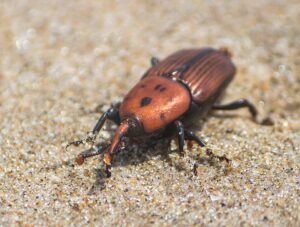
The Red Palm Weevil (Rhynchophorus ferrugineus) is considered one of the most destructive insect pests affecting palm trees worldwide. Originally native to South and Southeast Asia, it has spread across Europe, the Middle East, Africa, and many Mediterranean countries, causing severe economic and environmental damage.
Unlike many other insect pests, the Red Palm Weevil often remains hidden inside the trunk for months before visible symptoms appear. By the time most homeowners notice a problem, the internal damage is already extensive. Understanding how this pest behaves and recognizing the early signs of infestation are essential for protecting valuable ornamental and productive palms.
What Is the Red Palm Weevil?
The Red Palm Weevil is a large snout beetle that attacks numerous palm species by laying eggs inside wounds or soft tissues of the tree. After hatching, the larvae tunnel deep into the trunk, feeding on soft internal tissues and weakening the palm from the inside out. This hidden feeding behavior makes early detection particularly challenging.[1]
Identification
Adult Red Palm Weevils measure approximately 2–5 cm long and have a characteristic reddish-brown body with variable black markings. They possess a long curved snout (rostrum), which is used by females to bore into palm tissue for egg laying.
The larvae are creamy white, legless grubs with a hardened brown head capsule. Mature larvae may reach 5 cm in length and are responsible for nearly all structural damage to the palm.
The pupa develops inside a distinctive oval cocoon constructed from palm fibers, usually hidden within the trunk.
Biology & Ecology
The Red Palm Weevil undergoes complete metamorphosis consisting of egg, larva, pupa, and adult stages.
A single female may lay more than 200 eggs during her lifetime under favorable conditions.[2]
The larvae hatch within a few days and immediately begin boring into the palm. Their tunnels may extend throughout the crown, trunk, and growing point. Multiple generations can occur each year in warm climates, allowing infestations to build rapidly.
Adults are strong fliers capable of dispersing several kilometers, enabling infestations to spread quickly between urban landscapes, nurseries, parks, and agricultural plantations.
Global Distribution
Today, the Red Palm Weevil is established across much of:
- Southern Europe
- Middle East
- North Africa
- South Asia
- Southeast Asia
- China
- Japan
- Numerous Pacific islands
In Europe, it has become one of the most significant threats to ornamental palm trees, particularly in Mediterranean countries including Greece, Italy, Spain, Cyprus, France, and Portugal.[3]
Risks and Damage
The larvae destroy the internal vascular tissues responsible for transporting water and nutrients. As feeding continues, structural support weakens until the crown collapses or the palm dies completely.
Common hosts include:
- Canary Island Date Palm (Phoenix canariensis)
- Date Palm (Phoenix dactylifera)
- Washingtonia palms
- Coconut Palm (Cocos nucifera)
- Several ornamental palm species
Besides killing valuable landscape trees, infestations can significantly impact tourism, municipalities, hotels, historic gardens, and commercial date production.
See our guide on Palm Tree Pests for comparisons with other important palm insects.
Signs of Red Palm Weevil Infestation
Early detection greatly increases the chance of successful treatment.
Common signs include:
- Yellowing or drooping central leaves
- Wilting fronds
- Holes in the trunk
- Brown fibrous material around openings
- Fermented or unpleasant odor
- Oozing sap
- Chewed palm fibers at the crown
- Clicking or chewing sounds from larvae inside the trunk
- Sudden collapse of the palm crown
Most homeowners notice symptoms only after internal feeding has been occurring for several months.
In practice… technicians are often called after the upper crown has already begun leaning or collapsing. When the trunk is opened, dozens or even hundreds of larvae may be found feeding simultaneously. At this stage, complete recovery is often no longer possible.
How the Red Palm Weevil Spreads
The primary pathways include:
- Movement of infested nursery palms
- Natural flight of adult beetles
- Poorly protected pruning wounds
- Transport of untreated palm material
Fresh pruning wounds release plant odors that strongly attract female weevils seeking suitable egg-laying sites.
Control and Prevention Methods
Successful Red Palm Weevil management depends on early detection and integrated pest management.
Recommended preventive measures include:
- Regular professional inspections
- Avoid unnecessary pruning during peak activity periods
- Protect pruning wounds when recommended locally
- Install pheromone monitoring traps where appropriate
- Remove severely infested palms promptly
- Dispose of infested material safely to prevent spread
A common mistake is… waiting until large numbers of leaves have turned brown before seeking help. Unfortunately, visible decline usually means that extensive internal destruction has already occurred, making successful treatment much less likely.
Advanced Professional Approaches
Professional pest management programs typically combine several techniques rather than relying on a single treatment.
These may include:
- Systemic insecticide applications where legally approved
- Trunk injection systems
- Crown drench treatments
- Pheromone trapping programs
- Acoustic detection technologies
- Thermal imaging in research applications
- Routine monitoring schedules
What most people don't realize is… palms can appear healthy externally while suffering extensive internal damage. Experienced technicians often identify infestations using subtle crown changes long before the average observer notices obvious symptoms.
For landscapes containing multiple palms, monitoring every tree is usually far more effective than treating only visibly damaged specimens.
Frequently Asked Questions
Can a palm recover after infestation?
If detected early, some palms can recover following professional treatment. Advanced infestations involving severe crown damage often cannot be saved.
Is the Red Palm Weevil dangerous to people?
No. The insect does not bite, sting, or transmit diseases to humans. Its damage is limited to palm trees.
Can I treat the infestation myself?
Small preventive measures are possible, but active infestations generally require specialized equipment, approved products, and professional experience.
Which palm species are most susceptible?
Phoenix canariensis is considered one of the most vulnerable ornamental species, although many other palms may also become infested.
How long can an infestation remain hidden?
Several months. Larvae develop entirely inside the trunk before external symptoms become noticeable.
What is the best treatment for Red Palm Weevil?
The best treatment combines early detection, professional monitoring, integrated pest management, and approved control methods suited to local regulations.
Final Thoughts
The Red Palm Weevil remains one of the most destructive invasive pests affecting palms worldwide. Because its larvae feed internally, prevention and early diagnosis are far more effective than attempting to rescue severely damaged trees. Regular inspections, prompt intervention, and integrated management provide the best opportunity to preserve valuable palms in residential landscapes, public gardens, hotels, and commercial plantations.
Learn more about Agricultural & Outdoor Pests
Disclaimer
This article is for informational purposes only. Food safety (HACCP) and pest control requirements vary by country, authority, and type of food business. For legal compliance and audit readiness, always consult a qualified HACCP professional and a licensed pest control operator in your area.
All pest control measures must use approved products and be applied strictly according to the product label, as required by law in most jurisdictions (including the EU, UK, and USA). Improper use of pesticides, lack of documentation, or absence of a structured pest monitoring program may lead to non-compliance, fines, or business closure.
A compliant system must include documented procedures, monitoring records, corrective actions, and verification. Pest control is not optional—it is a core prerequisite program under HACCP and must be properly implemented, recorded, and reviewed.
Author Bio
BSc Agronomist & Certified Pest Control Expert
Scientific Director – Advance Services (Athens, Greece)
Licensed Pest Control Business – Ministry of Rural Development & Food (GR)