Giant Centipede Lifespan
I have been asked many times if I have ever seen a giant centipede. I haven’t, since it lives mostly in tropical regions. Only Scolopendra morsitans is found in the Mediterranean, but I haven’t seen it myself. However, I have studied many cases and reports from areas where people were shocked to see a long, fast, multilegged creature running across the floor. Most of the time, it was a giant centipede (genus Scolopendra). These predators can grow over 20 cm long, move very fast, and deliver a painful bite. Homeowners often panic, but understanding how they live — and how long they live — helps control them effectively and safely.
Identification
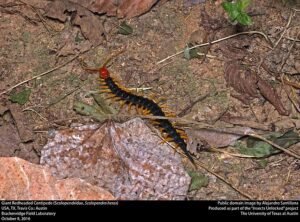
Giant centipedes belong to the class Chilopoda and the family Scolopendridae. The most famous species of this group is Scolopendra gigantea, also known as the Amazonian giant centipede. It can reach more than 25 cm in length and is found in tropical regions of South America. The genus also includes other large species like Scolopendra subspinipes, Scolopendra morsitans, and Scolopendra heros. Ιt is related to Lithobius forficatus, the European stone centipede that lives in gardens and damp areas around homes, and to Scutigera coleoptrata, the house centipede, a very slender species with long legs that is common inside housesTheir bodies are flat and divided into 15 to 21 segments, each bearing one pair of legs. The head carries long antennae and strong jaws called forcipules, used to inject venom into prey.
Color varies by species and region: tropical ones are brown, orange, or red; desert species are often yellowish. Adults may reach 20 to 30 cm in length, while smaller juveniles look similar but with paler color and thinner legs. They are often confused with millipedes , but centipedes move faster, have fewer legs, and are predatory.
Biology & Ecology
Giant centipedes are nocturnal hunters feeding on cockroaches, crickets, spiders, small lizards, and even mice. They use venom and speed rather than webs or traps.
Their lifespan is surprisingly long for invertebrates. Most species live 5 to 7 years, but some survive up to 10 years under ideal humidity and temperature. Growth occurs through several molts. Young centipedes may shed their skin 8 to 10 times before maturity, and adults continue to molt periodically.
They prefer dark, humid shelters: under stones, logs, plant pots, or inside wall cracks. Indoors, they often hide in bathrooms, basements, or storage areas where moisture and insects exist.
Global Distribution
Members of the genus Scolopendra live in most warm regions—Southern Europe, Africa, Asia, Australia, and the Americas.
-
Scolopendra subspinipes is common in Southeast Asia and the Pacific.
-
Scolopendra morsitans occurs in Mediterranean countries and parts of Africa.
-
Ethmostigmus rubripes, the Australian giant centipede, is one of the largest and most aggressive.
In cooler climates, centipedes survive indoors or in greenhouses but rarely breed outdoors.
Risks / Damage
Giant centipedes cause no structural damage, but they represent a public-health concern due to their painful bite. The venom contains toxins that cause local swelling, redness, and burning pain. In allergic or sensitive individuals, reactions can be more severe but rarely life-threatening.
Psychological discomfort is significant; seeing one large centipede in a kitchen or hotel room often triggers panic among guests or staff. For restaurants or food shops, a single sighting can harm reputation.
Signs of Infestation
-
Frequent sighting of centipedes at night, especially in humid rooms.
-
Presence of prey insects (cockroaches, crickets) that attract centipedes.
-
Shed exoskeletons near baseboards or storage areas.
-
Moist conditions: leaking pipes, drains, or piles of organic debris.
A true “infestation” is uncommon; centipedes are solitary. However, repeated sightings indicate favorable conditions.
Control & Prevention Methods
1. Eliminate humidity. Repair leaks, ventilate basements, and use dehumidifiers.
2. Remove hiding spots. Clear leaf litter, stones, and clutter around buildings.
3. Control prey. Reduce populations of cockroaches, silverfish, or termites—centipedes will leave when food is scarce.
4. Seal entry points. Close cracks, gaps under doors, and drain openings.
5. Sticky traps. Simple monitoring tools indoors to confirm presence.
Household insecticides can kill exposed individuals but seldom solve the cause. Always read labels carefully and avoid overuse in living spaces.
Advanced / Professional Approaches
Licensed pest-control professionals combine habitat modification with targeted applications of residual insecticides or dust formulations inside wall voids and utility areas.
-
In food premises, gel-bait systems for cockroaches indirectly reduce centipedes.
-
Exterior barrier treatments may help in tropical or rural properties.
-
Thermal fogging or ULV spraying is rarely needed and must follow local laws.
Professionals also conduct moisture and pest mapping, identifying structural defects that support both centipedes and their prey.
Cultural / Historical Context
In Asia and Central America, giant centipedes have appeared in folklore as symbols of strength and fear. Some cultures used dried centipedes in traditional medicine; others considered them omens of danger. Today, they are sometimes kept as exotic pets, though this practice is discouraged due to their venom and welfare issues.
FAQ
1. How long do giant centipedes live?
Usually 5–7 years, sometimes up to 10 under stable warm, humid conditions.
2. Are giant centipedes dangerous to humans?
Their bite is painful but rarely serious. Medical care is advised if swelling or allergic reaction appears.
3. What do they eat?
They feed on insects, spiders, and small vertebrates. Controlling these pests helps reduce centipedes.
4. Where do they hide indoors?
In bathrooms, kitchens, basements, or storage rooms with moisture and insect prey.
5. Do they breed inside homes?
Usually not. Females lay eggs in soil or under stones outdoors; indoor breeding is rare.
6. How can I prevent them?
Fix moisture problems, seal cracks, and keep surroundings clean. Professional inspection is best when sightings continue.
Learn more about Wildlife & Vertebrate Pests
Final Thoughts
Giant centipedes are fascinating but intimidating arthropods. They play an important ecological role as natural predators, helping reduce populations of other insects and pests. However, their size, speed, and venom can cause concern when they appear indoors. In my experience, most centipede problems start with humidity and insect prey. If you eliminate moisture and control other pests, centipedes will usually disappear on their own.
When sightings persist, professional inspection is the safest solution. A licensed pest control technician can identify the species, locate entry points, and apply safe, targeted treatments without disrupting your living environment.
Disclaimer
This article is for informational purposes only. Pest control laws and approved chemicals vary by country. For best results and legal safety, we strongly recommend contacting a licensed pest control professional in your local area. Always make sure that the pest control technician is properly certified or licensed, depending on your country’s regulations. It’s important to confirm that they only use approved products and apply them exactly as instructed on the product label. In most places in Europe, the UK, or the USA, following label directions is not just best practice—it’s the law.
Author
Nasos Iliopoulos
BSc Agronomist & Certified Pest Control Expert
Scientific Director, Advance Services (Athens, Greece)
Licensed Pest Control Business – Ministry of Rural Development & Food (GR)
References
-
University of Kentucky - Centipedes
-
Wikipedia - Scolopendra gigantea