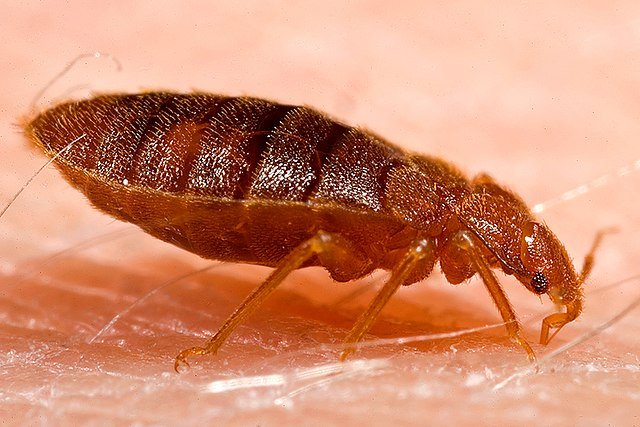
Clover Mites vs Chiggers: How to Tell the Difference and Control Them
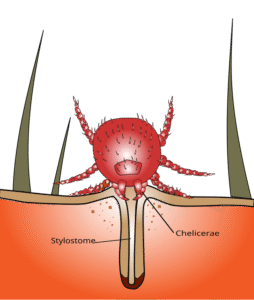 I have seen many times in my career those tiny red dots that look like red dust crawling on walls, patios, or grass. They are almost always clover mites (Bryobia praetiosa Koch) — a very common outdoor mite that sometimes invades homes. There is also another pest which in USA is called chiggers (Trombiculidae family), which are also found in European countries but mainly in grassy or rural areas, not in city gardens or houses. Chiggers are parasitic larvae that bite humans and cause skin irritation, while clover mites are harmless and only a nuisance when they appear in large numbers. Understanding the difference helps treat the problem correctly and avoid unnecessary worry.
Identification
Clover Mites (Bryobia praetiosa)
Clover mites are bright red, oval-shaped, and about 0.75 millimeters long—barely visible to the naked eye. They have long front legs that look like antennae and move slowly on walls, windows, or plants. When crushed, they leave red stains on surfaces. You can often find hundreds of them crawling near sunny windows or exterior walls in spring.
Chiggers (Trombiculidae family)
Chiggers, on the other hand, are microscopic larvae—about 0.2 millimeters long—and are part of the mite family. Adults live in the soil and are harmless, but the larval stage bites humans and animals. Chiggers are orange-red and move faster than clover mites. They don’t live on walls but on grass, shrubs, and weeds, especially in warm, humid conditions.
Biology & Ecology
Clover Mites
These mites feed on plant sap from grasses, clovers, and garden plants. They reproduce without males (parthenogenesis), and each female lays up to 70 eggs in cracks near windows, walls, and under bark. Eggs survive winter and hatch when temperatures rise in spring. Clover mites do not bite humans or animals. Their only nuisance is staining and visual infestation.
Chiggers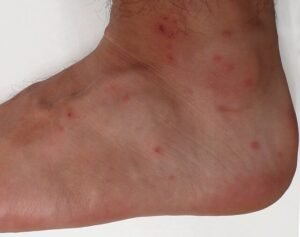 Chiggers are the larval stage of a complex life cycle that includes nymph and adult mites living freely in soil. Only the larvae feed on animal skin by injecting digestive enzymes and sucking up liquefied tissue. Their almast invisible bite causes itchy, red welts that can last for days. After feeding, the larvae drop off, and adults continue living harmlessly in the environment.
Global Distribution
Clover Mites
They are common in North America, Europe, and temperate parts of Asia and Australia. They prefer cooler seasons, usually appearing in early spring and autumn. They thrive near fertilized lawns, gardens, and newly built homes with young vegetation.
Chiggers
Chiggers are widespread in tropical and subtropical regions, including the southern USA, Southeast Asia, Africa, and Australia. In northern countries, they appear mainly during hot, humid summers in grassy fields, parks, and forests.
Risks and Damage
Clover Mites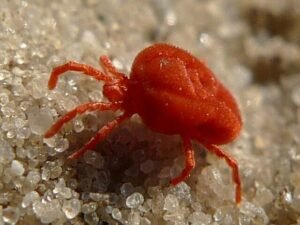 They do not bite or transmit diseases, but they are aesthetic pests. Large numbers crawling indoors can alarm homeowners. When squashed, they leave red marks that are difficult to clean from walls, curtains, or furniture.
Chiggers
Chiggers cause intense itching and skin inflammation. Their saliva can trigger allergic reactions in sensitive individuals. While they are not known to spread diseases in most regions, in Asia and parts of the Pacific, some species transmit scrub typhus (Orientia tsutsugamushi).
Signs of Infestation
Clover Mites
-
Tiny red dots moving on window sills, walls, and plant pots
-
Red smears when crushed
-
Clusters around sunny sides of buildings or lawns touching walls
Chiggers
-
Groups of itchy, red welts around ankles, waist, or under tight clothing after outdoor activity
-
Presence of dense grass or weed patches in shady, moist areas
-
Reports of bites from multiple people in the same outdoor area
Control & Prevention Methods
For Clover Mites:
-
Seal cracks and gaps around windows, doors, and siding.
-
Trim vegetation away from walls (keep a 45–60 cm barrier).
-
Vacuum mites indoors instead of crushing them.
-
Reduce lawn fertilization, which encourages lush growth that attracts them.
-
Apply perimeter insecticidal dusts (like diatomaceous earth or silica-based products) in cracks if infestations are heavy.
For Chiggers:
-
Mow lawns and clear weeds to remove their habitat.
-
Avoid sitting or lying directly on grass, especially in humid seasons.
-
Use insect repellents with DEET or permethrin-treated clothing when outdoors.
-
Shower after outdoor activity and wash clothes in hot water to remove any larvae.
-
Treat lawns with approved acaricides where infestations are confirmed by professionals.
Advanced / Professional Approaches
Professionals use targeted perimeter treatments for clover mites, focusing on building foundations and vegetation borders. For chiggers, licensed applicators may treat turf and ornamental areas with acaricides or insect growth regulators (IGRs), but only where local regulations allow.
Integrated Pest Management (IPM) includes environmental modification—lowering lawn moisture, maintaining short grass, and controlling weeds. In food or hospitality settings with lawns, these methods prevent both pest issues and customer discomfort.
Cultural & Historical Context
Clover mites were first described in Europe but became a well-known household pest in the 20th century with the rise of modern landscaping and lawns. Chiggers, on the other hand, have been recognized since ancient times in Asia as “harvest mites.” In Japanese, they are called tsutsugamushi, linked historically to the disease scrub typhus in rural regions.
FAQ
Q1: Do clover mites bite humans?
No. Clover mites never bite or suck blood. They are plant feeders and only cause staining when crushed.
Q2: How do chigger bites look?
They appear as clusters of red, itchy bumps, often around tight clothing areas. The itching can last up to a week.
Q3: Can clover mites live indoors permanently?
No. They survive only for a few days indoors without plant food. They die naturally if the humidity is low.
Q4: How can I tell clover mites and chiggers apart?
Clover mites are larger, slower, and found on walls and plants. Chiggers are smaller, faster, and bite humans outdoors, especially in grass.
Q5: Are chigger bites dangerous?
Usually no, except in some Asian regions where they can spread scrub typhus. Elsewhere, they only cause skin irritation.
Q6: What’s the best natural way to remove clover mites?
Vacuum them, wipe surfaces with soapy water, and reduce moisture. Avoid crushing them to prevent red stains.
Final Thoughts
Clover mites and chiggers are often confused because of their red color and tiny size, but their impact is very different. Clover mites are a nuisance that come indoors from lawns and gardens, while chiggers are outdoor parasites that bite people and cause itching. The good news is that both can be managed effectively with simple prevention: reduce lawn moisture, trim vegetation, seal cracks, and maintain good hygiene after outdoor activity.
If you’re not sure which one you’re dealing with, collect a few specimens and show them to a licensed pest control professional. A correct identification saves time, money, and unnecessary treatments.
Learn more about Wildlife & Vertebrate Pests
Disclaimer
This article is for informational purposes only. Pest control laws and approved chemicals vary by country. For best results and legal safety, we strongly recommend contacting a licensed pest control professional in your local area. Always make sure that the pest control technician is properly certified or licensed, depending on your country’s regulations. It’s important to confirm that they only use approved products and apply them exactly as instructed on the product label. In most places in Europe, the UK, or the USA, following label directions is not just best practice—it’s the law.
Author
Nasos Iliopoulos, BSc Agronomist & Certified Pest Control Expert
Scientific Director – Advance Services (Athens, Greece)
Licensed Pest Control Business – Ministry of Rural Development & Food (GR)
References
-
Alabama Univeristy - Chigger & Concrete Mites
-
National Pest Management Association (NPMA) – “Seasonal Mite Activity and Prevention”