Asian Giant Hornet (Vespa mandarinia)
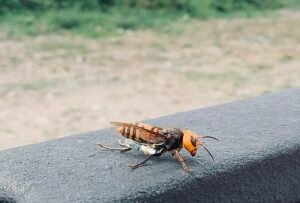
In recent years, the Asian Giant hornet, also known as the the northern giant hornet or the Japanese giant hornet, or sensationally the “murder hornet,” has gained global attention for its huge size and the fact that is a very important bee enemy in many countries. This large hornet species belongs to the family Vespidae and it is native to East Asia, especially Japan, China, Korea, and parts of Southeast Asia. It is the largest hornet in the world, with queens reaching up to 5 cm (2 inches) in length.
Many people confuse these hornets with European hornets (Vespa crabro) or paper wasps, but the Asian giant hornet is significantly larger and more aggressive when defending its nest. Although it rarely attacks humans unless provoked, its sting is painful and can be dangerous in large numbers.
Identification
Adult Vespa mandarinia can be easily identified by their:
-
Large size (3.5–5 cm body length)
-
Broad orange or yellow head with large compound eyes
-
Dark brown or black thorax and alternating yellow-black stripes on the abdomen
-
Powerful mandibles used for hunting prey and chewing through hive walls
The workers are slightly smaller than queens, and males lack stingers. Their flight is strong, loud, and intimidating.
It’s important not to confuse them with bald-faced hornets, yellowjackets, or European hornets or the smaller normal asian hornet, all smaller and less robust species.
Biology & Ecology
Asian giant hornets are social insects living in colonies that start each spring with a single overwintered queen. The queen builds a small nest, lays eggs, and raises the first batch of workers. Once workers emerge, they take over foraging, nest expansion, and defense, allowing the queen to focus on reproduction.
They prefer low-altitude forests and rural landscapes, nesting underground in abandoned rodent burrows, tree roots, or rotting stumps. Unlike paper wasps, they rarely build aerial nests.
Hornets are carnivorous and upper predators, feeding mainly on other insects such as honey bees, mantises, crickets, and flies. Their larvae consume chewed-up prey brought by the workers. Adults also feed on tree sap, fruit, and honey.
Global Distribution
Originally from Asia, the Asian Giant hornet has been recorded in Japan, China, Korea, Taiwan, Thailand, Vietnam, and parts of Russia.
In 2019–2020, sightings in North America (Washington State and British Columbia) triggered widespread concern, as this was the first known detection outside its native range. Authorities immediately started eradication programs to prevent establishment.
Climate models suggest that temperate regions of Europe, the Mediterranean, and the USA could provide suitable conditions for future invasions if the species spreads.
Risks / Damage
The main concern with Vespa mandarinia is its impact on honeybee populations. A few hornets can destroy an entire beehive within hours, decapitating bees and feeding the larvae with bee thoraxes. This behavior, known as “slaughter phase,” can severely damage pollination and agriculture.
To humans, hornets pose a moderate health risk:
-
Their sting injects a large dose of venom causing intense pain, swelling, and in rare cases, allergic shock (anaphylaxis).
-
Multiple stings can be life-threatening due to tissue damage and toxicity.
-
However, fatalities are extremely rare and usually involve individuals allergic to stings or attacked by multiple hornets.
Their large size and loud buzzing also cause psychological fear, often leading to panic and unnecessary exterminations of harmless wasps or hoverflies.
Signs of Infestation
You may notice:
-
Frequent large hornets flying near tree roots, compost piles, or wall gaps.
-
Underground nest entrances with active traffic of workers.
-
Piles of insect remains near the nest entrance.
-
Nearby honeybee hives showing severe loss or decapitated bees.
If hornets are repeatedly spotted entering and exiting a fixed point in the ground, it’s likely an active colony.
Control & Prevention Methods
Prevention is key:
-
For buildings seal wall cracks, foundation holes, and ground cavities.
-
Remove abandoned burrows or decayed stumps near homes.
-
Avoid leaving exposed food, meat, or sugary drinks outdoors.
-
Keep bee hives protected with fine mesh screens if possible or hornet traps(with meat and fish) during summer and early autumn.
For small activity areas (single scouts), use:
-
Commercial hornet sprays labeled for home use (follow label instructions carefully).
-
Homemade traps using meet and fish, if you put something sweet put vinegar as well to attract the hornet workers only and not the bees.
Do not approach, spraying or disturb their nest yourself. These hornets defend aggressively when threatened and can chase intruders over long distances.
Advanced / Professional Approaches
A licensed pest control professional must handle only any active nest near people or livestock. The removal process usually involves:
-
Nighttime treatment when hornets are inactive.
-
Use of protective suits and approved insecticides injected directly into the nest entrance.
-
Sealing of treated nest openings to prevent reactivation 1-2 days after.
In agricultural or beekeeping contexts, professionals use pheromone traps, bait stations, or mechanical barriers to protect honeybee colonies. In any case we strongly advice to call a licenced pest controler if you think that you saw asian giant hornets.
In some regions, such as Japan, thermal fogging or CO₂ injection is used to neutralize underground nests safely.
Cultural or Historical Context
In Japan, the Japanese giant hornet is both feared and respected. Locally called ōsuzumebachi, it’s considered a symbol of strength.
However, it causes dozens of stings annually, especially among forestry workers and hikers. Hornet-infused liquor (hachinoko sake) is even made in some rural areas as a traditional remedy, although this is not recommended.
FAQ
Q1: Are Asian Giant hornets the same as European hornets?
A: No. They belong to the same genus (Vespa) but differ in size, aggression, and habitat preference.
Q2: What do Asian Giant hornets eat?
A: They mainly prey on other insects, including honeybees, mantises, and crickets.
Q3: Are Asian Giant hornets dangerous to humans?
A: Only if provoked or defending their nest. Most encounters end without stings.
Q4: How big is the Asian Giant hornet?
A: Queens can reach up to 5 cm (2 inches), the largest hornet species in the world.
Q5: How to get rid of Asian Giant hornet near my home?
A: Call an expert. Don't take action by yourself contact a certified pest control technician for nest removal.
Q6: What other hornets or wasps look similar?
A: European hornet, bald-faced hornet, paper wasp, and yellowjacket—all smaller but often mistaken for them.
Final Thoughts
The Asian Giant hornets (Vespa mandarinia) is one of the most remarkable and misunderstood insects in the world. Its massive size and intimidating buzz can cause fear, but it plays a role in the ecosystem by hunting other insects. Problems start when colonies establish too close to human activity or when they threaten honeybee populations.
If you notice large hornets around your property or beehives, observe from a safe distance and avoid disturbing them. Identifying whether they are European hornets, yellowjackets, or the Asian giant hornet is crucial before taking action. Contact a licensed pest control professional who has the right training and protective equipment to handle the problem safely.
Learn more about other agricultural and outdoor pests that affect gardens and crops.
Disclaimer
This article is for informational purposes only. Pest control laws and approved chemicals vary by country. For best results and legal safety, we strongly recommend contacting a licensed pest control professional in your local area. Always make sure that the pest control technician is properly certified or licensed, depending on your country’s regulations. It’s important to confirm that they only use approved products and apply them exactly as instructed on the product label. In most places in Europe, the UK, or the USA, following label directions is not just best practice—it’s the law.
Nasos Iliopoulos, BSc Agronomist & Certified Pest Control Expert
Scientific Director – Advance Services (Athens, Greece)
Licensed Pest Control Business – Ministry of Rural Development & Food (GR)
References
-
Penn University - Northern Giant Hornet