What Is Disinfection? Understanding the Levels and Practical Applications
 What Is Disinfection? Disinfection is one of the key processes in public health and pest management. Whether in homes, restaurants, hospitals, or hotels, it plays a crucial role in reducing the spread of harmful microorganisms. Many people confuse cleaning, sanitizing, and disinfecting, but these are distinct processes with different purposes and levels of microbial reduction.
In my work as a pest control and hygiene specialist, disinfection is often the final stage after managing infestations, especially from pests like cockroaches, pigeons or rodents that contaminate surfaces with bacteria and allergens.
What Is Disinfection?
Disinfection is the process of eliminating or inactivating pathogenic microorganisms (bacteria, viruses, and fungi) on surfaces and objects. Unlike sterilization, which destroys all forms of microbial life (including spores), commercial disinfection targets the organisms most likely to cause infection or disease.
Disinfectants can be chemical or physical agents used for this purpose. Common types include alcohols, chlorine compounds, quaternary ammonium compounds (QACs), hydrogen peroxide, and UV-C light.
Cleaning vs. Sanitizing vs. Disinfecting
To understand where disinfection fits, it’s important to define each step:
-
Cleaning: Physical removal of dirt, debris, and organic matter using detergents and water. It does not necessarily kill microorganisms.
-
Sanitizing: Reduces microbial populations to a safe level (as defined by public health standards). Often used in food industry contexts.
-
Disinfecting: Destroys most pathogens on surfaces, going beyond cleaning and sanitizing.
In practice, cleaning always precedes disinfection, because dirt and organic matter can block the active ingredients of disinfectants.
Levels of Disinfection
According to the Spaulding Classification System, disinfection is divided into three levels depending on the microorganisms targeted and the intended use of the surface or instrument.
1. Low-Level Disinfection
-
Targets: Most vegetative bacteria, some fungi, and some viruses (not spores).
-
Typical Use: Floors, walls, furniture, and non-critical equipment like blood pressure cuffs or pest monitoring tools.
-
Common Agents: Quaternary ammonium compounds (QACs), diluted phenolics.
2. Intermediate-Level Disinfection
-
Targets: Mycobacteria, most viruses, fungi, and bacteria.
-
Typical Use: Surfaces contaminated by bodily fluids, toilets, or contaminated pest areas after infestations.
-
Common Agents: Alcohols (70–90%), chlorine compounds (500–1,000 ppm), or iodophors.
3. High-Level Disinfection
-
Targets: All microorganisms except large numbers of bacterial spores.
-
Typical Use: Medical or laboratory instruments that come in contact with mucous membranes (endoscopes, surgical tools).
-
Common Agents: Hydrogen peroxide (6–25%), glutaraldehyde, peracetic acid.
Biology & Ecology: Why Disinfection Matters After Pest Control
Pests such as cockroaches (Blattella germanica), houseflies (Musca domestica), rats, and mice, but also pigeons, carry microorganisms on their bodies and feces. These microbes thrive in warm, moist environments — kitchens, drains, and food storage areas — making disinfection a biological necessity after pest eradication.
Without proper disinfection, even a successful pest removal can leave behind pathogenic residues that cause contamination.
Global Standards and Regulations
Disinfection standards vary globally:
-
USA: Regulated by the EPA (Environmental Protection Agency) under the Federal Insecticide, Fungicide, and Rodenticide Act (FIFRA).
-
Europe: Disinfectants are classified under the Biocidal Products Regulation .
-
Australia and Asia: Local health authorities certify products for environmental hygiene, especially in the food sector.
Always use disinfectants that are officially approved in your country, with proven efficacy against bacteria and viruses, verified through valid registrations. Always follow the product label instructions, and consult a licensed professional if required by your national regulations.
Risks / Misuse of Disinfectants
Improper disinfection can lead to several problems:
-
Health hazards: Skin and respiratory irritation from misuse or mixing chemicals.
-
Resistance: Overuse of certain agents, such as QACs, may promote microbial tolerance.
-
Environmental contamination: Excess chlorine or phenols can harm aquatic life.
Always read the label, use correct dilution, and ensure good ventilation during application.
Signs You Need Disinfection
-
After pest infestations or rodent activity.
-
After sewage leaks in your basement or your appartment, or water damage.
-
Following illness outbreaks (flu, norovirus, etc.).
-
In kitchens, restaurants, or healthcare areas with visible contamination.
-
After deep cleaning in high-traffic areas like elevators, door handles, and restrooms.
Control & Prevention Methods
To maintain a hygienic environment:
-
Schedule regular cleaning and disinfection in kitchens, restrooms, and storage areas.
-
The professional will choose disinfectants suitable for your surfaces (metal, plastic, fabric).
-
Keep humidity under 60% if possible, to slow microbial growth.
-
Use disposable wipes or microfiber cloths to avoid spreading contamination.
-
Train staff on contact time — the duration disinfectants must stay wet on a surface to work effectively.
For pest-related disinfection, ensure that it follows eradication of the pest, not before.
Advanced / Professional Approaches
Professional disinfection services use:
-
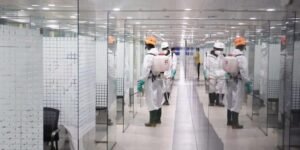
ULV fogging (Ultra Low Volume) — disperses micro-droplets that reach all hidden areas.
-
Electrostatic spraying — evenly coats surfaces and reduces chemical waste.
-
Thermal fogging — for post-infestation odor and pathogen control.
-
ATP monitoring systems — to measure cleanliness levels before and after disinfection.
Professionals always use certified biocides and calibrated equipment, ensuring both safety and efficacy.
Cultural or Historical Context
The concept of disinfection dates back to the 19th century when Louis Pasteur demonstrated the microbial basis of disease. Modern disinfection protocols evolved from medical sterilization practices but are now standard in pest control, food safety, and even public transportation systems — especially after the COVID-19 pandemic.
FAQ Section
Q1: What is the difference between sanitizing and disinfecting?
A: Sanitizing reduces germs to safe levels, while disinfecting kills most harmful pathogens on surfaces.
Q2: How often should I disinfect surfaces?
A: High-touch areas (doorknobs, switches, handles) should be disinfected daily. Αfter pest treatments.
Q3: Can I use vinegar or alcohol instead of disinfectant?
A: Vinegar is not a disinfectant; alcohol works only at concentrations above 70%. Use approved products.
Q4: What happens if I mix disinfectants?
A: Never mix chemicals — dangerous gases may form.
Q5: What disinfectant is best after a pest infestation?
A: Chlorine-based or quaternary ammonium disinfectants with proven bactericidal and virucidal efficacy usually are enough.
Q6: Are all disinfectants safe for food areas?
A: No. Always check if the product is food-contact safe and rinse surfaces if required.
Q7: How long should disinfectants stay on surfaces?
A: Follow the manufacturer’s contact time written on the label — typically between 1–10 minutes for full effectiveness.
Learn more about Agricultural and outdoor pests
Final Thoughts
Disinfection is not complicated, but it must be done correctly. In homes and small businesses, most hygiene failures come from two issues: using the wrong product or using the right product the wrong way. When you follow the label, clean before disinfecting, and respect contact time, you already achieve more than 90% of the required hygiene standard. After pest infestations, proper disinfection completes the job by removing pathogens that insects or rodents leave behind. In sensitive environments—food shops, cafés, restaurants—consistent routines protect both staff and customers and keep your space compliant with public-health expectations.
Disclaimer
This article is for informational purposes only. Pest control laws and approved chemicals vary by country. For best results and legal safety, we strongly recommend contacting a licensed pest control professional in your local area. Always make sure that the pest control technician is properly certified or licensed, depending on your country’s regulations. It’s important to confirm that they only use approved products and apply them exactly as instructed on the product label. In most places in the world, such as in Europe, the UK, Australia or the USA, following label directions and the rules is not just best practice—it’s the law.
Author Bio
Nasos Iliopoulos, BSc Agronomist & Certified Pest Control Expert
Scientific Director – Advance Services (Athens, Greece)
Licensed Pest Control Business – Ministry of Rural Development & Food (GR)
References
-
EPA – Registered Disinfectants for Use Against Microorganisms
-
European Chemicals Agency (ECHA) – Biocidal Products Regulation