 Apple Maggot (Rhagoletis pomonella): Identification, Damage, Control, and Prevention Guide
 Apple Maggot (Rhagoletis pomonella): Identification, Damage, Control, and Prevention Guide
The Apple Maggot (Rhagoletis pomonella) is one of the most destructive pests of apple orchards in North America. Although it primarily attacks apples, it can also infest crabapples, hawthorn, pears, cherries, and other members of the rose family. The larvae tunnel through fruit, causing internal damage that reduces quality, accelerates decay, and makes apples unsuitable for fresh markets.
Because the damage develops inside the fruit, infestations often go unnoticed until harvest. Early monitoring and an integrated pest management (IPM) program are the most effective ways to protect orchards and reduce crop losses.
What Is the Apple Maggot?
The Apple Maggot is a small fruit fly belonging to the family Tephritidae. Unlike common house flies, adult apple maggots feed on plant secretions and do not damage fruit directly. The real damage is caused by the cream-colored larvae that hatch inside apples and tunnel through the flesh while feeding.
Identification
Eggs
Eggs are tiny, elongated, and white. Female flies insert them just beneath the skin of developing fruit using their sharp egg-laying organ (ovipositor). A single female may lay several hundred eggs during her lifetime.
Larvae
The larvae, commonly called maggots, are legless, creamy white, and cylindrical. Fully developed larvae reach approximately 8 mm in length and tunnel throughout the fruit, leaving brown winding trails.
Pupae
After leaving infested fruit, mature larvae burrow into the soil beneath host trees where they pupate. Most spend the winter in this stage before emerging as adults the following summer.
Adults
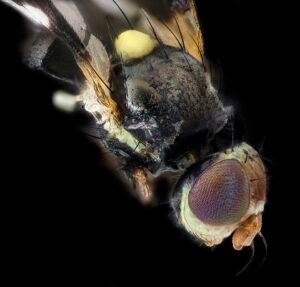
Adult flies measure about 5 mm long and have a shiny black body with distinctive black bands across their transparent wings. These wing markings are one of the easiest ways to distinguish Apple Maggot from other fruit flies.
Biology & Ecology
Apple Maggot usually completes one generation per year. Adult flies begin emerging from the soil in early to mid-summer, depending on local temperatures. After mating, females puncture developing apples and deposit eggs beneath the skin.
The larvae feed inside the fruit for several weeks before exiting and dropping to the soil, where they pupate until the following growing season.
Warm weather, unmanaged orchards, abandoned apple trees, and wild crabapples provide ideal conditions for population growth.
Global Distribution
Apple Maggot is native to North America and is widely distributed throughout the United States and southern Canada. It has become a quarantine pest in several apple-producing regions because infested fruit can spread the insect to new areas through commercial trade.
Risks & Damage
Larvae tunnel through the apple flesh, creating winding brown galleries that reduce fruit quality and marketability. Feeding also allows fungi and bacteria to enter the fruit, accelerating rot.
Common damage includes:
- Brown winding tunnels beneath the skin
- Soft, sunken areas on fruit
- Premature fruit drop
- Internal fruit breakdown
- Secondary fungal infections
- Reduced storage life
In practice, many growers first notice the problem only after cutting open harvested apples. External damage may appear minor, while extensive tunneling has already developed inside the fruit.
Signs of Apple Maggot Infestation
Early detection is essential for successful management.
- Small egg-laying punctures on apple skin
- Brown trails inside fruit
- Soft spots around feeding areas
- Premature fruit drop
- Cream-colored larvae inside apples
- Adult flies captured on sticky monitoring traps
A common mistake is relying only on visible fruit damage. Since larvae develop inside apples, trapping adult flies before egg laying provides a much more effective warning system.
Control & Prevention Methods
Monitoring
Yellow sticky traps or red sphere traps baited with attractants are widely used to monitor adult fly activity. Regular trap inspections help determine the best timing for control measures.
Sanitation
Collect and destroy fallen apples throughout the growing season to prevent larvae from completing their life cycle. Removing abandoned or unmanaged host trees nearby also reduces breeding sites.
Cultural Practices
- Harvest fruit promptly.
- Remove infested fruit from orchards.
- Control nearby wild host plants when practical.
- Maintain orchard hygiene.
Biological Control
Several natural enemies attack Apple Maggot, including parasitoid wasps and predatory insects. While they help suppress populations, they rarely provide complete control in commercial orchards.
Chemical Control
Where necessary, registered insecticides should be applied according to monitoring results and local recommendations. Proper timing is critical because treatments are most effective before eggs hatch and larvae enter the fruit.
Advanced Professional Approaches
Commercial orchards typically combine monitoring traps, degree-day models, orchard sanitation, selective insecticides, and regular scouting as part of an Integrated Pest Management (IPM) program.
What most people don't realize is that a few unmanaged backyard apple trees can produce enough Apple Maggots to threaten nearby commercial orchards. Area-wide cooperation between neighboring property owners often provides better long-term control than treating a single orchard alone.
If you manage multiple fruit crops, see our guide on Codling Moth for another important internal fruit pest. You may also find our article on Spotted Wing Drosophila useful for protecting soft fruits.
FAQ
What fruits does Apple Maggot attack?
It primarily attacks apples but may also infest crabapples, hawthorn, pears, cherries, and several other rosaceous plants.
Are Apple Maggots harmful to humans?
No. Although finding larvae inside fruit is unpleasant, they do not transmit diseases to humans.
How do Apple Maggots spread?
Adults fly between host trees, while infested fruit transported to new locations can introduce the pest into previously uninfested areas.
When is the highest risk period?
Adult activity generally peaks during summer when apples are developing and suitable for egg laying.
Can fallen apples increase infestations?
Yes. Larvae leave fallen fruit and pupate in the soil, producing the next generation of flies.
What is the best treatment for Apple Maggot?
An integrated program combining trapping, sanitation, monitoring, and well-timed insecticide applications provides the most reliable control.
Final Thoughts
The Apple Maggot remains one of the most important fruit pests in North America because its larvae develop hidden inside apples, making infestations difficult to detect until significant damage has occurred. Regular monitoring, orchard sanitation, and integrated pest management remain the most effective strategies for protecting fruit quality and maintaining healthy orchards.
Disclaimer
This article is for informational purposes only. Food safety (HACCP) and pest control requirements vary by country, authority, and type of food business. For legal compliance and audit readiness, always consult a qualified HACCP professional and a licensed pest control operator in your area.
All pest control measures must use approved products and be applied strictly according to the product label, as required by law in most jurisdictions (including the EU, UK, and USA). Improper use of pesticides, lack of documentation, or absence of a structured pest monitoring program may lead to non-compliance, fines, or business closure.
A compliant system must include documented procedures, monitoring records, corrective actions, and verification. Pest control is not optional—it is a core prerequisite program under HACCP and must be properly implemented, recorded, and reviewed.
Author Bio
BSc Agronomist & Certified Pest Control Expert
Scientific Director – Advance Services (Athens, Greece)
Licensed Pest Control Business – Ministry of Rural Development & Food (GR)
References
1. Apple Maggot