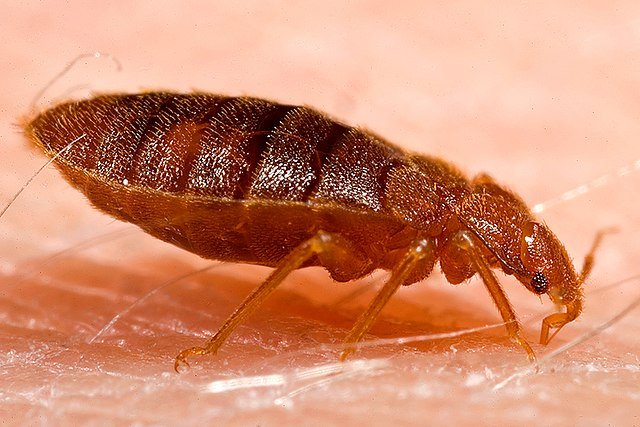
Are Firebrats Dangerous?
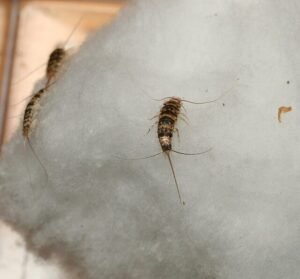 Most people worry when they see fast-moving insects near heat sources. Firebrats (Thermobia domestica) often cause this reaction because they look unusual and appear in places where few pests survive—around ovens, boilers, and radiators. As a pest controler, in the question "are firebrats dangerous?" I can confirm that firebrats are not dangerous to humans, but they can still be a nuisance and can cause material damage. Firebrats do not transmit any diseases to us or our pets and are not considered as a public health issue.
What Firebrats Really Are
Firebrats belong to the order Zygentoma, the same group as silverfish (Lepisma saccharina). They are small, wingless insects with flat, carrot-shaped bodies, long antennae, and three tail-like filaments. Their bodies are covered with fine scales, giving them a mottled brown or gray appearance. Firebrats prefer high temperatures (32–41 °C / 90–105 °F) and humidity, which is why they thrive in bakeries, boiler rooms, and industrial kitchens.
Are Firebrats Dangerous to Humans?
No. Firebrats do not bite, sting, or transmit diseases. They are not parasites and they don’t feed on humans or pets. Their mouthparts are designed for scraping organic debris, not for biting skin. From a public health perspective, they are considered nuisance pests, not health hazards.
What Kind of Damage They Cause
Even though they pose no medical risk, firebrats can damage property and stored goods:
-
They feed on starchy materials such as paper, cardboard, linen, and wallpaper glue.
-
They can contaminate stored dry foods like flour, cereals, or pet food with scales and droppings.
-
In commercial settings, even a small infestation can cause product rejection or inspection problems.
-
They may occasionally hide inside warm electrical panels or insulation, but they rarely cause electrical issues.
Why Their Presence Matters
Finding firebrats indoors usually means one thing: excessive heat and humidity. Their survival depends on constant warmth, so they indicate thermal leaks or poor ventilation near boilers, ovens, or laundry areas. In homes, they are most common in attics or around water heaters.
How to Prevent Firebrat Infestations
-
Improve ventilation and reduce humidity near hot appliances.
-
Repair pipe leaks and avoid storing cardboard boxes close to heat.
-
Clean food residues and vacuum hidden corners regularly.
-
Apply only approved dusts, such as silica gel or diatomaceous earth, carefully in cracks near radiators or ovens—avoiding food-handling areas. Always follow the product label directions.
-
In commercial kitchens or bakeries, use integrated pest management (IPM) focusing on sanitation, monitoring, and exclusion before any chemical step.
When to Call a Professional
If you continue to see firebrats despite cleaning and reducing heat, they may be nesting inside walls or insulation. In such cases, contact a licensed pest control operator who uses approved insecticides and follows local regulations and label instructions. Chemical control should only be considered after proper inspection and when sanitation and environmental corrections fail. Unnecessary pesticide use indoors may increase health risks and rarely solves the root problem.
Final Thoughts
Firebrats are not dangerous in the medical sense, but they signal environmental conditions that also attract other pests. Controlling heat, moisture, and clutter is the most effective long-term defense. When infestations persist, professional treatment ensures full elimination and prevents costly material damage. If you’d like to learn more about pest behavior and prevention, continue read our AdvancePestX blog for detailed guides and expert advice.
Disclaimer
This article is for informational purposes only. Pest control laws and approved chemicals vary by country. Always use only approved pest control products and follow label directions exactly. Never apply insecticides in food-handling or preparation areas unless the label explicitly allows it. For safe and effective results, contact a licensed pest control professional in your local area.
Nasos Iliopoulos
BSc Agronomist & Certified Pest Control Expert
Scientific Director – Advance Services (Athens, Greece)
Licensed Pest Control Business – Ministry of Rural Development & Food (GR)
References
- University of Minnesota Extension – Silverfish and Firebrats
- Penn State Extension – Silverfish and Firebrats
- NPIC- Silverfish and firebrats