Case Bearing Clothes Moth (Tinea pellionella): Identification, Damage & Control
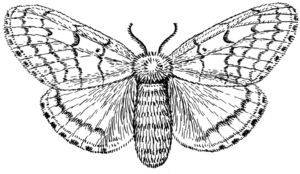
The Case Bearing Clothes Moth (Tinea pellionella) is one of the most well-known textile pests worldwide. Its larvae specialize in feeding on wool, fur, feathers, and other keratin-based materials — and sometimes even leather. This behaviour makes it a very dangerous enemy for everything stored in your closets and wardrobes.
A lot of clients call me reporting small butterflies flying inside their homes. Most of the time, they don't even know what they're looking at. The Case Bearing Clothes Moth Tinea pellionella accounts for roughly 5% of my professional visits every year — not a rare case at all.
Is It Really That Difficult to Deal With?
 Honestly, no. Case Bearing Clothes Moth is not the most resistant pest I deal with. If you apply the right insecticide, in the right way, in the right places — it's manageable. The problem is that most people don't do that. They end up spraying the entire house without logic, which is both ineffective and unnecessary.
What makes this moth tricky is not its resistance — it's its ability to hide. The larvae build a small portable silk case, camouflaged with fibers from the fabric they're feeding on. By the time you notice the damage, the infestation is already well established. When clients call me and I see adults flying around, I know the larvae have been there for a while. I have to search carefully — but with experience, once I see the damage pattern, I already know what I'm dealing with.
Identification
The adult moth is small — about 6–8mm long, with a wingspan of 10–15mm. The forewings are mottled brownish-gray with darker spots, easy to overlook in a dimly lit wardrobe. Adults avoid light and stay close to dark, undisturbed storage areas, which is why they're rarely seen.
The larvae of Case Bearing Clothes Moth are the ones doing the damage. They're whitish caterpillars, about 6mm when mature, always living inside their portable silk cases. These cases — cylindrical, 6–8mm long — are covered with wool fibers, dust, or hair, blending perfectly with the surrounding material. This is what separates Tinea pellionella from the Webbing Clothes Moth (Tineola bisselliella), which spins loose silk mats instead.
Biology and Lifecycle
A female lays between 30 and 200 tiny whitish eggs directly on fabrics containing keratin. The larvae hatch, immediately start building their cases, and begin feeding. They enlarge the case as they grow, pupate inside it, and emerge as adults — whose only purpose is reproduction. Adults don't feed at all.
Development time varies significantly with temperature and humidity — from 2 months up to over a year. This is important to understand when you're trying to eliminate an infestation: the pest doesn't follow a fixed calendar.
What Does It Actually Damage?
Wool garments, carpets, blankets, upholstered furniture, feathers, taxidermy, leather, fur coats. In more serious cases — museums, archives, antique collections — the damage can be irreversible. Old books bound with animal glue, parchment, antique garments. Unlike pantry pests like the cigarette beetle or the rice weevil that go after your food, this one goes after things that often can't be replaced.
The economic impact in severe infestations can reach thousands of dollars. But beyond the financial side, the loss is often sentimental — a wool coat, a handmade carpet, something passed down through the family.
Signs You Have a Problem
- Small silk cases on garments or inside storage areas
- Irregular holes in woolen fabrics or fur
- Shed larval skins or frass near infested items
- Adults flying near closets or wardrobes — by this point, the infestation is already established
What I Recommend Before Any Insecticide
Before reaching for a spray, I always recommend starting with a thorough clean. Vacuuming inside wardrobes, in corners, and anywhere fluff and dust accumulate removes a significant amount of eggs, larvae, and their food sources.
Wash suspicious garments at 55–60°C if the fabric allows it. For delicate wools or items that can't handle high temperatures, freezing at –18°C for at least 72 hours is a safe and effective alternative. Dry cleaning also works. Airtight containers and garment bags for long-term storage are worth the investment.
The Insecticide Treatment
The logic here is not to spray everywhere. I apply insecticide specifically where the moth moves, hides, and develops — around and inside the wardrobe, along skirting boards, in corners, behind furniture where fabrics and dust accumulate. Every home is different, so there's no single recipe that works everywhere.
Don't expect the problem to disappear the same day. Most insecticides don't affect eggs. On the day of treatment, you may have eggs at various stages, plus larvae of different ages. As new moths hatch in the following days, they come into contact with the residual insecticide and die before they can reproduce. From my experience, in most typical infestations, this process takes around 40 to 45 days.
For widespread infestations, professional insecticidal treatment applied to cracks, crevices, and storage areas is the right approach. Fumigation exists but is rarely justified — it should only be considered in exceptional cases like museum collections or severe institutional infestations, and only when specifically recommended by a licensed professional.
Pheromone traps and glue boards are useful monitoring tools, but don't confuse monitoring with control. Their job is to tell you moths are present — not to eliminate the infestation. And don't place too many pheromone traps inside a building; it can attract moths from neighbouring properties.
The Bottom Line
The Case-Bearing Clothes Moth is not the hardest pest to eliminate — but it is one of the easiest to underestimate. Correct treatment means targeted cleaning, focused insecticide application where it actually matters, and patience while the biological cycle completes. That combination, in most cases, resolves the problem definitively.
FAQs About Case-Bearing Clothes Moths
Q: What makes case-bearing clothes moths different from webbing clothes moths? A: Case-bearing larvae build and live inside portable silk cases. Webbing clothes moth larvae spin silk mats directly on the fabric they infest.
Q: Can they damage synthetic fabrics? A: Pure synthetics are generally safe. Fabrics blended with wool or other animal fibers are vulnerable.
Q: Do adult moths eat clothes? A: No. Only the larvae feed on textiles. Adults focus solely on reproduction.
Q: Are they dangerous to people or pets? A: No. They don't bite, sting, or spread disease. The risk is purely material and economic.
Q: How do I get rid of an infestation without chemicals? A: Freezing at –18°C for at least 72 hours, heat treatment above 55°C, dry cleaning, and thorough vacuuming are all effective non-chemical methods — especially when combined.
Learn more about other Urban & Indoor Pests that affect our houses and buidings.
Disclaimer
This article is for informational purposes only. Pest control laws and approved chemicals vary by country. For best results and legal safety, we strongly recommend contacting a licensed pest control professional in your local area. Always make sure that the pest control technician is properly certified or licensed, depending on your country’s regulations. It’s important to confirm that they only use approved products and apply them exactly as instructed on the product label. In most places in Europe, UK, or USA, following label directions is not just best practice—it’s the law.
Author
Nasos Iliopoulos
BSc Agronomist & Certified Pest Control Expert
Scientific Director, Advance Services (Athens, Greece)
Licensed Pest Control Business – Ministry of Rural Development & Food (GR)
References
-
Wikipedia – Tinea pellionella
-
Penn University - Clothes Moth