Flea Bites on Humans – Identification, Treatment, and Prevention
 If you wake up with small red itchy bumps on your legs or ankles and you don’t own pets, you might think it’s mosquitoes. But if those bites come in clusters or lines, you may be dealing with fleas.
Flea bites on humans are more common than people realize — especially during warm months or after returning to a closed home where pets or rodents lived. In my years as a pest control technician, I’ve seen entire households suffer from flea infestations that started from one cat, one carpet, or even one old rug picked up from a market.
Fleas are tiny, fast, and persistent. Their bites itch badly, and scratching can lead to infection. Understanding what causes flea bites, how to recognize them, and what to do about them can save you a lot of discomfort — and possibly prevent a full-blown infestation.
What Are Fleas?
Fleas are wingless blood-sucking parasites that feed on warm-blooded animals — dogs, cats, rodents, birds, and sometimes humans.
There are over 2,000 flea species, but the ones that bite humans most often include:
-
Cat flea (Ctenocephalides felis) – the most common species worldwide.
-
Dog flea (Ctenocephalides canis) – often found in kennels and animal shelters.
-
Human flea (Pulex irritans) – rare but still found in rural areas.
-
Oriental rat flea (Xenopsylla cheopis) – historically linked with plague.
All these species can feed on humans when their preferred hosts are not available.
Adult fleas live on the host, but their eggs, larvae, and pupae hide in carpets, cracks, bedding, or furniture — which is why the problem keeps coming back even after cleaning.
Identification – How to Recognize Flea Bites on Humans
Flea bites are often mistaken for mosquito or bed bug bites. Here’s how to tell the difference.
Typical Flea Bite Characteristics:
-
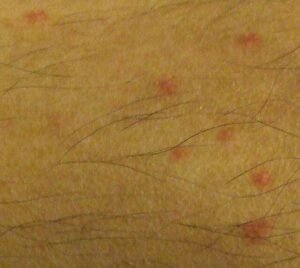
Small, red bumps with a central puncture mark.
-
Usually appear in groups or clusters.
-
Found mainly on legs, ankles, and waistline.
-
Intense itching and occasional burning sensation.
-
Scratching often causes secondary infections or scabs.
Difference from Other Bites:
-
Mosquito bites are single and larger.
-
Bed bug bites often appear in a line on exposed skin during sleep.
-
Flea bites are concentrated below the knees or around tight clothing.
Tip: If you notice new bites after sitting on the carpet or bed, and especially if you see small dark insects jumping, it’s almost certainly fleas.
Biology and Ecology of Flea Bites
Fleas are specialized jumpers. Their strong hind legs allow them to leap up to 30 cm high — enough to reach your legs from the floor.
They are attracted by carbon dioxide, heat, and movement. When you walk into an infested area, adult fleas emerge from pupae and jump to feed.
Once they bite, they inject saliva containing anticoagulants and enzymes, which triggers the allergic reaction — redness, swelling, and itching. Some people react strongly, others barely notice.
In humid conditions (around 70–80%) and moderate temperatures (20–30°C), fleas reproduce extremely fast. A single female can lay 20–40 eggs per day, and the complete cycle from egg to adult can take as little as three weeks.
That’s why one weekend away from home can turn a few hidden eggs into a full infestation when you return.
Global Distribution
Fleas are found worldwide, but the risk of human bites is higher in:
-
Humid climates (southern U.S., Mediterranean, tropical Asia).
-
Pet-friendly households with cats or dogs.
-
Rural areas with livestock or wild animals.
-
Old buildings with carpets or floor gaps.
In Europe and North America, cat fleas (C. felis) are responsible for over 90% of human flea bites. In Africa, Asia, and Latin America, the human flea (P. irritans) is still common, especially around pigs and rodents.
Risks and Health Concerns
Most flea bites are harmless apart from itching, but they can lead to several health problems.
1. Allergic Reactions
Some people develop severe allergic dermatitis after flea bites — large red welts, swelling, or hives.
2. Secondary Skin Infections
Scratching opens the skin, allowing bacteria like Staphylococcus aureus to enter.
3. Disease Transmission
Fleas are known vectors of multiple pathogens:
-
Rickettsia felis (flea-borne spotted fever)
-
Bartonella henselae (cat-scratch disease)
-
Yersinia pestis (plague bacterium, historically spread by rat fleas)
While plague is rare today, rural infestations still pose minor zoonotic risks.
4. Psychological Impact
Chronic infestations can cause anxiety, sleeplessness, and fear of re-infestation — especially in families with children.
Signs of Infestation in Homes
If you’re getting bitten regularly, the source is likely inside your environment. Watch for these signs:
-
Jumping insects: small brown dots that disappear instantly when you move.
-
Flea dirt: black dust-like specks on bedding or carpets (turns reddish when wet).
-
Pets scratching excessively.
-
Bites on the lower legs and ankles — especially after walking on carpets.
-
Activity after cleaning or returning from holiday — pupae hatch in response to vibration and CO₂.
If there are no pets in the house, fleas might be coming from rodents, wildlife, or even previous tenants’ pets.
Control and Treatment
Treating flea bites and removing the source are two different things — both need to happen together.
1. Treating Flea Bites on Humans
-
Wash bites with soap and water.
-
Apply antiseptic cream or calamine lotion to reduce itching.
-
Use ice packs to relieve swelling.
-
Avoid scratching — it only worsens irritation.
-
For severe allergies, antihistamines or topical corticosteroids can help (consult a doctor).
2. Cleaning and Sanitation
-
Vacuum thoroughly daily for at least 10 days — carpets, cracks, under furniture.
-
Immediately dispose of vacuum bags outside.
-
Wash bedding and clothes at 60°C and dry in sunlight or a dryer.
-
Steam clean carpets and sofas where possible.
3. Treating Pets and Animal Areas
Flea infestations almost always involve animals.
-
Use vet-approved flea treatments (spot-on, oral tablets, collars).
-
Clean pet bedding regularly.
-
Treat the surrounding environment — not just the animal.
4. Professional Pest Control
In large infestations, DIY won’t cut it.
Professional exterminators use:
-
Residual insecticides (pyrethroids, IGRs like methoprene or pyriproxyfen).
-
Fogging or ULV treatment for full coverage.
-
Dust formulations (silica gel or diatomaceous earth) for cracks.
-
Follow-up after 10–14 days to catch emerging adults.
Advanced Control Methods
-
Integrated Pest Management (IPM): combining sanitation, mechanical removal, and targeted treatments.
-
Heat treatments: above 50°C kill all life stages instantly, ideal for sensitive homes or hospitals.
-
Humidity reduction: fleas struggle to breed below 50% humidity.
-
Exclusion: sealing entry points used by rodents or stray animals.
Smart monitoring devices using CO₂ and warmth are also used by professional companies to detect flea hotspots after treatment.
Cultural and Historical Context
Fleas are deeply tied to human history. The bubonic plague in medieval Europe, which killed millions, was spread by the Oriental rat flea (Xenopsylla cheopis).
Fleas also played roles in daily life — early medicine used “flea combs” for delousing, and the term “flea circus” comes from 19th-century sideshows where fleas were trained to “perform” under magnifiers.
Today, most flea problems are domestic and manageable — but they remind us how close our lives still are to the animal world.
FAQ
Q1: How do I know if bites are from fleas or bed bugs?
Flea bites are mostly below the knees and in clusters. Bed bug bites are often on the upper body, appearing in straight lines.
Q2: How long do flea bites last on humans?
Usually 3–7 days. Severe reactions can last up to two weeks.
Q3: Can fleas live on humans?
No, fleas don’t live permanently on humans. They bite and jump off to hide in surroundings.
Q4: Do flea bites spread diseases today?
Rarely. Plague and rickettsial diseases are uncommon but possible in some regions.
Q5: How can I stop flea bites fast?
Wash, apply antiseptic, and use antihistamines if needed. But to stop bites completely, eliminate the fleas from your environment.
Q6: Why do fleas bite only me and not others in my house?
Some people emit more heat and CO₂ or have skin chemicals that attract fleas more strongly.
For more on indoor pests like this one, see our full Urban & Indoor Pests guide.
Final Thoughts
Flea bites on humans are not just annoying — they’re a clear warning that an infestation is already active somewhere nearby. Whether it starts from your pet, your carpet, or even from rodents in the attic, fleas spread fast and don’t go away by luck.
In my work as a pest control technician, I’ve learned that most people treat only the visible problem — the bites — and forget the invisible one: the eggs and pupae hiding in the environment. That’s why the problem comes back.
If you wake up with itchy ankles or small red clusters of bites, don’t waste time guessing if it’s mosquitoes or bed bugs. Check your pets, clean thoroughly, and if the itching continues, call a licensed pest control professional.
The fastest recoveries happen when you act early — clean, treat, and follow up within 10–14 days. Once you break the flea life cycle, they can’t come back.
Remember: prevention is easier and cheaper than chasing the next wave of bites.
Disclaimer
This article is for informational purposes only. Pest control laws and approved chemicals vary by country. For best results and legal safety, we strongly recommend contacting a licensed pest control professional in your local area. Always make sure that the pest control technician is properly certified or licensed, depending on your country’s regulations. It’s important to confirm that they only use approved products and apply them exactly as instructed on the product label. In most places in Europe, UK, or USA, following label directions is not just best practice—it’s the law.
Author
Nasos Iliopoulos
BSc Agronomist & Certified Pest Control Expert
Scientific Director – Advance Services (Athens, Greece)
Licensed Pest Control Business – Ministry of Rural Development & Food (GR)
References
-
NHS UK - Bites of insects
-
NIH - Flea Bites
-
Maslesha (2016). An enlarged photo of flea bites on the lower leg of a human subject. Original photograph published on Wikimedia Commons under the Creative Commons Attribution 4.0 International (CC BY 4.0) license.
[No direct file URL available – original record retrieved from Wikimedia Commons metadata, last updated 1 September 2024.]