Gall Midges – Tiny Flies That Cause Big Plant Problems
 Gall midges (family Cecidomyiidae) are small, delicate flies known for inducing galls—abnormal swellings or growths—on plants. These pests are often overlooked because of their tiny size, yet they can cause serious damage to ornamental, fruit, and vegetable crops.
Although gall midges rarely infest homes, they often appear in gardens, greenhouses, or near windows, where their larvae feed on leaves, buds, or flowers. Understanding their biology and control methods is essential to preventing plant deformities and yield losses.
Identification
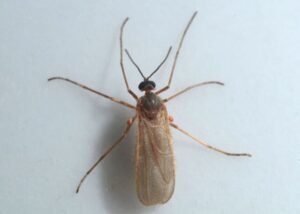
Adult gall midges are tiny flies, usually 1–3 mm long, with slender bodies, long legs, and hairy wings. Their color varies from yellowish to brown or black.
-
Larvae (maggots) are orange, red, or yellow and live inside galls or plant tissue.
-
They are easily confused with fungus gnats or fruit flies, but gall midges are smaller and weaker fliers.
-
The most common pest species include:
-
Hessian fly (Mayetiola destructor) – damages wheat.
-
Gall midge (Contarinia nasturtii) – attacks brassicas and cabbages.
-
Orchid gall midge (Contarinia maculipennis) – common in greenhouses.
-
Swede midge (Contarinia nasturtii) – a major pest of cruciferous crops in Europe and North America.
-
Biology & Ecology
Gall midges belong to one of the largest fly families, with over 6,000 described species worldwide.
-
Adults live only a few days, feeding on nectar or not at all.
-
Females lay eggs on tender plant tissue.
-
Larvae burrow into leaves, stems, or buds, releasing chemicals that cause the plant to produce galls.
-
Inside these galls, larvae feed protected from predators and weather.
-
After feeding, they drop to the soil to pupate and later emerge as adults.
Some species have several generations per year, particularly in warm or greenhouse environments.
Global Distribution
Gall midges are cosmopolitan, found in nearly all regions:
-
Europe: cabbage gall midge and wheat midges are common pests.
-
USA & Canada: significant damage in canola and ornamental plants.
-
Asia: citrus and mango gall midges affect tropical crops.
-
Australia: gall midges attack eucalypts and ornamental flowers.
Because of their host-specific nature, each region tends to have distinct species that target local crops.
Risks / Damage
Gall midges are primarily agricultural and horticultural pests, not public-health threats. Their damage includes:
-
Gall formation: abnormal plant tissue growths where larvae feed.
-
Leaf and stem distortion: twisted shoots, curled leaves, or swollen buds.
-
Reduced flowering and fruiting: especially in ornamental plants and vegetables.
-
Crop yield loss: in cereals, vegetables, and fruit trees.
-
Aesthetic damage: for gardens, nurseries, and landscaping plants.
Severe infestations can destroy entire crops of cabbage, cauliflower, or ornamental plants.
Signs of Infestation
-
Swollen, blistered, or curled leaves.
-
Deformed flowers or buds that fail to open.
-
Small exit holes on leaf or stem galls.
-
Tiny orange or yellow maggots inside the galls.
-
Reduced plant vigor and slow new growth.
The galls are the most obvious symptom and can appear within days after egg-laying.
Control & Prevention Methods
1. Cultural Control
-
Remove and destroy affected plant parts immediately.
-
Rotate crops yearly to break the life cycle.
-
Avoid planting susceptible plants (like cabbages or brassicas) in the same spot repeatedly.
-
Keep greenhouses clean and free of plant debris.
2. Biological Control
-
Encourage natural enemies such as parasitoid wasps (Platygaster spp., Synopeas spp.).
-
Avoid broad-spectrum insecticides that may kill beneficial insects.
-
Use entomopathogenic nematodes in soil to reduce larvae and pupae.
3. Physical & Environmental Measures
-
Use fine mesh netting or row covers to prevent adults from laying eggs.
-
Till soil after harvest to expose pupae to predators and sunlight.
-
Maintain good airflow and reduce humidity in greenhouses.
4. Chemical Control
Use ready-to-use, legally approved insecticides for home or garden application, always following the label directions carefully. Check national regulations — in some countries, you may be obliged to hire a licensed pest control professional for chemical treatments.
Always alternate products to avoid resistance.
Advanced / Professional Approaches
Professionals often apply an Integrated Pest Management (IPM) approach combining:
-
Pheromone monitoring traps to detect adults early.
-
Precise timing of insecticide applications at egg-laying stage.
-
Soil drenches or nematode applications targeting larvae.
-
Biological augmentation in greenhouses.
In some cases, fumigation or heat treatments may be applied for sensitive greenhouse crops.
Cultural or Historical Context
Gall midges were first described in the 18th century, when wheat growers in Europe observed mysterious deformities in their fields. The Hessian fly, one of the earliest recorded species, was named after soldiers from Hesse, Germany, whose straw bedding supposedly introduced the pest to North America during the Revolutionary War.
FAQ Section
1. What are gall midges?
Tiny flies whose larvae form galls on plants, feeding inside them.
2. Are gall midges dangerous to humans?
No, they are harmless to people and pets.
3. Why are my plant leaves swollen or curled?
Gall midges inject saliva that causes abnormal growths called galls.
4. How do I get rid of gall midges naturally?
Prune affected parts, use row covers, and encourage beneficial wasps.
5. Can I use insecticides on gall midges?
Yes, but timing is critical — treat during egg or early larval stages and always follow the label.
6. Do gall midges infest homes?
Rarely. They usually stay outdoors on plants, though adults may enter through open windows.
7. How can I prevent gall midges next season?
Rotate crops, clean debris, and monitor for adults early in spring.
Final Thoughts
Gall midges are a prime example of how small insects can cause disproportionate damage to plants. Because they live hidden inside galls, many homeowners underestimate their presence until plant growth is already deformed. The most effective control strategy combines early detection, removal of infested parts, and biological control agents like parasitoid wasps or nematodes.
For persistent infestations in greenhouses or large gardens, Integrated Pest Management (IPM) is the only sustainable method. It combines cultural practices, monitoring, and selective chemical treatments applied exactly according to label instructions. With consistent attention, gall midges can be managed without harming beneficial insects or the environment.
Learn more about other agricultural and outdoor pests that affect gardens and crops.
Disclaimer
This article is for informational purposes only. Pest control laws and approved chemicals vary by country. For best results and legal safety, we strongly recommend contacting a licensed pest control professional in your local area. Always make sure that the pest control technician is properly certified or licensed, depending on your country’s regulations. It’s important to confirm that they only use approved products and apply them exactly as instructed on the product label. In most places in Europe, the UK, or the USA, following label directions is not just best practice—it’s the law.
Nasos Iliopoulos
BSc Agronomist & Certified Pest Control Expert
Scientific Director – Advance Services (Athens, Greece)
Licensed Pest Control Business – Ministry of Rural Development & Food (GR)
References
-
University of California IPM – Gall Midges and Their Control
-
Michigan State University – Gall Midges