Aphids – Understanding the Green Peach Aphid and How to Control It
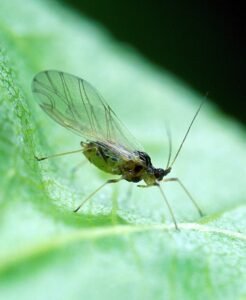 Aphids (Myzus persicae – green peach aphid) are among the most common and damaging garden pests worldwide. These tiny, soft-bodied insects feed on plant sap, weakening plants and transmitting viral diseases. While they are usually found on outdoor plants, they can also appear indoors on houseplants, greenhouse crops, or produce brought from the garden.
Identification
The green peach aphid is a small insect, typically 1.5–3 mm long. It can be green, yellow, or pinkish, with long antennae and a pair of tube-like projections called cornicles on the rear of its body. Both winged and wingless forms exist — winged aphids help spread infestations quickly between plants.
Typical signs of aphids on plants:
-
Clusters of tiny green insects on leaves, stems, or buds.
-
Sticky residue known as honeydew on leaves and surfaces.
-
Sooty mold growing on the honeydew.
-
Distorted, curled, or yellowing leaves.
-
Ants crawling on the plants (they feed on honeydew).
Common related species include the melon aphid (Aphis gossypii) and cabbage aphid (Brevicoryne brassicae).
Biology & Ecology
Aphids reproduce extremely fast. Most individuals are females that give birth to live young without mating (parthenogenesis). A single aphid can produce dozens of offspring in a few days. In warm weather, populations can double every week.
They prefer mild temperatures and moderate humidity. Aphids feed by inserting their slender mouthparts into plant tissues and sucking out the sap. This weakens the plant and disrupts normal growth.
In temperate regions, green peach aphids overwinter as eggs on peach trees and similar hosts. In spring, the young migrate to a wide range of plants — vegetables, ornamentals, weeds — where they reproduce all summer.
Global Distribution
The green peach aphid is found almost everywhere:
-
Europe and the Mediterranean – on vegetables and fruit crops.
-
North America – major pest in greenhouses and potato fields.
-
Australia – attacks leafy vegetables and ornamental plants.
-
Asia and Africa – highly adapted to warm climates and tropical crops.
It is one of the most studied pest insects globally, and a known vector for over 100 plant viruses.
Risks / Damage
-
Plant stress and reduced growth – Aphids remove essential nutrients and water from the plant, leading to leaf curling, wilting, and poor flowering.
-
Sooty mold and honeydew – The sticky residue encourages fungal growth that blocks sunlight.
-
Virus transmission – Aphids can spread potato virus Y, tobacco mosaic virus, and many others within minutes of feeding.
-
Crop losses – In agriculture, they can cause serious economic damage to vegetables, fruit trees, and greenhouse crops.
Signs of Infestation
-
Sticky leaves and ants present on plants.
-
Visible aphid colonies, especially on young shoots.
-
Yellowing, curling, or stunted growth.
-
Black or gray fungus developing on leaves (sooty mold).
-
Deformed flowers or fruits.
Control & Prevention Methods
1. Physical control
-
Remove infested leaves manually.
-
Use strong water spray to wash aphids off plants.
-
Prune heavily infested shoots.
2. Natural predators
Encourage lady beetles (ladybugs), lacewings, and parasitic wasps (Aphidius spp.) — they feed on aphids and naturally reduce populations.
3. Biological control
Apply commercial biological products containing Beauveria bassiana or neem-based insecticides.
4. Home remedies
-
Mix mild soap with water (1–2%) and spray the plants.
-
Use neem oil or horticultural oil to suffocate insects.
5. Cultural practices
-
Remove weeds around crops that can host aphids.
-
Avoid over-fertilizing with nitrogen, which promotes tender growth that aphids prefer.
-
Check new plants before bringing them indoors.
Advanced / Professional Approaches
In large infestations, Integrated Pest Management (IPM) programs are used:
-
Monitoring: Yellow sticky traps or visual inspections.
-
Threshold action: Spraying only when populations exceed certain levels.
-
Selective insecticides: Use systemic products like imidacloprid or acetamiprid, applied according to label directions.
-
Resistance management: Rotate active ingredients to prevent aphids from developing resistance.
Professional pest technicians working in greenhouses often combine biological and chemical methods for best long-term results.
Cultural or Historical Context
Aphids have affected agriculture for centuries. In ancient Greece and Rome, farmers recognized “plant lice” destroying their crops. Today, they remain one of the main challenges for organic and conventional growers alike. Interestingly, the word aphid comes from the Greek “aphis,” meaning “foam” — likely referring to the sticky residue they leave behind.
FAQ Section
1. What are aphids?
Aphids are small sap-sucking insects that damage plants and spread viruses.
2. What is the green peach aphid?
A common species of Aphids (Myzus persicae) that attacks many plants and is highly adaptable.
3. Are aphids harmful to humans?
No, aphids do not bite or transmit diseases to people.
4. How do you get rid of aphids naturally?
Use strong water jets, neem oil, or insecticidal soap to get rid f aphids.
5. What are signs of aphid damage?
Sticky leaves, curled shoots, and black sooty mold are symptoms of aphids.
6. Why do ants appear with aphids?
Ants feed on aphid honeydew and protect them from predators.
7. Can aphids infest indoor plants?
Yes, especially when outdoor plants are brought indoors.
8. What kills aphids instantly?
Insecticidal soap or neem oil sprayed directly on the insects.
Final Thoughts
The green peach aphid (Myzus persicae) is one of the most adaptable and persistent plant pests worldwide. Even though it’s small, it can cause serious problems in gardens, greenhouses, and commercial crops. The key to control is early detection and consistent management. Regular inspections, biological allies like lady beetles, and careful use of selective insecticides can keep aphid populations low without harming beneficial insects.
For homeowners, prevention starts with healthy plants. Avoid over-fertilizing, check new plants before moving them indoors, and act quickly when sticky leaves or curling shoots appear. A combination of natural control methods and professional guidance ensures long-term success and protects your plants year-round.
Learn more about other agricultural and outdoor pests that affect gardens and crops.
Disclaimer
This article is for informational purposes only. Pest control laws and approved chemicals vary by country. For best results and legal safety, we strongly recommend contacting a licensed pest control professional in your local area. Always make sure that the pest control technician is properly certified or licensed, depending on your country’s regulations. It’s important to confirm that they only use approved products and apply them exactly as instructed on the product label. In most places in Europe, the UK, or the USA, following label directions is not just best practice—it’s the law.
Nasos Iliopoulos
BSc Agronomist & Certified Pest Control Expert
Scientific Director – Advance Services (Athens, Greece)
Licensed Pest Control Business – Ministry of Rural Development & Food (GR)
References
-
University of Centucky– Aphids
-
Yniversity of Maryland Extension – Aphids on Trees and Shrubs