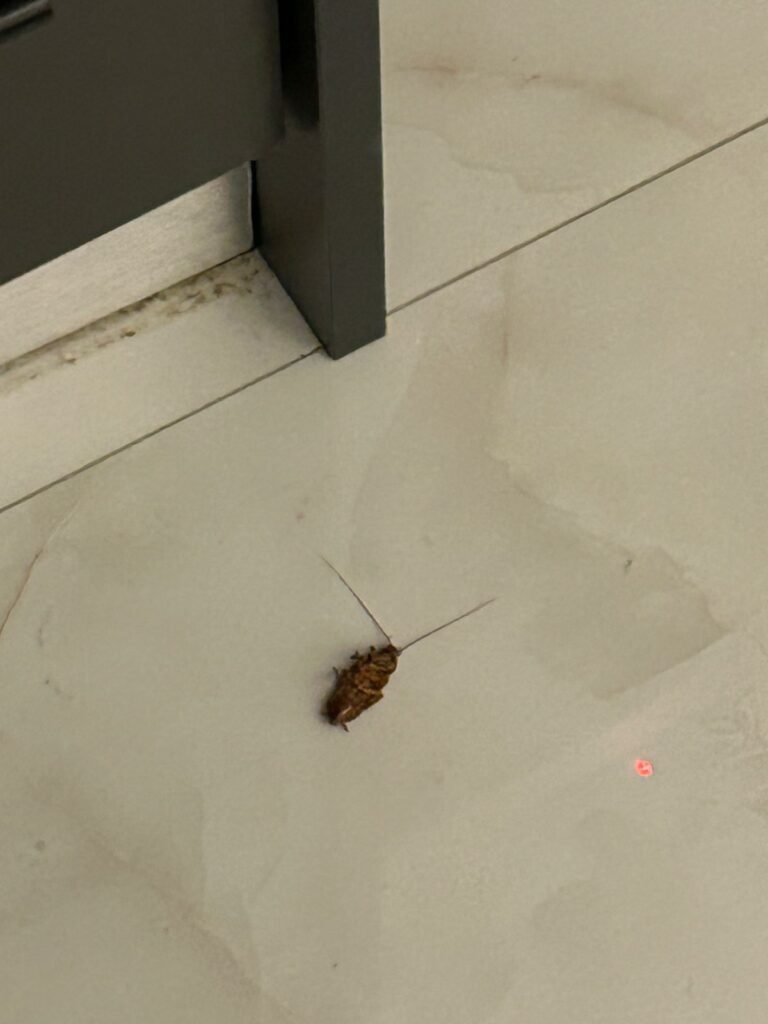
How to Find a Cockroach Nest: Where Roaches Hide and How to Locate the Real Source
If you keep seeing cockroaches, the real problem is usually not the insects you see—it is the hidden nest you do not see. Many homeowners kill visible roaches and assume the problem is solved, but unless the nesting area is found, the infestation usually continues. For this reason this is one of the most difficult indoor pests.
Learning how to find a cockroach nest is one of the most important parts of successful cockroach control. Roaches stay close to food, water, warmth, and darkness. Their nests are usually hidden behind appliances, inside cabinets, wall voids, drains, and plumbing areas.
In practice, most infestations are not in the middle of the room. They are deep inside protected spaces where normal cleaning never reaches.
What Is a Cockroach Nest?
A cockroach nest is not a nest like ants or wasps build. It is a hidden harborage area where cockroaches gather, reproduce, and stay protected during the day.
German cockroaches especially stay close to kitchens and bathrooms because they need moisture and food constantly. According to the University of Kentucky Entomology Department, the German cockroach (Blattella germanica) reproduces faster than any other common domestic cockroach species, making early detection critical.[1]
This is why one visible cockroach often means many more are hidden nearby.
What Does a Cockroach Nest Look Like?
You usually will not see a “nest” itself. Instead, you will find strong signs of activity concentrated in one hidden area.
- Large amounts of droppings (black pepper-like or coffee-ground appearance)
- Egg cases (oothecae)
- Shed skins from growing nymphs
- Dead roaches
- Strong musty or oily odor
- Brown smear marks on walls or corners
If several of these signs appear together, you are usually very close to the nesting area.
Most Common Places Where Cockroach Nests Are Found
Behind the Refrigerator
The warm motor area behind the refrigerator is one of the most common nesting sites, especially for German cockroaches. Heat, darkness, crumbs, and moisture create ideal conditions.
Under and Behind the Stove
Grease buildup makes this one of the strongest food sources in the home.
A common mistake is cleaning only visible kitchen surfaces. Built-up grease behind appliances often feeds the infestation more than the countertop does. Pull the stove out and clean deeply behind it.
In practice, technicians often find the main infestation behind the stove rather than in open kitchen areas. Pesticides also work poorly on heavy grease because the residue blocks contact and reduces treatment effectiveness.
Under the Sink
Leaks, pipe condensation, and darkness make sink cabinets a major nesting zone. Even a small water leak can support a large cockroach population.
Inside Kitchen Cabinets
Especially around hinges, corners, and behind stored food. Roaches prefer quiet places that are rarely disturbed.
Bathroom Drains and Floor Drains
American cockroaches (Periplaneta americana) and Oriental cockroaches often use drains, sewer lines, and plumbing voids as movement routes and nesting zones.
Drain systems often act like highways for cockroaches, especially for larger species that move through sewer systems, basements, and pipe voids before entering homes through floor drains and gaps around plumbing.[2]
Wall Voids and Electrical Areas
Behind outlet covers, inside wall cavities, and around plumbing penetrations are common hidden harborages that many people completely miss.
How to Find a Cockroach Nest Step by Step
1. Check at Night
Cockroaches are nocturnal insects. Night is when they search for food, water, and safe movement. This is why many people only notice them after turning on the kitchen light late at night.
If you suddenly turn on the light and see multiple roaches running in the same direction, follow where they disappear. That often leads directly to the nest.
2. Look for Droppings
Droppings are often the best clue. Heavy concentrations usually mean the nest is very close.
German cockroach droppings look like black pepper. Larger species leave thicker, darker droppings.
3. Smell the Area
Large infestations create a strong musty smell. In severe cases, professionals can identify the general nest location just by odor.
4. Use Sticky Traps
Place glue traps behind appliances, under sinks, and near baseboards. After a few days, the traps show where activity is strongest.
This is often the fastest way to identify the main harborage without opening walls.
5. Pull Appliances Forward
Refrigerators, ovens, washing machines, and dishwashers hide major infestations. Many homeowners never move them during cleaning.
What most people don’t realize is that pulling the stove forward often reveals the real infestation immediately.
Signs the Nest Is Inside the Walls
If you see repeated activity but cannot find the source, the nest may be inside wall voids.
- Roaches appearing from electrical outlets
- Activity around plumbing pipe openings
- Droppings near baseboards with no visible source
- Roaches appearing from shared apartment walls
- Constant reappearance after cleaning
The visible roach is often only a small percentage of the actual infestation. The rest may be hidden deep inside structural voids.
Best Treatment After Finding the Nest
Once the nest is located, spraying alone is usually not enough.
Best treatment for German cockroaches is never just one product—it is a combination of baiting, sanitation, moisture control, and exclusion.
Professional pest control usually includes:
- High-quality gel bait placement
- Insect Growth Regulators (IGR)
- Targeted dust treatment in hidden voids
- Moisture correction
- Deep grease removal
- Sealing cracks and entry points
Spraying random insecticides around the kitchen usually fails because German cockroaches avoid treated surfaces and continue breeding inside walls and appliances.
When to Call a Professional
If roaches keep returning after cleaning and baiting, or if the nest appears to be inside walls, professional pest control is usually necessary.
Severe infestations, especially in apartments, restaurants, and food businesses, often require inspection of shared plumbing systems and neighboring units.
Food businesses must also maintain documented pest monitoring and corrective actions as part of HACCP compliance under food hygiene regulations.[3]
For more on indoor pests like this one, see our full Urban & Indoor Pests guide.
Final Thoughts
If you want real cockroach control, finding the nest matters more than killing the visible insects. The roach you see is usually not the problem—it is the warning sign.
Once the nesting area is found, treatment becomes faster, cheaper, and much more effective. Without locating the source, most infestations simply return.
Disclaimer
This article is for informational purposes only. Food safety (HACCP) and pest control requirements vary by country, authority, and type of food business. For legal compliance and audit readiness, always consult a qualified HACCP professional and a licensed pest control operator in your area.
All pest control measures must use approved products and be applied strictly according to the product label, as required by law in most jurisdictions (including the EU, UK, and USA). Improper use of pesticides, lack of documentation, or absence of a structured pest monitoring program may lead to non-compliance, fines, or business closure.
A compliant system must include documented procedures, monitoring records, corrective actions, and verification. Pest control is not optional—it is a core prerequisite program under HACCP and must be properly implemented, recorded, and reviewed.
Author Bio
BSc Agronomist & Certified Pest Control Expert
Scientific Director – Advance Services (Athens, Greece)
Licensed Pest Control Business – Ministry of Rural Development & Food (GR)