Ichneumon Wasps 
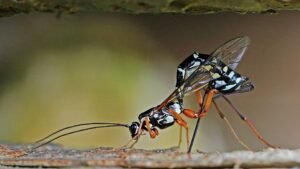
The Ichneumon Wasps (family Ichneumonidae) are among the most important beneficial insects found in gardens, forests, orchards, agricultural fields, and natural ecosystems. Although their long bodies and impressive ovipositors may appear intimidating, these solitary wasps are harmless to people and are highly valued for their ability to naturally control many destructive insect pests.
Thousands of Ichneumon Wasp species parasitize caterpillars, beetle larvae, sawflies, wood-boring insects, and numerous other agricultural pests. Their remarkable life cycle makes them one of the most effective natural enemies used in Integrated Pest Management (IPM) and biological control programs worldwide.
What Are Ichneumon Wasps?
The Ichneumon Wasps (family Ichneumonidae) belong to one of the largest insect families, with more than 25,000 described species and many thousands yet to be identified. Unlike social wasps, they do not build colonies or defend nests. Instead, females search for suitable host insects and deposit eggs inside or on them. The developing larvae feed on the host internally before completing their development.
Identification
Adult Ichneumon Wasps vary greatly in size, ranging from about 5 mm to more than 40 mm depending on the species. Most have slender black, brown, orange, or yellow bodies with narrow waists, long antennae, and transparent wings.
Females of many species possess an exceptionally long ovipositor that may exceed the length of the body. Despite its appearance, this structure is used only for laying eggs and not for stinging people.
Larvae remain hidden inside their host insects and are rarely observed until they emerge.
Their elegant appearance and long antennae often distinguish them from other beneficial parasitoid wasps.
Biology & Ecology
Ichneumon Wasps undergo complete metamorphosis through egg, larva, pupa, and adult stages.
Adult females use chemical signals, vibrations, and even sounds produced by hidden insects to locate suitable hosts. Some species can detect wood-boring larvae deep inside tree trunks before inserting their ovipositor through the wood to lay eggs.
After hatching, the developing larva feeds internally while allowing the host to survive until the final stages of development. Eventually, the host dies, and the mature parasitoid emerges to pupate before becoming an adult.
Depending on species and climate, one or several generations may occur annually.
Global Distribution
Ichneumon Wasps occur throughout:
- North America
- Europe
- Asia
- South America
- Africa
- Australia
They are found in forests, agricultural systems, gardens, grasslands, and nearly every terrestrial habitat where suitable insect hosts exist.
Where Are Ichneumon Wasps Found?
These beneficial parasitoids are commonly found in:
- Fruit orchards
- Vegetable gardens
- Agricultural fields
- Forests
- Woodlands
- Flower gardens
- Natural meadows
- Greenhouses
Adults are frequently observed visiting flowers to feed on nectar while searching nearby vegetation for suitable hosts.
Benefits of Ichneumon Wasps
Ichneumon Wasps naturally suppress numerous agricultural and forestry pests by parasitizing their immature stages.
Common hosts include:
- Caterpillars
- Armyworms
- Cutworms
- Sawfly larvae
- Wood-boring beetle larvae
- Moth larvae
- Beetle larvae
- Various forest pests
Because each developing parasitoid eventually kills its host, Ichneumon Wasps help regulate pest populations naturally while reducing the need for chemical insecticides.
See our guides on Braconid Wasps, Tachinid Flies, and Minute Pirate Bugs to discover other beneficial insects that naturally protect crops and gardens.
How Ichneumon Wasps Help Control Crop Pests
Female Ichneumon Wasps spend much of their lives searching for suitable insect hosts hidden inside plants, soil, or wood. Once located, eggs are deposited directly into or onto the host using the ovipositor.
The developing larvae consume the host gradually while completing their own development. This highly specialized relationship allows Ichneumon Wasps to suppress pest populations naturally without harming crops.
Many species specialize in only one or a few closely related host insects, making them highly efficient biological control agents.
In practice… homeowners sometimes become alarmed after spotting a large Ichneumon Wasp with an exceptionally long ovipositor on a tree trunk. In reality, the insect is searching for wood-boring larvae hidden beneath the bark and poses no danger to people or pets.
How to Encourage Ichneumon Wasps
Creating diverse habitats with flowering plants helps support healthy Ichneumon Wasp populations throughout the growing season.
- Plant nectar-rich flowering species.
- Maintain native flowering vegetation.
- Reduce unnecessary insecticide applications.
- Protect hedgerows and natural habitats.
- Encourage biodiversity around crops.
- Adopt Integrated Pest Management practices.
A common mistake is… killing Ichneumon Wasps because of their long ovipositors. These insects are harmless and spend their lives searching for destructive pests rather than interacting with people.
Role in Integrated Pest Management (IPM)
Ichneumon Wasps are among the most valuable naturally occurring parasitoids used in sustainable agriculture and forestry.
- Natural suppression of caterpillars
- Control of wood-boring insects
- Reduced pesticide dependence
- Improved biodiversity
- Long-term biological control
- Sustainable crop protection
What most people don't realize is… some Ichneumon Wasps can detect hidden insect larvae deep inside wood using vibrations produced by their hosts. This remarkable ability allows them to control pests that many other natural enemies cannot reach.
Frequently Asked Questions
Are Ichneumon Wasps beneficial?
Yes. They are among the world's most important beneficial parasitoids and naturally control numerous agricultural and forest pests.
Do Ichneumon Wasps sting people?
No. The long ovipositor is used exclusively for laying eggs and is not a defensive stinger.
What insects do Ichneumon Wasps attack?
They parasitize caterpillars, sawfly larvae, beetle larvae, wood-boring insects, armyworms, cutworms, and many other pest species.
Why do some Ichneumon Wasps have very long tails?
The "tail" is actually the female's ovipositor, which allows her to place eggs inside hidden insect hosts, including larvae buried deep inside wood.
Can Ichneumon Wasps reduce pesticide use?
Yes. Healthy parasitoid populations naturally suppress pest insects, reducing the need for chemical insecticide applications.
How can I attract Ichneumon Wasps?
Grow flowering plants, preserve natural habitats, reduce broad-spectrum insecticide use, and encourage biodiversity throughout the landscape.
Final Thoughts
Ichneumon Wasps are among nature's most specialized biological control agents. By parasitizing caterpillars, beetle larvae, sawflies, wood-boring insects, and many other destructive pests, these remarkable beneficial insects help maintain healthier crops, forests, and gardens while reducing reliance on chemical insecticides. Protecting Ichneumon Wasps supports sustainable agriculture, stronger biodiversity, and long-term ecological balance.
Learn more about Agricultural & Outdoor Pests
Disclaimer
This article is for informational purposes only. Food safety (HACCP) and pest control requirements vary by country, authority, and type of food business. For legal compliance and audit readiness, always consult a qualified HACCP professional and a licensed pest control operator in your area.
All pest control measures must use approved products and be applied strictly according to the product label, as required by law in most jurisdictions (including the EU, UK, and USA). Improper use of pesticides, lack of documentation, or absence of a structured pest monitoring program may lead to non-compliance, fines, or business closure.
A compliant system must include documented procedures, monitoring records, corrective actions, and verification. Pest control is not optional—it is a core prerequisite program under HACCP and must be properly implemented, recorded, and reviewed.
Author Bio
BSc Agronomist & Certified Pest Control Expert
Scientific Director – Advance Services (Athens, Greece)
Licensed Pest Control Business – Ministry of Rural Development & Food (GR)