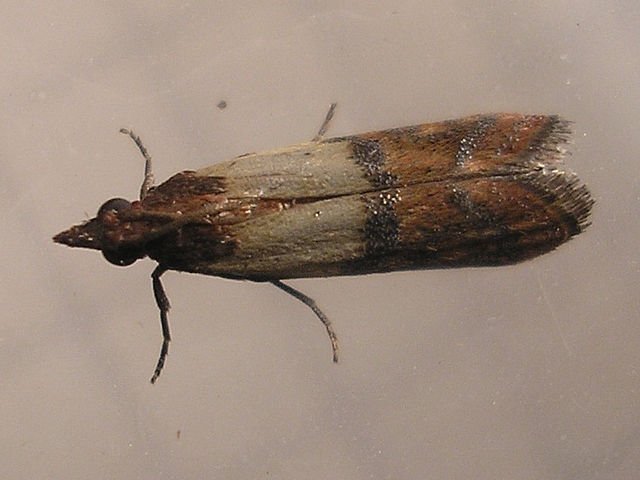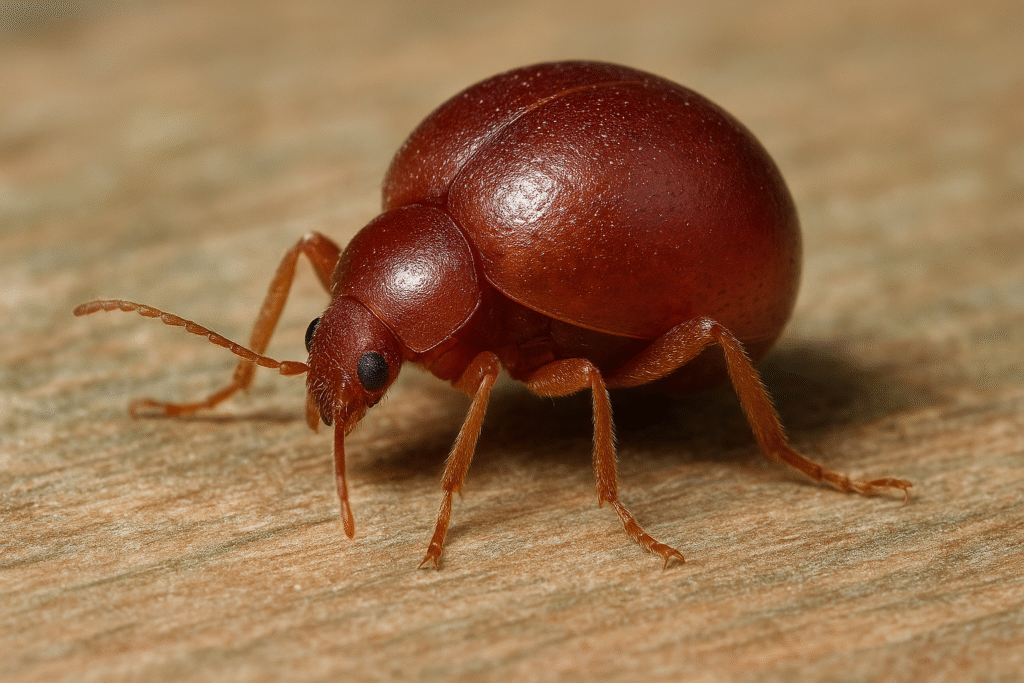
Khapra Beetle (Trogoderma granarium) – Identification, Infestation Risks, and Control
 The Khapra beetle (Trogoderma granarium Everts) is one of the world’s most destructive stored-product pests. It attacks grains, cereals, seeds, nuts, flour, and dried foods. It is so serious that it is listed as a quarantine pest in most countries, including the USA, European Union, Australia, and Japan.
Even a small infestation can lead to import bans or full warehouse closures. Knowing how to identify, prevent, and control this beetle is essential for anyone managing food storage, packaging, or trade facilities.
Identification
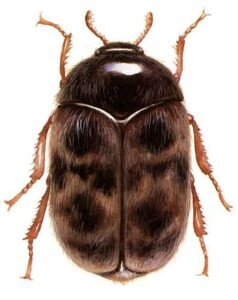
Adult Khapra beetles are small, oval, and brownish — about 2–3 mm long. Their bodies are covered with fine hairs, giving them a slightly fuzzy look.
-
Adults: Short-lived (1–2 weeks), rarely feed.
-
Larvae: Golden to reddish-brown, covered with dense hairs and a distinctive tuft at the tail end. They cause almost all the damage.
-
Eggs: Tiny, whitish to pale yellow, laid loosely among stored grains or cracks in packaging.
They are often confused with the Warehouse beetle (Trogoderma variabile) or Carpet beetles (Anthrenus spp.), but Khapra larvae are more hairy, survive longer without food, and can remain dormant for months.
Biology & Ecology
-
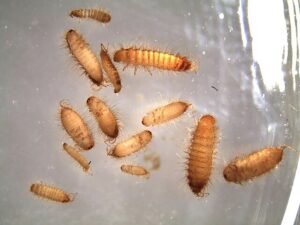 Life cycle: Egg → larva (5–9 stages) → pupa → adult.
 -
Duration: 25–220 days depending on temperature.
-
Ideal conditions: 30–37°C and 70% relative humidity.
-
Dormancy: Larvae can survive over 6 years without food, making this beetle almost impossible to eliminate without complete cleaning.
-
Reproduction: A single female can lay 50–100 eggs.
Larvae prefer cracks, seams, bags, and residues where they can hide and feed unseen.
Global Distribution
Originally from South Asia, the Khapra beetle now appears in:
-
India, Pakistan, and Middle East: Highly established.
-
Africa and Southeast Asia: Widespread.
-
Europe: Found sporadically under strict eradication.
-
USA, Canada, Australia: Intercepted at ports; strict quarantine applied.
The insect is prohibited in most countries, and even a few larvae can trigger emergency fumigation or shipment rejection.
Risks and Damage
The Khapra beetle is one of the few insects classified as a Category A quarantine pest.
-
Food damage: Larvae destroy grains, leaving powder, frass, and cast skins.
-
Economic losses: Infested goods are unsellable; entire lots are rejected.
-
Public health: While not directly harmful to humans, their shed hairs and skins can cause allergic reactions and dermatitis.
-
Contamination: Infested storage areas require total cleaning and disinfection before reuse.
Signs of Infestation
-
Fine powder-like residues and hairs in stored products.
-
Presence of larval skins and adult beetles.
-
Reduced grain weight and quality.
-
Beetles found in corners, cracks, and old residues of silos or packaging machines.
-
Sticky traps showing Trogoderma-type adults.
In advanced infestations, the smell of rancid grain or dust buildup is typical.
Control & Prevention Methods
1. Sanitation and Cleaning
-
Deep-clean all storage bins, cracks, and equipment before introducing new grain.
-
Use industrial vacuums and brushes, not air blowers.
-
Dispose of waste grain far from the facility.
2. Temperature and Humidity Management
-
Keep grain moisture below 10%.
-
Lower room temperature under 20°C where possible.
-
Proper ventilation and dehumidifiers help stop development.
3. Monitoring and Detection
-
Use Khapra beetle pheromone traps for adults and larvae.
-
Inspect walls, bags, and pallets weekly.
-
Record and analyze trap data.
4. Quarantine and Isolation
-
Any infested material must be sealed and isolated immediately.
-
Notify local agricultural or quarantine authorities if confirmed.
5. Chemical and Heat Treatments
-
Only licensed professionals may apply approved fumigants such as phosphine gas.
-
Heat treatment (55°C for 30 minutes) effectively kills all life stages.
-
Avoid surface sprays—they rarely reach larvae hidden deep in grain.
Advanced / Professional Approaches
Professional pest control companies apply integrated pest management (IPM) combining:
-
Regular inspection and sanitation schedules.
-
Fumigation under gas-tight covers.
-
Use of inert dusts (diatomaceous earth, silica gel) in cracks and voids.
-
Installation of pheromone monitoring systems for early detection.
In large warehouses, grain aeration, CO₂ treatments, or modified atmospheres are used to suffocate pests without chemicals.
Cultural or Historical Context
The Khapra beetle became infamous in global trade during the 1950s when infestations were found in US grain imports, causing international panic. It remains one of the few insects banned by name under the International Plant Protection Convention (IPPC). Countries that detect it must report immediately and apply eradication within days.
FAQ
What is the Khapra beetle?
It’s a small brown dermestid beetle that destroys stored food products like grains, seeds, nuts, and flour.
Why is the Khapra beetle so dangerous?
Because it’s highly resistant, can survive years without food, and quickly spreads through trade.
Are Khapra beetles harmful to humans?
They don’t bite or transmit disease, but their shed hairs and skins can cause allergies or skin irritation.
How can I identify Khapra beetle larvae?
They are golden brown with dense hairs and a brush-like tail. Larvae are usually hidden deep in stored products.
How to get rid of Khapra beetles?
Clean and vacuum storage areas, destroy infested material, lower humidity, and contact a licensed pest control company for fumigation.
Do traps work for Khapra beetles?
Yes. Pheromone traps detect early activity but must be combined with cleaning and professional control.
Can I treat Khapra beetles myself?
No. Because of legal restrictions and resistance, only licensed operators are authorized to treat or fumigate infested sites.
Final Thoughts
The Khapra beetle (Trogoderma granarium) is not an ordinary pest. It is one of the most regulated insects in the world, responsible for strict import controls and millions in trade losses every year. For any warehouse, mill, packaging, or grain storage facility, prevention is the only realistic strategy.
Once the pest is established, complete eradication requires professional fumigation, strict quarantine, and full sanitation. The most effective long-term solution is maintaining a clean, dry, and cool environment, with constant monitoring using pheromone traps and detailed inspection logs.
If you manage a food warehouse or packaging plant, train your staff to recognize early signs of infestation and ensure that every delivery is checked before storage. The cost of vigilance is minimal compared to the cost of contamination.
Learn more about other Stored Product Pests
Disclaimer
This article is for informational purposes only. Pest control laws and approved chemicals vary by country. For best results and legal safety, we strongly recommend contacting a licensed pest control professional in your local area. Always make sure that the pest control technician is properly certified or licensed, depending on your country’s regulations. It’s important to confirm that they only use approved products and apply them exactly as instructed on the product label. In most places in Europe, the UK, or the USA, following label directions is not just best practice—it’s the law.
Nasos Iliopoulos
BSc Agronomist & Certified Pest Control Expert
Scientific Director – Advance Services (Athens, Greece)
Licensed Pest Control Business – Ministry of Rural Development & Food (GR)
References
-
University of Florida - Khapra Beetle, Trogoderma granarium Everts (Insecta: Coleoptera: Dermestidae)
-
Purdue University - Stored Product Pests