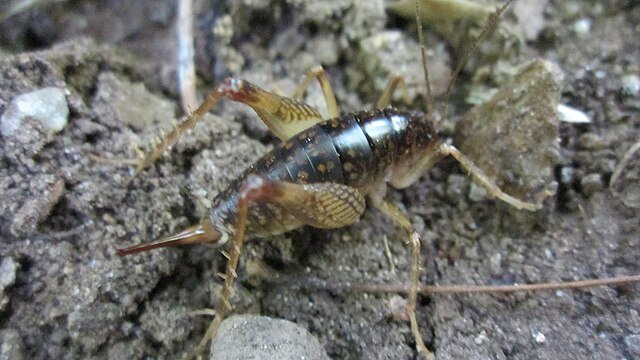
Long-legged Fly
The Long-legged Fly (family Dolichopodidae) is one of the most overlooked beneficial insects found in gardens, orchards, greenhouses, wetlands, and agricultural fields. Although these tiny metallic flies are often mistaken for harmless gnats, both adults and larvae are active predators that help suppress numerous crop pests naturally.
Long-legged Flies prey on aphids, thrips, whiteflies, mites, leafhoppers, springtails, and many other soft-bodied insects. Their constant hunting activity makes them valuable contributors to Integrated Pest Management (IPM) and sustainable agriculture.
What Is the Long-legged Fly?
The Long-legged Fly (family Dolichopodidae) belongs to one of the largest fly families, containing more than 8,000 described species worldwide. Unlike nuisance flies, most members of this family are beneficial predators throughout both the adult and larval stages. Their excellent vision, rapid movements, and agile flight allow them to capture tiny insect prey with remarkable efficiency.[1]
Identification
Adult Long-legged Flies are small insects, usually measuring between 2 and 8 mm in length. Most species display an attractive metallic green, bronze, blue, or copper coloration with a slender body and exceptionally long legs.
They possess large compound eyes, short antennae, and clear wings. Their quick movements and habit of constantly running across leaves make them relatively easy to recognize despite their small size.
Larvae are slender, pale-colored, legless, and usually develop in moist soil, leaf litter, decaying vegetation, or wet organic matter where prey is abundant.
Unlike house flies, Long-legged Flies rarely visit food or human dwellings and spend most of their lives hunting insects outdoors.
Biology & Ecology
Long-legged Flies undergo complete metamorphosis through egg, larva, pupa, and adult stages.
Females lay eggs in moist habitats where developing larvae have access to abundant prey. Larvae actively feed on small insect larvae, nematodes, and other tiny invertebrates.
Adults patrol leaves, stems, flowers, and soil surfaces searching for insects. Using their excellent vision, they rapidly seize prey before consuming it.
Several generations may develop each year depending on temperature, humidity, and prey availability.[2]
Global Distribution
Long-legged Flies occur throughout:
- North America
- Europe
- Asia
- South America
- Africa
- Australia
They are found in nearly every terrestrial habitat, especially where moisture and insect prey are plentiful.
Where Are Long-legged Flies Found?
These beneficial predators commonly inhabit:
- Vegetable gardens
- Fruit orchards
- Agricultural fields
- Greenhouses
- Wetlands
- Riverbanks
- Flower gardens
- Natural vegetation
Adults are frequently seen walking across leaves, flowers, and soil surfaces while searching for prey.
Benefits of Long-legged Flies
Long-legged Flies naturally suppress a wide variety of small agricultural pests.
Their common prey includes:
- Aphids
- Thrips
- Whiteflies
- Spider mites
- Leafhopper nymphs
- Springtails
- Small fly larvae
- Various insect eggs
Because both adults and larvae are predatory, Long-legged Flies provide continuous biological control throughout much of the growing season.
See our guides on Hoverflies, Predatory Thrips, and Brown Lacewings to learn about other beneficial insects that naturally protect crops.
How Long-legged Flies Help Control Crop Pests
Adult Long-legged Flies spend much of the day actively searching leaves, flowers, and stems for prey. Once a suitable insect is located, they rapidly capture it using their legs before feeding.
The larvae complement this activity by hunting within moist soil and organic matter, where many immature pest insects develop.
This combination of above-ground and below-ground predation helps suppress pest populations across multiple habitats within agricultural systems.
In practice… growers often notice tiny metallic green flies darting across crop leaves without realizing they are observing beneficial predators. These fast-moving insects may consume dozens of small pests each day while remaining almost unnoticed.
How to Encourage Long-legged Flies
Healthy populations of Long-legged Flies can be encouraged by maintaining moist habitats and reducing unnecessary pesticide applications.
- Reduce broad-spectrum insecticide use.
- Maintain flowering plants throughout the growing season.
- Preserve moist soil and organic matter.
- Protect natural vegetation around fields.
- Encourage biodiversity.
- Practice Integrated Pest Management.
A common mistake is… assuming all small flies are pests. Many Long-legged Flies are beneficial predators that quietly suppress aphids, thrips, mites, and other crop pests while posing no risk to plants.
Role in Integrated Pest Management (IPM)
Long-legged Flies contribute naturally to sustainable crop production by reducing populations of numerous soft-bodied pests.
- Natural suppression of aphids
- Control of thrips
- Predation of spider mites
- Reduced pesticide dependence
- Improved biodiversity
- Long-term ecological balance
What most people don't realize is… Long-legged Flies are active hunters during nearly their entire life cycle. While adults patrol vegetation, the larvae simultaneously hunt beneath the soil surface, providing biological control in areas that many other beneficial insects cannot reach.
Frequently Asked Questions
Are Long-legged Flies beneficial?
Yes. Both adults and larvae are beneficial predators that naturally control aphids, thrips, whiteflies, mites, and other small agricultural pests.
Do Long-legged Flies damage plants?
No. They feed on insects rather than healthy plant tissues and are considered beneficial in gardens and agricultural systems.
What do Long-legged Flies eat?
They prey on aphids, thrips, spider mites, whiteflies, leafhopper nymphs, springtails, insect eggs, and various tiny invertebrates.
Why are they called Long-legged Flies?
They are named for their unusually long, slender legs, which help them move quickly across vegetation while hunting prey.
Can Long-legged Flies reduce pesticide use?
Yes. Healthy populations naturally suppress several common crop pests and contribute to sustainable Integrated Pest Management programs.
How can I attract Long-legged Flies?
Maintain flowering plants, preserve moist habitats, reduce unnecessary insecticide applications, and encourage biodiversity throughout gardens and agricultural landscapes.
Final Thoughts
Long-legged Flies are among the most overlooked beneficial predators in agriculture. By feeding on aphids, thrips, whiteflies, mites, and many other small pests throughout both their adult and larval stages, they provide continuous biological control while supporting healthier crops and reducing dependence on chemical insecticides. Conserving these agile predators through habitat management and Integrated Pest Management strengthens biodiversity and promotes sustainable crop production.
Learn more about Agricultural & Outdoor Pests
Disclaimer
This article is for informational purposes only. Food safety (HACCP) and pest control requirements vary by country, authority, and type of food business. For legal compliance and audit readiness, always consult a qualified HACCP professional and a licensed pest control operator in your area.
All pest control measures must use approved products and be applied strictly according to the product label, as required by law in most jurisdictions (including the EU, UK, and USA). Improper use of pesticides, lack of documentation, or absence of a structured pest monitoring program may lead to non-compliance, fines, or business closure.
A compliant system must include documented procedures, monitoring records, corrective actions, and verification. Pest control is not optional—it is a core prerequisite program under HACCP and must be properly implemented, recorded, and reviewed.
Author Bio
BSc Agronomist & Certified Pest Control Expert
Scientific Director – Advance Services (Athens, Greece)
Licensed Pest Control Business – Ministry of Rural Development & Food (GR)