Minute Pirate Bug 
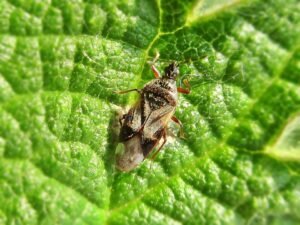
The Minute Pirate Bug (Orius spp.) is one of the most valuable beneficial insects in agriculture, greenhouses, home gardens, and ornamental landscapes. Despite its tiny size, this aggressive predator feeds on a remarkable variety of destructive crop pests, making it an important ally in Integrated Pest Management (IPM).
Both adults and nymphs actively hunt thrips, aphids, spider mites, whiteflies, insect eggs, and small caterpillars. Because they naturally suppress pest populations before they become serious infestations, Minute Pirate Bugs help reduce pesticide use while supporting healthier and more sustainable crop production.
What Is the Minute Pirate Bug?
The Minute Pirate Bug (Orius spp.) is a tiny predatory true bug belonging to the family Anthocoridae. Unlike plant-feeding insects, it survives primarily by feeding on other insects and mites. It is especially valued for its ability to control thrips, one of the most difficult pests to manage in many crops.[1]
Identification
Adult Minute Pirate Bugs measure only 2–5 mm in length. They have an oval body with a distinctive black-and-white wing pattern that makes them recognizable under close inspection.
Their head is relatively broad, and they possess large reddish eyes along with a sharp piercing beak used to capture prey.
Nymphs are wingless, yellowish-orange to brown, and become darker as they mature. Like the adults, they are highly active predators and spend most of their time searching plants for insects.
Because of their small size, they often go unnoticed until growers observe a reduction in pest populations.
Biology & Ecology
Minute Pirate Bugs undergo incomplete metamorphosis through egg, nymph, and adult stages.
Females lay their eggs inside plant tissues where they are protected from predators and environmental conditions. After hatching, nymphs begin feeding almost immediately and continue hunting throughout their development.
Several generations may occur each year depending on temperature, prey availability, and environmental conditions.[2]
Although they are highly predatory, Minute Pirate Bugs may occasionally feed on pollen when insect prey is scarce, allowing them to survive until pest populations increase.
Global Distribution
Species of Orius are widely distributed across:
- North America
- Europe
- Asia
- Australia
- Africa
- Mediterranean agricultural regions
They are commonly found in both cultivated and natural environments where flowering plants and insect prey are abundant.
Where Are Minute Pirate Bugs Found?
Minute Pirate Bugs are commonly found in:
- Vegetable crops
- Fruit orchards
- Greenhouses
- Strawberry fields
- Pepper crops
- Cotton fields
- Flower gardens
- Wildflower habitats
They are particularly common in flowering crops because pollen provides an additional food source during periods of low prey availability.
Benefits of Minute Pirate Bugs
Minute Pirate Bugs are highly effective natural predators that attack a broad range of economically important pests.
Their preferred prey includes:
- Thrips
- Aphids
- Spider mites
- Whiteflies
- Scale insect crawlers
- Leafhopper nymphs
- Caterpillar eggs
- Small caterpillars
- Moth eggs
Thrips are among their favorite prey, making Minute Pirate Bugs one of the most widely used beneficial insects in greenhouse biological control programs.
See our guides on Big-Eyed Bugs, Damsel Bugs, and Green Lacewings to discover other beneficial predators that naturally protect crops from damaging insect pests.
How Minute Pirate Bugs Help Control Crop Pests
Minute Pirate Bugs actively patrol leaves, flowers, and developing fruit while searching for prey. Once they locate an insect, they quickly pierce it with their mouthparts and feed on its internal fluids.
Both adults and nymphs consume numerous pests every day, helping keep infestations below damaging levels before significant crop losses occur.
Because they attack multiple pest species, they remain valuable throughout the growing season even as pest populations change.
In practice… growers often notice fewer thrips problems in crops where Minute Pirate Bugs are well established. During greenhouse inspections, technicians frequently observe these tiny predators inside flowers, where they actively hunt thrips that are otherwise difficult to control with insecticides.
How to Encourage Minute Pirate Bugs
Maintaining healthy populations of Minute Pirate Bugs helps improve natural biological control and reduces reliance on pesticides.
- Grow flowering plants that provide pollen.
- Maintain plant diversity around crops.
- Avoid unnecessary broad-spectrum insecticides.
- Protect natural habitats around fields.
- Monitor beneficial insects before spraying.
- Adopt Integrated Pest Management practices.
A common mistake is… applying preventive insecticides without checking whether beneficial predators are already controlling the pest population. Eliminating Minute Pirate Bugs often allows thrips and other pests to recover rapidly, increasing the need for additional treatments.
Role in Integrated Pest Management (IPM)
Minute Pirate Bugs are among the most widely recognized biological control agents used in modern IPM programs.
- Natural suppression of thrips and aphids
- Reduced pesticide applications
- Improved biological diversity
- Protection of pollinators
- Long-term pest management
- Sustainable crop production
What most people don't realize is… Minute Pirate Bugs can establish stable populations in crops that provide both insect prey and flowering plants. This allows them to remain present long before damaging pest outbreaks begin, providing continuous natural protection.
Frequently Asked Questions
Are Minute Pirate Bugs beneficial?
Yes. They are among the most effective beneficial predatory insects used in agriculture and greenhouse biological control.
What do Minute Pirate Bugs eat?
They feed on thrips, aphids, spider mites, whiteflies, caterpillar eggs, moth eggs, leafhoppers, and many other small insects.
Can Minute Pirate Bugs bite people?
Occasionally, they may probe exposed skin, causing a brief pinprick sensation. However, they do not feed on humans, transmit diseases, or pose any medical risk.
Why are Minute Pirate Bugs important?
They naturally suppress difficult pests such as thrips, reducing crop damage while supporting sustainable pest management.
Can Minute Pirate Bugs be used in greenhouses?
Yes. They are widely released in commercial greenhouse production because they are highly effective against thrips and several other greenhouse pests.
How can I attract Minute Pirate Bugs?
Plant flowering species, reduce unnecessary insecticide use, preserve natural vegetation, and encourage biodiversity throughout the growing area.
Final Thoughts
The Minute Pirate Bug is one of the smallest but most effective beneficial predators found in agriculture. By naturally controlling thrips, aphids, spider mites, whiteflies, and many other damaging pests, it plays a vital role in sustainable crop protection. Encouraging healthy populations of these tiny predators helps maintain balanced ecosystems while reducing dependence on chemical insecticides.
Learn more about Agricultural & Outdoor Pests
Disclaimer
This article is for informational purposes only. Food safety (HACCP) and pest control requirements vary by country, authority, and type of food business. For legal compliance and audit readiness, always consult a qualified HACCP professional and a licensed pest control operator in your area.
All pest control measures must use approved products and be applied strictly according to the product label, as required by law in most jurisdictions (including the EU, UK, and USA). Improper use of pesticides, lack of documentation, or absence of a structured pest monitoring program may lead to non-compliance, fines, or business closure.
A compliant system must include documented procedures, monitoring records, corrective actions, and verification. Pest control is not optional—it is a core prerequisite program under HACCP and must be properly implemented, recorded, and reviewed.
Author Bio
BSc Agronomist & Certified Pest Control Expert
Scientific Director – Advance Services (Athens, Greece)
Licensed Pest Control Business – Ministry of Rural Development & Food (GR)