Pharaoh Ants (Monomorium pharaonis): Tiny Invaders with Huge Impact
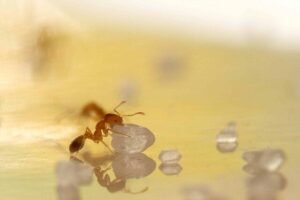 The Pharaoh ant (Monomorium pharaonis) is one of the smallest yet most problematic ant species encountered in homes, hospitals, and food facilities. Despite measuring only 1.5–2 millimeters, these ants have a reputation far larger than their size suggests. Known for their light-yellow bodies and nearly invisible appearance, they are infamous for their ability to form massive colonies with multiple queens, spread diseases, and resist traditional pest control methods.
Unlike Little black ants (Monomorium minimum) or Pavement ants (Tetramorium caespitum), Pharaoh ants thrive in heated indoor environments year-round. Their adaptability and stealth make them a top concern for pest management professionals worldwide.
Identification
Recognizing Pharaoh ants correctly is the first step in effective control.
-
Size: Workers measure just 1.5–2 mm, making them smaller than most household ants.
-
Coloration: Pale yellow to reddish with darker abdomens. Under poor lighting, they can appear almost translucent.
-
Antennae: 12-segmented with a distinct 3-segmented club.
-
Queens: Slightly larger (4–5 mm), darker in shade, and capable of producing thousands of workers.
-
Behavior: Trail strongly to food sources, especially sweets, fats, and proteins.
Because of their size and color, Pharaoh ants are often confused with grease ants or thief ants. Professional inspection is critical, especially when infestations occur in sensitive environments such as hospitals.
Biology and Ecology
Pharaoh ants are highly organized, and their survival strategy is built on flexibility.
-
Colony Structure: Colonies are polygynous (multiple queens), often numbering in the dozens. This ensures rapid population growth and colony survival even if disrupted.
-
Nesting Habits: Nests are found in warm, humid, hidden areas—wall voids, insulation, electrical outlets, and hospital equipment. They rarely nest outdoors in temperate climates.
-
Feeding Behavior: Opportunistic omnivores, feeding on sugary foods, fats, dead insects, and proteins.
-
Reproduction: Queens can produce hundreds of eggs, and because of colony "budding," new nests form quickly when colonies are disturbed.
This budding behavior makes Pharaoh ants particularly hard to eliminate using DIY sprays, as disturbance only scatters colonies into new infestations.
Global Distribution
Native to Africa, Pharaoh ants are now cosmopolitan pests, thriving wherever heated buildings exist.
-
North America: Common in hospitals, apartments, and bakeries.
-
Europe: Particularly problematic in hospitals, retirement homes, and densely populated housing.
-
Asia: Widespread in food industries and residential complexes.
-
Tropical Regions: Present both indoors and outdoors, with populations exploding in consistently warm climates.
Because they are dependent on artificial heat in colder regions, Pharaoh ants are primarily indoor pests in North America and Europe but can thrive outdoors in tropical zones.
Risks and Damage
Pharaoh ants are not merely a nuisance; they pose significant health and economic threats.
-
Disease Transmission: Known to carry over a dozen pathogens, including Salmonella, Staphylococcus, and Clostridium. Infestations in hospitals can spread these organisms to vulnerable patients.
-
Food Contamination: Colonies forage in kitchens, pantries, and storage facilities, contaminating food with bacteria.
-
Structural Spread: Colonies inside electrical wiring or insulation may cause short circuits or damage.
-
Psychological Impact: Their persistence and difficulty to control cause stress in households and institutions.
Compared to Fruit flies (Drosophila spp.) or Blow flies (Calliphoridae), Pharaoh ants present a much more direct disease risk due to their nesting and feeding behavior.
Signs of Infestation
Key signs that indicate Pharaoh ant presence include:
-
Tiny yellow ants trailing to food sources in kitchens, pantries, or hospital wards.
-
Clusters near warm appliances such as refrigerators, dishwashers, or electrical outlets.
-
Persistent re-infestations even after DIY treatments, as colonies split and relocate.
-
Presence in unusual places, including sterile hospital areas, IV drips, or surgical instruments.
Because of their size and cryptic nesting, infestations often go unnoticed until populations are well-established.
Control Methods
Controlling Pharaoh ants requires targeted and professional strategies:
-
Baiting: Ant baits with slow-acting toxicants (e.g., boric acid, hydramethylnon, or fipronil) are the most effective. Baits must be protein- and sugar-based to match their shifting food preferences.
-
Avoid Sprays: Contact insecticides cause colony fragmentation, worsening infestations.
-
Sanitation: Eliminate food crumbs, seal containers, and reduce grease build-up.
-
Exclusion: Seal cracks, electrical outlets, and voids where colonies may hide.
Because of their colony-budding strategy, baiting remains the gold standard for Pharaoh ant elimination.
Advanced Approaches
Professional pest control often incorporates Integrated Pest Management (IPM) strategies:
-
Regular monitoring with bait cards to track activity.
-
Rotation of bait formulations to avoid food preference shifts.
-
Hospital-specific strategies, where sterile conditions make chemical use restricted.
-
Heat mapping or thermal imaging to detect hidden nests in walls or insulation.
Some research explores the use of growth regulators to interfere with ant development, though practical application remains limited.
Cultural and Historical Context
The Pharaoh ant’s name is misleading—it does not originate from ancient Egypt. The term likely arose in the 18th century when naturalists believed the species plagued the Pharaohs.
-
Historic Misidentification: Originally thought to be native to Egypt, later confirmed as African in origin.
-
Symbol of Persistence: In some cultures, their presence indoors symbolizes poor sanitation, though in reality, even the cleanest environments (including hospitals) can suffer infestations.
-
Modern Urban Myth: Their near-invisibility and resilience have made them the subject of pest control folklore, where they are described as "the ant you never really get rid of."
FAQ Section
Q1: Are Pharaoh ants dangerous to humans?
Yes Pharaoh ants (Monomorium pharaonis) can be dangerous, they are known to carry and mechanically transmit disease-causing bacteria, including Salmonella, Staphylococcus, and Streptococcus. They are especially hazardous in hospitals and healthcare facilities, where they can spread pathogens between contaminated and sterile areas
Q2: Why do sprays make Pharaoh ant infestations worse?
Sprays scatter colonies, leading to budding. This multiplies infestations instead of eliminating them.
Q3: How small are Pharaoh ants?
Workers are only 1.5–2 mm long, making them one of the smallest household ants.
Q4: Do Pharaoh ants bite or sting?
They do not sting and rarely bite. Their threat is primarily contamination and disease transmission.
Q5: What foods attract Pharaoh ants?
They are opportunistic, consuming sweets, fats, proteins, and even dead insects.
Q6: Can Pharaoh ants survive outdoors?
In tropical climates, yes. In temperate regions, they rely on heated indoor environments
Final Thoughts
The Pharaoh ant (Monomorium pharaonis) remains one of the most difficult household pests to manage due to its tiny size, hidden colonies, and budding behavior. Unlike other nuisance ants such as Pavement ants (Tetramorium caespitum) or Acrobat ants (Crematogaster spp.), Pharaoh ants are especially problematic in hospitals, nursing homes, and food facilities where their disease-carrying potential poses a direct threat to human health.
Successful management requires patience, persistence, and professional strategies. DIY sprays are rarely effective and often worsen the infestation. Instead, targeted baiting programs combined with exclusion and sanitation provide the best long-term control.
Whether in residential kitchens or critical medical environments, Pharaoh ants highlight a universal truth in pest control: the smallest pests can often cause the biggest problems.
Disclaimer
This article is for informational purposes only. Pest control laws and approved chemicals vary by country. For best results and legal safety, we strongly recommend contacting a licensed pest control professional in your local area. Always make sure that the pest control technician is properly certified or licensed, depending on your country’s regulations. It’s important to confirm that they only use approved products and apply them exactly as instructed on the product label. In most places in Europe, UK, or USA, following label directions is not just best practice—it’s the law.
Author Bio
Nasos Iliopoulos,
ΒSc Agronomist & Certified Pest Control Expert
Scientific Director – Advance Services (Athens, Greece)
Licensed Pest Control Business – Ministry of Rural Development & Food (GR)
References
-
Penn State Extension – Pharaoh Ants Pest Management Guide.
-
University of Florida IFAS Extension – Monomorium pharaonis.
-
BPCA (British Pest Control Association) – Pharaoh Ants: Identification and Control.
-
Britannica – Pharaoh Ant overview.
-
Image Attribution: Monomorium pharaonis worker with sugar crystal by Julian.szulc, licensed under CC BY 3.0.