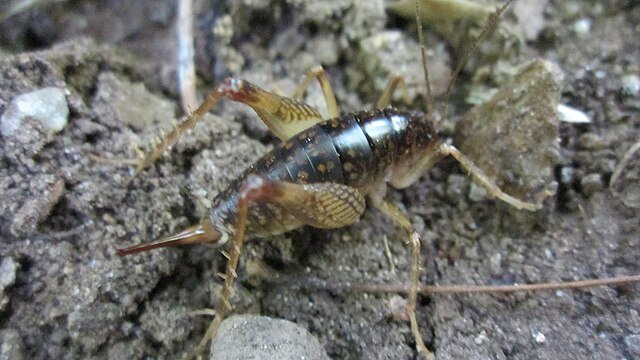
Snakefly
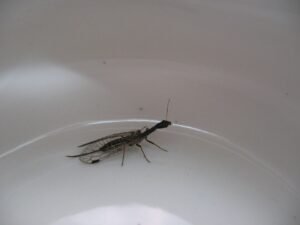
The Snakefly (order Raphidioptera) is one of the most fascinating beneficial insects found in forests, orchards, vineyards, gardens, and agricultural landscapes. Named for its unusually long neck, which gives it a snake-like appearance, the Snakefly is an efficient predator throughout both its larval and adult stages.
Snakeflies feed on aphids, caterpillars, insect eggs, mites, beetle larvae, and many other soft-bodied pests. Although they are rarely encountered due to their secretive habits, they play an important role in maintaining natural ecological balance and are valuable contributors to Integrated Pest Management (IPM).
What Is the Snakefly?
The Snakefly (order Raphidioptera) is an ancient group of predatory insects that has existed for more than 140 million years. Unlike lacewings or antlions, Snakeflies possess a distinctive elongated prothorax that allows the head to move freely while hunting. Both larvae and adults are beneficial predators that feed exclusively on other arthropods, making them valuable natural enemies of many agricultural pests.[1]
Identification
Adult Snakeflies usually measure between 10 and 25 mm in length. Their most distinctive feature is the long, narrow "neck" formed by the elongated prothorax.
They have two pairs of transparent, heavily veined wings that are held roof-like over the body when at rest. Their bodies are slender, usually brown or dark gray, with long antennae and large compound eyes.
Females possess a long, straight ovipositor used for laying eggs in bark crevices.
Larvae are elongated, flattened, and equipped with strong jaws that make them effective predators beneath tree bark and within crevices.
Biology & Ecology
Snakeflies undergo complete metamorphosis through egg, larva, pupa, and adult stages.
Females lay eggs in cracks within bark or other protected locations. The larvae develop slowly beneath bark, in leaf litter, or among decaying wood where they actively hunt small insects and their eggs.
The larval stage may last two to three years depending on the species and environmental conditions. Pupation occurs in protected sites before adults emerge during spring or early summer.
Both larvae and adults are active predators, although the larval stage accounts for most of the insect's lifespan.[2]
Global Distribution
Snakeflies are found mainly throughout temperate regions of the Northern Hemisphere.
- Europe
- North America
- Western Asia
- Central Asia
- Mountainous regions with cool climates
They are absent from tropical regions because their development requires a period of winter chilling.
Where Are Snakeflies Found?
These beneficial predators commonly occur in:
- Woodlands
- Forests
- Fruit orchards
- Vineyards
- Home gardens
- Hedgerows
- Natural meadows
- Tree plantations
Larvae spend most of their lives beneath loose bark, while adults are frequently found resting on tree trunks, shrubs, or flowering vegetation.
Benefits of Snakeflies
Snakeflies naturally suppress a wide variety of insect pests that attack trees, shrubs, fruit crops, and ornamental plants.
Common prey includes:
- Aphids
- Caterpillars
- Scale insects
- Spider mites
- Insect eggs
- Beetle larvae
- Bark beetles
- Leafhopper nymphs
Because both larvae and adults are active predators, Snakeflies provide natural pest suppression throughout multiple stages of their life cycle.
See our guides on Green Lacewings, Assassin Bugs, and Ground Beetles to learn about other beneficial predators that naturally protect crops.
How Snakeflies Help Control Crop Pests
Snakefly larvae spend years beneath bark and within tree crevices searching for insect eggs, bark beetles, aphids, and other hidden prey. Adults continue hunting after emergence by capturing insects on leaves, branches, and surrounding vegetation.
Their powerful jaws allow them to seize prey quickly before consuming it. This continuous predatory activity helps reduce pest populations in orchards, forests, vineyards, and ornamental landscapes.
Because they attack insects that live beneath bark as well as those found on foliage, Snakeflies contribute to pest control in areas that many other predators cannot easily reach.
In practice… orchard managers occasionally discover Snakefly larvae beneath loose bark while inspecting trees for bark beetles. Although these unusual insects may appear unfamiliar, they are often feeding on the very pests responsible for damaging the trees.
How to Encourage Snakeflies
Maintaining diverse habitats with mature trees and minimal pesticide use helps support healthy Snakefly populations.
- Preserve mature trees and natural woodland edges.
- Reduce unnecessary broad-spectrum insecticide applications.
- Maintain leaf litter and natural ground cover.
- Protect hedgerows and native vegetation.
- Encourage biodiversity throughout the landscape.
- Practice Integrated Pest Management.
A common mistake is… removing every piece of loose bark or dead wood from orchards and gardens. These natural features often provide important habitat for developing Snakefly larvae and many other beneficial predators.
Role in Integrated Pest Management (IPM)
Although rarely mass-reared commercially, Snakeflies contribute naturally to biological control in forests, orchards, and agricultural ecosystems.
- Natural suppression of aphids
- Control of bark beetles
- Predation of insect eggs
- Reduced pesticide dependence
- Support for biodiversity
- Long-term ecological balance
What most people don't realize is… Snakefly larvae spend far longer hunting pests than the adults do. While adult Snakeflies live only a few weeks, the larvae may spend several years beneath bark actively feeding on harmful insects before finally emerging.
Frequently Asked Questions
Are Snakeflies beneficial?
Yes. Both larvae and adults are beneficial predators that naturally control aphids, bark beetles, caterpillars, insect eggs, and many other pests.
Do Snakeflies damage plants?
No. They feed entirely on insects and other small arthropods rather than healthy plants.
What do Snakeflies eat?
They prey on aphids, caterpillars, bark beetles, scale insects, mites, insect eggs, and various small arthropods.
Can Snakeflies bite people?
Snakeflies are not aggressive toward humans. Although they can use their jaws defensively if handled, they pose no significant risk.
Why are they called Snakeflies?
Their long, flexible prothorax resembles a snake's neck, giving these insects their common name.
How can I encourage Snakeflies?
Maintain mature trees, preserve natural habitats, reduce insecticide use, and encourage biodiversity throughout gardens, orchards, and wooded landscapes.
Final Thoughts
Snakeflies are among the most unusual and ancient beneficial insects still found today. By feeding on aphids, bark beetles, insect eggs, caterpillars, and other destructive pests throughout both their larval and adult stages, they contribute significantly to natural pest control. Protecting Snakeflies through habitat conservation and Integrated Pest Management supports healthier forests, orchards, gardens, and sustainable agriculture.
Learn more about Agricultural & Outdoor Pests
Disclaimer
This article is for informational purposes only. Food safety (HACCP) and pest control requirements vary by country, authority, and type of food business. For legal compliance and audit readiness, always consult a qualified HACCP professional and a licensed pest control operator in your area.
All pest control measures must use approved products and be applied strictly according to the product label, as required by law in most jurisdictions (including the EU, UK, and USA). Improper use of pesticides, lack of documentation, or absence of a structured pest monitoring program may lead to non-compliance, fines, or business closure.
A compliant system must include documented procedures, monitoring records, corrective actions, and verification. Pest control is not optional—it is a core prerequisite program under HACCP and must be properly implemented, recorded, and reviewed.
Author Bio
BSc Agronomist & Certified Pest Control Expert
Scientific Director – Advance Services (Athens, Greece)
Licensed Pest Control Business – Ministry of Rural Development & Food (GR)