Tawny Crazy Ants: Identification, Biology, Risks, and Control
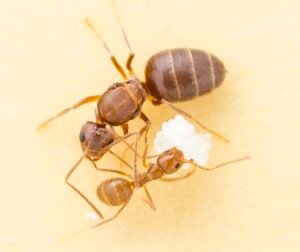 The Tawny crazy ants (Nylanderia fulva), also known in some regions as the raspberry crazy ant, is an invasive insect that has caused major disruption across parts of the Americas. This species is notorious for forming supercolonies, displacing native ants, and creating problems for agriculture, households, and electrical systems. Its name “crazy” refers to its frantic, erratic movement when disturbed.
Unlike more familiar household pests such as the Argentine ant (Linepithema humile) or the red imported fire ant (Solenopsis invicta), tawny crazy ants display unique biological traits that make them difficult to manage. They do not respond well to common baits and spread in unusual ways, often hitching rides in human goods. Understanding their biology, risks, and control strategies is key for anyone facing infestations.
Identification
Correct identification of Nylanderia fulva is critical. Misidentification with other small invasive ants like the ghost ant (Tapinoma melanocephalum) or the little fire ant (Wasmannia auropunctata) often leads to ineffective treatments.
-
Size: Workers are about 2.0–2.5 mm long.
-
Color: Uniformly reddish-brown to tawny, sometimes lighter than other Nylanderia species.
-
Body features: One-segmented petiole, no spines on the thorax, antennae with 12 segments and no club.
-
Movement: Erratic, fast, and seemingly disorganized—hence the name “crazy ant.”
-
Smell: When crushed, they release a sharp, unpleasant odor, unlike the coconut-like smell of some other ants.
Colonies are often found in moist, shaded areas: under leaf litter, stones, logs, and within mulch. In urban environments, nests occur near foundations, potted plants, and electrical equipment.
Biology and Ecology
The biology of Nylanderia fulva explains why infestations spread so aggressively.
-
Colony structure: Supercolonies with multiple queens. Populations can reach into the billions across large areas.
-
Reproduction: Queens reproduce continuously, and colony budding (where part of the colony moves to establish a new nest) is frequent.
-
Feeding habits: Omnivorous diet—feeds on insects, honeydew from aphids and scale insects, plant secretions, and household food waste.
-
Competition: Outcompetes other invasive ants like Solenopsis invicta, often leading to dramatic ecological shifts.
-
Adaptations: Resistant to fire ant venom; workers cover themselves with formic acid, neutralizing the alkaloids of fire ants.
-
Behavior: Workers do not sting, but they bite and spray formic acid, causing irritation.
These ants alter ecosystems by reducing native arthropod diversity. They also disrupt food chains, impacting predators like spiders, lizards, and even ground-foraging birds that rely on insects as prey.
Global Distribution
Native to South America, Nylanderia fulva has spread rapidly.
-
South America: Established across Brazil, Colombia, Argentina, and Venezuela.
-
North America: First reported in Texas in the early 2000s; spread to Louisiana, Mississippi, and Florida.
-
Caribbean: Detected in multiple islands with severe ecological impact.
-
Other regions: Cases of interception in Europe and Asia due to trade, but not widespread establishment yet.
Their spread often follows human commerce. Infestations commonly begin near ports, greenhouses, and industrial facilities where goods are imported.
Risks and Damage
Ecological damage
-
Displacement of native ants and insects.
-
Declines in arthropod predators and pollinators.
-
Indirect effects on plants that depend on pollinators or seed-dispersing ants.
Agricultural impact
-
Promote populations of aphids and scale insects by protecting them for honeydew.
-
Damage to crops including citrus, sugarcane, and ornamentals.
-
Increased pesticide use by farmers, raising costs.
Household and structural damage
-
Massive infestations inside homes and yards.
-
Bites cause discomfort but are not dangerous to humans.
-
Contaminate food and attract secondary pests like cockroaches.
Electrical equipment
Perhaps their most notorious trait:
-
Colonies invade electrical boxes, computers, and air-conditioning units.
-
Ants chew on insulation and swarm circuits, causing shorts and malfunctions.
-
Reports of millions in damages across Texas and Florida.
Signs of Infestation
Spotting tawny crazy ants early is important.
-
Erratic trails: Unlike linear trails of Argentine ants, these ants move chaotically.
-
Large numbers: Massive swarms around foundations, potted plants, or mulch.
-
Electrical issues: Repeated shorts or malfunctioning devices without visible cause.
-
Outdoor spread: Heavy presence under logs, leaf litter, or garden debris.
-
Seasonality: Peak activity in warm, humid months, but they survive mild winters.
Control Methods
Chemical control
-
Residual sprays: Contact insecticides may provide short-term relief but fail against supercolonies.
-
Bait challenges: Most traditional ant baits (sugar or protein-based) are poorly accepted by N. fulva.
-
Targeted products: Some insecticides containing fipronil or indoxacarb have limited success.
Cultural and physical control
-
Remove debris, leaf litter, and piles of wood or mulch.
-
Seal electrical boxes and use protective coatings where feasible.
-
Maintain dry conditions; avoid excessive irrigation.
Biological control
-
No proven large-scale biological control agent yet.
-
Research explores natural pathogens and parasites, but field success is limited.
Advanced Approaches
Professional pest management uses integrated pest management (IPM) strategies:
-
Barrier treatments: Creating treated zones around properties.
-
Nest flooding: Applying targeted liquid insecticides directly into nesting sites.
-
Combination baits: Alternating carbohydrate and protein baits, depending on colony nutritional needs.
-
Electrical protection: Applying insecticide dusts or mechanical barriers around sensitive equipment.
-
Research-based strategies: Studies suggest that rotation of active ingredients prevents tolerance buildup.
Future directions may involve microbial control agents, RNA-based biopesticides, or pheromone disruption to reduce colony cohesion.
Cultural and Historical Context
Though invasive ants are often discussed only scientifically, the case of Nylanderia fulva has cultural weight in the regions affected:
-
In Texas, the species was nicknamed the “raspberry crazy ant” after Tom Raspberry, a pest management professional who first highlighted its spread in the early 2000s.
-
Communities in the southern United States have faced not just financial losses but also lifestyle changes, as yards and homes became difficult to inhabit during heavy infestations.
-
In rural South America, farmers have adapted crop protection strategies specifically against these ants, reshaping agricultural practices.
This reflects how invasive species do not just alter ecosystems—they also reshape human culture and economy.
FAQ Section
Q1: Are tawny crazy ants dangerous to humans?
They do not sting. They bite and spray formic acid, causing mild irritation, but no serious medical risks.
Q2: How do tawny crazy ants spread to new areas?
Mostly through human movement of soil, potted plants, mulch, and electrical equipment. Natural spread is slower than human-assisted spread.
Q3: Why are baits not effective against Nylanderia fulva?
They shift feeding preferences quickly. Colonies may ignore standard sugar or protein baits, making consistent control difficult.
Q4: How do tawny crazy ants affect native wildlife?
They reduce populations of insects, spiders, and even small vertebrates by dominating food resources and preying on them. This impacts food chains for birds and reptiles.
Q5: What makes them resistant to fire ants?
They coat themselves with formic acid, detoxifying the venom of Solenopsis invicta. This adaptation allows them to displace fire ant colonies.
Q6: Can DIY treatments work against these ants?
Small, localized infestations may be reduced with residual sprays and sanitation, but supercolonies typically require professional intervention.
Q7: Do tawny crazy ants die in cold weather?
They survive mild winters in the southern United States. Severe freezing limits their range, but climate change may expand it.
Q8: What crops are most at risk from tawny crazy ants?
Citrus, sugarcane, and ornamental plants, mainly due to their protection of sap-feeding pests like aphids and scale insects.
Final Thoughts
The Tawny crazy ant (Nylanderia fulva) represents one of the most disruptive invasive ants of recent decades. Its erratic foraging, supercolony structure, and ability to neutralize fire ant venom make it a unique ecological competitor. While not dangerous to humans in the same way as stinging ants, the economic, agricultural, and ecological impact is significant.
Control requires persistence, integration of multiple methods, and professional expertise. Homeowners may achieve temporary relief, but large infestations demand long-term strategies, combining habitat modification, chemical barriers, and ongoing monitoring. Research into biological controls and pheromone-based technologies offers some hope for sustainable solutions in the future.
Disclaimer
This article is for informational purposes only. Pest control laws and approved chemicals vary by country. For best results and legal safety, we strongly recommend contacting a licensed pest control professional in your local area. Always make sure that the pest control technician is properly certified or licensed, depending on your country’s regulations. It’s important to confirm that they only use approved products and apply them exactly as instructed on the product label. In most places in Europe, UK, or USA, following label directions is not just best practice—it’s the law.
Author Bio
Nasos Iliopoulos
BSc Agronomist & Certified Pest Control Expert
Scientific Director – Advance Services (Athens, Greece)
Licensed Pest Control Business – Ministry of Rural Development & Food (GR)
References
-
Wikipedia - Rasberry crazy ant
-
Texas University - Tawny (Rasberry) Crazy Ant, Nylanderia fulva