Tomato Hornworms in Kitchens: Why They Appear Indoors and How to Remove Them
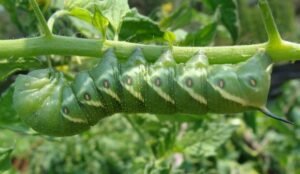 Finding a large green caterpillar crawling across your kitchen floor can be alarming. In many cases, it turns out to be a tomato hornworm (Manduca quinquemaculata)—a pest normally found outdoors on tomato plants, peppers, eggplants, or potatoes.
These larvae are famous for their size and distinctive horn-like spike on the tail. While they belong outside in the garden, they sometimes end up indoors, especially during summer harvest season. They are not dangerous to humans but can be unpleasant to find near food or storage areas.
Identification
Tomato hornworms are the larval stage of the five-spotted hawk moth.
-
Size: Up to 10 cm (4 inches) long.
-
Color: Bright green with white diagonal stripes along the body.
-
Horn: A curved, red or black spike at the rear end.
-
Eggs: Round, smooth, greenish-yellow, laid singly on the underside of tomato leaves.
They are often confused with the tobacco hornworm (Manduca sexta). The main difference:
-
Tomato hornworm has white V-shaped marks and a black horn.
-
Tobacco hornworm has white diagonal lines and a red horn.
Adult moths (called hawk moths or sphinx moths) are large, gray-brown, and fly at night, sometimes attracted by indoor lights.
Biology & Ecology
 Tomato hornworms belong to the Sphingidae family.
-
Life cycle: Egg → larva (hornworm) → pupa → adult moth.
-
Eggs hatch in 5–7 days.
-
The larval stage lasts 3–4 weeks, followed by pupation in the soil.
-
Adults emerge after 2–3 weeks or overwinter as pupae.
They feed mainly on plants of the nightshade family (Solanaceae).
Each female moth can lay 200–300 eggs, leading to sudden infestations in gardens during warm months.
When food plants are removed or harvested, larvae may crawl indoors seeking shelter or soil for pupation—this is how they end up in kitchens, garages, or basements near garden entrances.
Global Distribution
Tomato hornworms are native to North and Central America, but similar species exist worldwide.
-
USA & Canada: Common in home gardens and greenhouses.
-
Europe (Southern & Mediterranean): Rare but found in greenhouses and imported vegetables.
-
Australia & Asia: Close relatives cause similar damage on tomatoes and peppers.
Global trade in fresh produce has helped spread eggs or larvae unnoticed in boxes or crates of tomatoes.
Risks / Damage
In gardens:
-
Hornworms strip tomato plants of leaves and fruit.
-
Heavy infestations can defoliate entire plants overnight.
In homes:
-
They cause no structural or health damage, but are an unpleasant sight in kitchens or pantries.
-
When crawling indoors, they may leave small droppings (frass) or hide under furniture.
-
They are harmless to humans and pets, but may startle people due to their size.
Signs of Infestation
-
Defoliated tomato or pepper plants outdoors.
-
Large green caterpillars on plants or walls near the garden.
-
Dark frass (droppings) on countertops, near doors, or floors.
-
Empty pupal shells near windows or baseboards.
Sometimes a homeowner finds only one or two caterpillars inside, but this often means more are nearby outdoors.
Control & Prevention Methods
1. Outdoor Control
-
Inspect tomato plants daily for hornworms or eggs under leaves.
-
Remove caterpillars by hand and destroy them.
-
Use Bacillus thuringiensis (Bt) or spinosad sprays for natural control.
-
Encourage predators such as parasitic wasps (Cotesia congregata)—tiny white cocoons on hornworms indicate parasitization.
-
Till soil at the end of the season to destroy pupae.
2. Indoor Prevention
-
Seal cracks near doors, windows, or utility lines facing the garden.
-
Store fresh produce in sealed containers.
-
Sweep and vacuum regularly around doors leading to patios or gardens.
-
Use sticky traps near entrances if moths are flying indoors.
3. When Hornworms Are Found Indoors
-
Pick them up carefully with gloves or a paper towel.
-
Release them outdoors or dispose of them safely.
-
Check all indoor plants and vegetable boxes for additional larvae.
Advanced / Professional Approaches
In commercial environments—such as greenhouses, tomato packaging areas, or food processing sites—professionals use Integrated Pest Management (IPM) tools like:
-
Pheromone traps to monitor adult moths.
-
UV light traps in indoor areas.
-
Targeted biological sprays (Bt, IGRs) on crops.
-
Strict sanitation protocols for produce crates and transport areas.
Thermal disinfestation or controlled-atmosphere fumigation may be required in large-scale tomato storage facilities when contamination is suspected.
Cultural or Historical Context
Tomato hornworms have been known to farmers for centuries. In many regions, they were mistakenly believed to “sting” because of the horn on their tail—a myth that persists today.
In reality, they are completely non-aggressive and rely on camouflage and stillness to avoid predators.
Their adult form, the hawk moth, plays an important role as a pollinator, showing that even the most destructive garden pests have ecological value when managed correctly.
FAQ
Are tomato hornworms harmful to humans?
No, tomato hornworms don’t bite or sting, and their horn is harmless.
Why do I find tomato hornworms in my kitchen?
They often crawl inside seeking soil to pupate after feeding on outdoor plants.
Do tomato hornworms turn into moths?
Yes. The adult stage is a large brown hawk moth that flies at night.
How to get rid of tomato hornworms naturally?
Use Bt or hand-pick them from plants. Indoors, remove by hand and seal entry points.
Can tomato hornworms infest stored food?
No. They feed only on living plants, not on dry or stored products.
How to tell tomato hornworm vs tobacco hornworm?
Tomato hornworm has V-shaped white markings and a black horn; tobacco hornworm has diagonal lines and a red horn.
Final Thoughts
Tomato hornworms are impressive in size but not a real danger indoors. When they appear in kitchens, they are usually just wandering larvae that left the garden after eating their fill. They do not feed on food or damage furniture. The key to prevention is always garden monitoring and sanitation—remove eggs, larvae, and pupae before they mature.
If you grow tomatoes or peppers, inspect plants often, especially during warm weather. Outdoors, use Bt or hand removal. Indoors, simply collect and remove the intruder, clean the area, and close garden-facing gaps. In commercial or packaging facilities, monitoring traps and strict hygiene are the foundation of control.
Tomato hornworms remind us that every pest problem starts outdoors. A few minutes of inspection each week can stop them from ever reaching your kitchen.
Disclaimer
This article is for informational purposes only. Pest control laws and approved chemicals vary by country. For best results and legal safety, we strongly recommend contacting a licensed pest control professional in your local area. Always make sure that the pest control technician is properly certified or licensed, depending on your country’s regulations. It’s important to confirm that they only use approved products and apply them exactly as instructed on the product label. In most places in Europe, the UK, or the USA, following label directions is not just best practice—it’s the law.
Learn more about other agricultural and outdoor pests that affect gardens and crops.
Nasos Iliopoulos
BSc Agronomist & Certified Pest Control Expert
Scientific Director – Advance Services (Athens, Greece)
Licensed Pest Control Business – Ministry of Rural Development & Food (GR)
References
-
University of Minnesota Extension – Tomato Hornworms in Home Gardens
-
Utah State University – Tomato Hornworm and Tobacco Hornworm