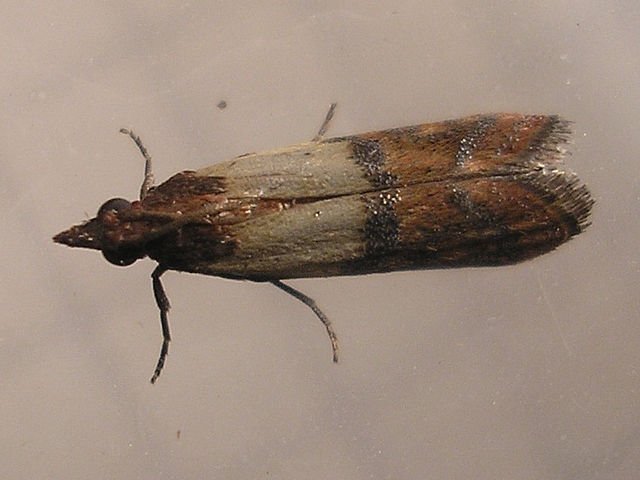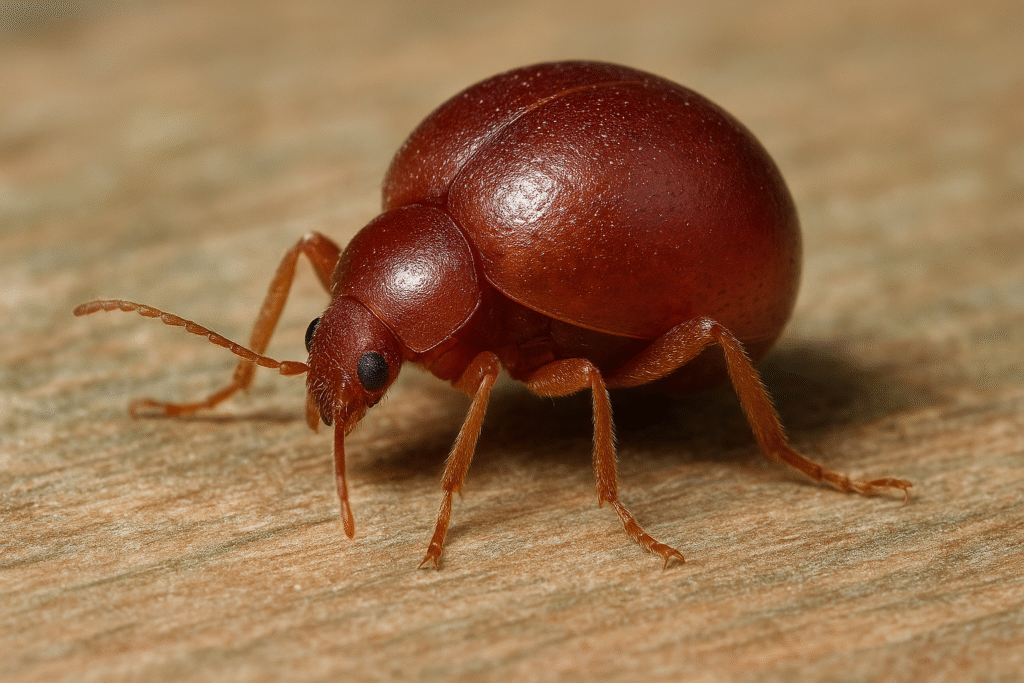
Warehouse Beetle (Trogoderma variabile) – Complete Identification, Control, and Prevention Guide
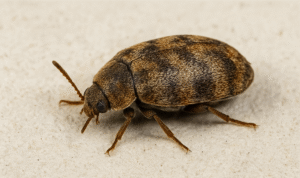 In my career inspecting food factories, warehouses, and retail shops, I’ve often seen cases where tiny brown beetles infest dry stored products. One of the most common culprits is the warehouse beetle (Trogoderma variabile) — a serious stored-product pest found worldwide. Homeowners sometimes mistake it for carpet beetles, but warehouse beetles do not eat carpets but our food and are more destructive, targeting grains, seeds, flour, pasta, nuts, spices, and even pet food.
Knowing where they lay their warehouse beetle eggs, and how to identify larvae, and rest infestation signs is key to stopping damage early. These insects can survive in both industrial warehouses and domestic pantries, spreading fast through contaminated packaging.
Identification
Adult warehouse beetles are small, oval beetles, about 2–4 mm long. Their body is dark brown with light brown or yellow scales forming irregular patterns. When seen under magnification, they resemble carpet beetles (Dermestidae family), but slightly darker and more uniform.
Key identification features:
-
Length: 2–4 mm
-
Color: brown or dark mottled pattern
-
Shape: oval, compact
-
Antennae: clubbed at the tip
-
Wings: short, not used for frequent flight indoors
The warehouse beetle larvae are elongated and covered with dense brown hairs. They are more dangerous than adults because they feed aggressively and contaminate products with shed hairs and fecal pellets. These hairs can cause allergic reactions in sensitive individuals.
Biology & Ecology
Trogoderma variabile thrives in warm, dry environments and infests stored grains, seeds, spices, dried meat, and processed foods. Females lay up to 100 warehouse beetle eggs, often directly inside packaging seams, cracks, or food dust.
-
Warehouse Beetle Eggs: Tiny, white, oval, and sticky; hatch within 6–10 days depending on temperature.
-
Larvae: Feed for 30–90 days, passing through multiple molts.
-
Pupae: Form in silken cocoons hidden in product debris.
-
Adults: Live for 4–8 weeks, during which they continue to spread infestation.
They can remain dormant for months in poor conditions, making them difficult to eliminate completely.
Global Distribution
The warehouse beetle is cosmopolitan. It originated in North America but now exists in Europe, Australia, Asia, and Africa through global trade. In the USA, it’s a major pest in grain storage and food-processing plants. In Europe, infestations are reported in bakeries, pet food factories, and dried fruit warehouses. Australia and Asia experience heavy infestations in tropical conditions, especially in poorly sealed containers or warehouses.
Risks & Damage
Warehouse beetles cause both economic and health-related damage:
-
Contaminate food with shed hairs, skins, and droppings
-
Trigger allergies or asthma-like symptoms in sensitive people
-
Damage seeds, grains, and dried foods by direct feeding
-
Ruin packaging and stored goods through boring holes
-
Spread across facilities via air ducts, conveyors, and infested raw materials
Are warehouse beetles harmful to humans?
They do not bite or sting, but contaminated products must be discarded. Inhaling shed larval hairs may cause irritation in workers in infested warehouses.
Signs of Infestation
Common indicators include:
-
Fine dust or powder near food packages
-
Shed larval skins and brown hairs
-
Adults crawling on window sills or near lights
-
Damaged packaging or grain clumps
-
Live larvae found inside cereals, nuts, or pet food
Use a flashlight and magnifier to check crevices, shelving joints, or underneath storage pallets.
Control & Prevention Methods
How to get rid of warehouse beetles:
-
Inspection: Identify and discard all infested products.
-
Cleaning: Vacuum cracks, shelves, and corners thoroughly.
-
Temperature treatment: Freeze infested items at −18°C for one week or heat at 60°C for 2 hours.
-
Sanitation: Remove dust, food residues, and old packaging materials.
-
Seal storage: Use airtight containers (metal, glass, or heavy plastic).
-
Reduce humidity: Keep below 50%, as larvae prefer slightly moist food.
-
Regular monitoring: Use warehouse beetle traps with pheromones to detect new activity.
Warehouse beetle traps are available commercially and contain attractants specific to Trogoderma variabile. They help track infestations early in both homes and food facilities.
Advanced / Professional Approaches
Professional pest control in industrial sites involves:
-
Integrated Pest Management (IPM): IPM is a method combining cleaning, monitoring, and exclusion.
-
Fumigation: Only by licensed technicians and under strict legal control.
-
Insect growth regulators (IGRs): To prevent larvae from maturing.
-
Residual insecticides: Applied to cracks and voids (never on food-contact surfaces).
-
Ongoing monitoring: Traps placed monthly to ensure no re-infestation.
Professionals also advise redesigning storage systems to avoid accumulation of dust and residues, which are major breeding points.
Cultural or Historical Context
Historically, Dermestid beetles like the warehouse beetle were used in museums to clean skeletons, since their larvae efficiently remove flesh. However, in the food industry, they represent one of the most persistent and damaging pests ever recorded in stored products.
FAQ
What do warehouse beetle eggs look like?
Warehouse beetle eggs look like tiny, oval, and white. Usually laid in cracks and holes on the wall or on food dust. Hard to see without magnification.
What do warehouse beetle larvae eat?
Dried grains, pasta, pet food, cereals, spices, and even dried meat or seeds.
Are warehouse beetles harmful to humans?
They don’t bite or sting, but they contaminate food and can cause allergies.
How to get rid of warehouse beetles naturally?
Freeze infested products, clean thoroughly, lower humidity, and use pheromone traps.
Do warehouse beetle traps work?
Yes. Pheromone traps attract males and help monitor infestations early.
Warehouse beetle vs carpet beetle — what’s the difference?
They look similar, but warehouse beetles prefer dry food and grain, while carpet beetles target fabrics and animal fibers.
Final Thoughts
The warehouse beetle (Trogoderma variabile) is one of the most persistent stored-product pests worldwide and one of the most common pantry beetles. It can survive for months without food, resist low humidity, and spread quickly through contaminated shipments. Whether you manage a food factory, warehouse, or home pantry, the same rule applies: cleanliness, inspection, and prevention are the only reliable defenses.
Professional pest management should be considered when infestations repeat or affect large stock volumes. Combining pheromone monitoring, temperature treatment, and hygiene protocols ensures long-term protection.
Learn more about other Stored Product Pests
Disclaimer
This article is for informational purposes only. Pest control laws and approved chemicals vary by country. For best results and legal safety, we strongly recommend contacting a licensed pest control professional in your local area. Always make sure that the pest control technician is properly certified or licensed, depending on your country’s regulations. It’s important to confirm that they only use approved products and apply them exactly as instructed on the product label. In most places in Europe, the UK, or the USA, following label directions is not just best practice—it’s the law.
Nasos Iliopoulos
BSc Agronomist & Certified Pest Control Expert
Scientific Director – Advance Services (Athens, Greece)
Licensed Pest Control Business – Ministry of Rural Development & Food (GR)
References
-
Iova State University - Warehouse Beetle and Cabinet Beetle
-
Utah State University - Warehouse Beetle