
Why Yellowjackets Appear in Urban Areas: A Practical Guide from Pest Control Experience
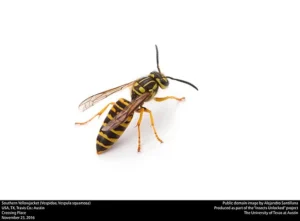 Many people believe that yellowjackets shouldn't be found in cities. Recently, a client reached out, expressing her confusion about seeing yellowjackets in her balcony, saying, “I want wasp control, but I don’t understand why I see yellowjackets in the city. This is crazy.” We spoke for about five minutes as she struggled to accept that flying insects could thrive in an urban setting, thinking of the city as entirely separate from nature. However, a modern city is still part of the natural world. We often overlook this because we focus on buildings, cars, and roads. Yet, nestled among these structures are trees, parks, small gardens, waste areas, food sources, and water—exactly what yellowjackets, or Vespula spp., require. Since these insects can fly hundreds of meters, it’s easy for them to show up at your window, balcony, or outdoor café area. This article will clarify why yellowjackets are present in cities, how to recognise them, their behaviour, and what steps to take if you encounter an infestation.
Identification
Yellowjackets are part of the Vespidae family. In Europe, the common species include Vespula germanica (German yellowjacket) and Vespula vulgaris (Common yellowjacket). In the USA, Vespula pensylvanica and Vespula maculifrons are also prevalent. Key identification features include:
- Black and yellow striped abdomen,
- quick, aggressive flight, and
- strong attraction to protein and sugary foods.
- nests are often hidden in wall cavities, ground holes, sheds, or attics.
People often confuse yellowjackets with related insects such as:
- Paper wasps (Polistes spp.) have slender bodies and open umbrella-shaped nests.
- Hornets (Vespa crabro) – larger with reddish-brown patterns
- Honey bees (Apis mellifera) – fuzzy bodies and gentle behaviour
- Bumble bees (Bombus spp.) – round, hairy bodies with slow flight
These related species may warrant further discussion in the future, especially paper wasps, hornets, and honey bees, as they are commonly mistaken for yellowjackets.
Biology & Ecology
Yellowjackets are social wasps. Each colony begins with a single queen in the spring, and worker wasps emerge in early summer, rapidly increasing in number. By late summer and early autumn, colonies can contain thousands of individuals.
They require:
- Shelter for nesting
- A reliable food source
- Water
Warm temperatures Urban areas provide all these needs, including: -
- Wall voids, roof gaps, and storage rooms for nesting
- Garbage bins with protein scraps -
- Cafés and bakeries with sugary waste
- Irrigation systems, fountains, and leaking pipes for water
- Mild temperatures due to urban heat islands
In essence, cities unintentionally create ideal habitats for yellowjackets.
Global Distribution and Urban Presence
Yellowjackets inhabit various environments worldwide:
Europe: Cities like Athens, Madrid, Rome, and Lisbon have significant populations due to warm summers, food availability, and green spaces.
USA & Canada: Urban yellowjackets are a significant issue in California, New York, Texas, Ontario, and British Columbia. In the western USA, Vespula pensylvanica is particularly notorious in parks and picnic areas.
Australia & New Zealand: Yellowjackets are invasive in certain regions and spread quickly through suburban areas.
Asia: In Japan and South Korea, urban wasps coexist with Asian hornets and other species, thriving in dense cities with parks that provide stable habitats. Wherever people reside, yellowjackets are likely to follow.
Why You See Yellowjackets in the City
This relates directly to a recent conversation I had with a client who expressed disbelief: “This is impossible. Why would yellowjackets be in the city? I never see nature here.” However, cities are not just sterile environments; they function as ecosystems. Even if you don’t notice nature, yellowjackets certainly do.
Key reasons include:
- Flight Ability: They can easily move from forests, hills, or small green spaces into the city.
- Food Sources: Cities provide ample food options, from trash bins to outdoor dining.
- Green Spaces: Urban parks, tree lines, and gardens offer habitats.
- Shelter: Modern buildings have numerous cracks and crevices for nesting.
- Climate: Urban heat islands allow colonies to thrive longer into the season.
In Athens, for instance, you are surrounded by mountains, pine forests, and parks. A yellowjacket can travel from a forested area to your balcony in under two minutes. Just because you haven’t seen them doesn’t mean they aren’t there; it simply means you haven’t noticed them. This misunderstanding is common among those who have lost touch with nature. Cities create a false sense that humans exist outside of ecosystems, but insects don’t adhere to that notion; they go where the resources are.
Risks and Damage
While yellowjackets don’t cause structural damage like termites, they pose several risks:
- Stings: They can sting aggressively when disturbed, and multiple stings can occur.
- Food Contamination: They may land on food in restaurants and cafes.
- Nuisance: They can make outdoor seating areas unusable.
- Allergic Reactions: A single sting can be dangerous for those with allergies.
- Aggressive Defense: Disturbing a nest can provoke swarm attacks.