Harlequin Bug: Identification, Damage, and the Best Ways to Protect Brassica Crops
The Harlequin Bug (Murgantia histrionica) is one of the most recognizable and destructive pests of vegetables belonging to the cabbage family. Its striking black, orange, and red markings make it easy to identify, but this colorful appearance should not be mistaken for harmlessness. Both adults and nymphs feed by piercing plant tissues and sucking sap, weakening plants and reducing crop quality.
Although the Harlequin Bug is most commonly associated with cabbage, it also attacks broccoli, cauliflower, kale, Brussels sprouts, mustard greens, radishes, turnips, and several ornamental plants. Early detection is essential because populations can increase rapidly during warm weather.
What is the Harlequin Bug?
The Harlequin Bug is a true bug belonging to the family Pentatomidae, commonly known as stink bugs. Native to Central America and Mexico, it has spread throughout much of North America where it has become one of the most important pests of cruciferous vegetables.
Unlike beneficial predatory bugs, Harlequin Bugs feed exclusively on plant sap using piercing-sucking mouthparts, causing direct damage to leaves, stems, and occasionally flower stalks.
Identification
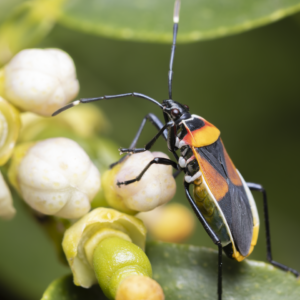
Adult Harlequin Bugs measure approximately 8–10 mm long and have a distinctive shield-shaped body. Their glossy black coloration is decorated with bright orange, yellow, or reddish markings arranged in unique geometric patterns.
Eggs are barrel-shaped with alternating black and white bands, resembling tiny decorative barrels. They are usually laid in neat double rows on the underside of leaves.
Nymphs hatch with orange or reddish bodies and gradually darken as they pass through several developmental stages before becoming adults.
Biology & Ecology
Adult Harlequin Bugs overwinter beneath crop debris, weeds, leaf litter, and other sheltered locations. As temperatures rise during spring, they emerge and begin feeding on cruciferous plants.
Females lay multiple clusters of eggs throughout the growing season. Nymphs begin feeding immediately after hatching and remain on host plants until reaching adulthood.
Depending on local climate, two to four generations may develop each year. Warm temperatures and abundant host plants allow populations to increase rapidly.
In practice, technicians often find Harlequin Bugs concentrated on the sunniest areas of cabbage and kale plants. Because they tend to gather in groups, early infestations are usually easier to detect than many other sap-feeding insects.
Global Distribution
The Harlequin Bug is widespread throughout the southern United States and continues expanding into more temperate regions during warm growing seasons. It is especially common wherever brassica vegetables are cultivated.
Although primarily established in North America, isolated populations have occasionally been reported elsewhere through the movement of infested plant material.
Risks and Crop Damage
Harlequin Bugs inject saliva into plant tissues while feeding, causing white or yellow stippling, wilting, browning, and eventual tissue death.
Heavy infestations weaken plants, reduce photosynthesis, stunt growth, and lower both yield and market quality. Young seedlings may die when feeding pressure is severe.
Repeated feeding also increases plant stress, making crops less able to tolerate drought and other environmental challenges.
Signs of Harlequin Bug Infestation
- Clusters of black-and-white barrel-shaped eggs.
- Bright orange or red nymphs feeding together.
- Colorful shield-shaped adult bugs.
- Yellow or white feeding spots on leaves.
- Leaf wilting and browning.
- Stunted plant growth.
- Reduced vegetable quality and yield.
A common mistake is waiting until plants begin to wilt before inspecting for Harlequin Bugs. By that stage, several generations may already be feeding, making control considerably more difficult.
Control and Prevention Methods
Regular Monitoring
Inspect brassica crops weekly, paying close attention to leaf undersides where eggs are commonly deposited.
Hand Removal
Removing egg masses, nymphs, and adults by hand can significantly reduce populations in home gardens.
Crop Sanitation
Destroy crop residues after harvest to eliminate overwintering sites and reduce spring infestations.
Crop Rotation
Rotating brassica crops helps reduce local populations by interrupting the pest's life cycle.
Trap Crops
Some growers successfully use mustard or other preferred brassicas as trap crops to concentrate beetles before targeted removal.
Chemical Control
Where populations exceed economic thresholds, approved insecticides may be applied according to local regulations and product labels. Treatments are generally most effective against young nymphs rather than mature adults.
See our guide on Cabbage Aphids for another common pest that frequently affects brassica crops.
Advanced Professional Approaches
Commercial vegetable producers combine field scouting, sanitation, trap cropping, biological conservation, and selective insecticide applications within integrated pest management programs. Monitoring egg masses often provides the earliest warning before damaging populations become established.
What most people don't realize is that Harlequin Bugs are much easier to control during the egg and young nymph stages. Once adults become abundant, repeated treatments are often required because of their mobility and continued egg laying.
Frequently Asked Questions
What plants do Harlequin Bugs attack?
They mainly attack cabbage, broccoli, cauliflower, kale, Brussels sprouts, mustard greens, radishes, turnips, and other cruciferous vegetables.
Are Harlequin Bugs harmful to humans?
No. They do not bite people or transmit diseases to humans.
Can Harlequin Bugs kill plants?
Heavy infestations may kill young seedlings and seriously weaken mature plants through continuous sap feeding.
Where are the eggs laid?
Eggs are deposited in neat clusters on the underside of leaves.
What is the best treatment for Harlequin Bugs?
Early monitoring, egg removal, crop sanitation, rotation, trap crops, and targeted insecticide applications when necessary provide the most effective control.
When are Harlequin Bugs most active?
They are most active during warm spring, summer, and early autumn when host plants are abundant.
Final Thoughts
The Harlequin Bug is a colorful but highly destructive pest capable of causing serious losses in brassica crops. Because both adults and nymphs feed continuously, early monitoring and prompt action remain the most effective strategies for protecting vegetables. Integrated pest management that combines sanitation, scouting, cultural practices, and selective treatments offers reliable long-term control while minimizing unnecessary pesticide use.
Learn more about Agricultural & Outdoor Pests
Disclaimer
This article is for informational purposes only. Food safety (HACCP) and pest control requirements vary by country, authority, and type of food business. For legal compliance and audit readiness, always consult a qualified HACCP professional and a licensed pest control operator in your area.
All pest control measures must use approved products and be applied strictly according to the product label, as required by law in most jurisdictions (including the EU, UK, and USA). Improper use of pesticides, lack of documentation, or absence of a structured pest monitoring program may lead to non-compliance, fines, or business closure.
A compliant system must include documented procedures, monitoring records, corrective actions, and verification. Pest control is not optional—it is a core prerequisite program under HACCP and must be properly implemented, recorded, and reviewed.
Author Bio
BSc Agronomist & Certified Pest Control Expert
Scientific Director – Advance Services (Athens, Greece)
Licensed Pest Control Business – Ministry of Rural Development & Food (GR)