Chalcid Wasps
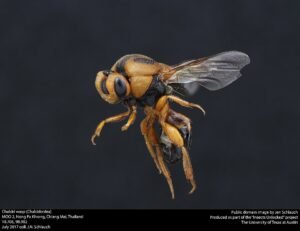
Moo 2, Nong Pa Khrang, Chiang Mai, Thailand,
18.706, 98.982
July 2017, coll. J. N. Schlauch
The Chalcid Wasps (superfamily Chalcidoidea) are among the smallest yet most effective beneficial insects found in gardens, orchards, agricultural fields, forests, and natural ecosystems. Although they are rarely noticed because of their tiny size, these parasitoid wasps play a vital role in controlling many destructive insect pests naturally.
Thousands of Chalcid Wasp species parasitize aphids, whiteflies, scale insects, caterpillars, beetle larvae, leaf miners, and insect eggs. Their remarkable diversity and specialized life cycles make them one of the most important groups of beneficial insects used in Integrated Pest Management (IPM) and biological control programs around the world.
What Are Chalcid Wasps?
The Chalcid Wasps (superfamily Chalcidoidea) comprise more than 22,000 described species distributed among several families, including Aphelinidae, Encyrtidae, Eulophidae, Pteromalidae, and Trichogrammatidae. Most species are parasitoids, meaning their larvae develop on or inside other insects, eventually killing their hosts. Others attack insect eggs, preventing pest outbreaks before they begin.[1]
Identification
Adult Chalcid Wasps are extremely small, usually measuring between 0.5 and 5 mm in length. Most species have slender black, brown, metallic green, or bluish bodies with transparent wings and elbowed antennae.
Females possess a fine ovipositor used for laying eggs inside or on suitable insect hosts. Unlike social wasps, they do not sting people or defend nests.
Because of their minute size, they often resemble tiny flying gnats and are easily overlooked in gardens and crop fields.
The immature stages remain hidden inside host insects throughout most of their development.
Biology & Ecology
Chalcid Wasps undergo complete metamorphosis through egg, larva, pupa, and adult stages.
Adult females carefully search for suitable hosts using visual and chemical cues. Depending on the species, eggs are deposited inside insect eggs, larvae, pupae, or even adult insects.
The developing larvae consume the host gradually while completing their own development. Eventually, the mature parasitoid emerges, leaving behind an empty host shell.
Several generations may develop each year because many species complete their life cycle rapidly under favorable environmental conditions.[2]
Global Distribution
Chalcid Wasps occur worldwide and are found on every continent except Antarctica.
- North America
- Europe
- Asia
- South America
- Africa
- Australia
They inhabit virtually every terrestrial ecosystem where insect hosts are present.
Where Are Chalcid Wasps Found?
These beneficial parasitoids are commonly found in:
- Vegetable gardens
- Fruit orchards
- Agricultural fields
- Greenhouses
- Flower gardens
- Forests
- Grasslands
- Natural habitats
Adults are often observed on flowers where they feed on nectar while searching nearby plants for suitable insect hosts.
Benefits of Chalcid Wasps
Chalcid Wasps naturally suppress a wide variety of agricultural pests, making them some of the most valuable biological control agents available.
Common hosts include:
- Whiteflies
- Aphids
- Scale insects
- Leaf miners
- Caterpillar eggs
- Moth eggs
- Beetle larvae
- Fruit fly pupae
- Various insect eggs and larvae
Some members of the superfamily, particularly Trichogramma species, are commercially released around the world to control moth and butterfly pests by parasitizing their eggs before they hatch.
See our guides on Braconid Wasps, Ichneumon Wasps, and Tachinid Flies to learn about other beneficial parasitoids that naturally protect crops.
How Chalcid Wasps Help Control Crop Pests
Female Chalcid Wasps spend much of their lives searching leaves, stems, bark, and developing fruit for insect hosts. Once a suitable host is found, they carefully deposit one or more eggs using their ovipositor.
The developing larvae eliminate the host from within, preventing future pest generations from developing. Egg parasitoids are especially valuable because they stop crop damage before larvae ever begin feeding.
Many Chalcid Wasps specialize in only one or a few pest species, making them highly effective biological control agents.
In practice… growers using biological control in greenhouses often never see Chalcid Wasps because of their tiny size. Instead, they notice declining whitefly or scale insect populations as these parasitoids quietly establish themselves and begin suppressing pests naturally.
How to Encourage Chalcid Wasps
Maintaining diverse flowering habitats helps support healthy Chalcid Wasp populations throughout the growing season.
- Plant nectar-producing flowers.
- Grow flowering herbs around crops.
- Reduce unnecessary insecticide applications.
- Protect natural vegetation.
- Encourage biodiversity in the landscape.
- Practice Integrated Pest Management.
A common mistake is… assuming biological control is not working simply because beneficial insects are difficult to see. Many Chalcid Wasps are only a few millimeters long but can dramatically reduce pest populations without ever attracting attention.
Role in Integrated Pest Management (IPM)
Chalcid Wasps are among the most widely used parasitoids in commercial biological control programs worldwide.
- Natural suppression of whiteflies
- Control of scale insects
- Parasitism of insect eggs
- Reduced pesticide dependence
- Improved biodiversity
- Sustainable crop protection
What most people don't realize is… some of the world's most successful biological control programs rely on Chalcid Wasps that are barely visible to the naked eye. Despite their tiny size, they can prevent entire generations of crop pests from ever developing.
Frequently Asked Questions
Are Chalcid Wasps beneficial?
Yes. They are among the most important beneficial parasitoids used in agriculture and biological pest control.
Do Chalcid Wasps sting people?
No. They are harmless to humans and use their ovipositor only for laying eggs inside insect hosts.
What pests do Chalcid Wasps control?
They parasitize whiteflies, aphids, scale insects, leaf miners, caterpillar eggs, beetle larvae, fruit flies, and many other agricultural pests.
Why are Chalcid Wasps important in agriculture?
They naturally suppress pest populations while reducing the need for chemical insecticides and supporting sustainable crop production.
Can Chalcid Wasps be used in greenhouses?
Yes. Several species are commercially used to control whiteflies, scale insects, and other greenhouse pests.
How can I attract Chalcid Wasps?
Grow flowering plants that provide nectar, encourage biodiversity, preserve natural habitats, and minimize unnecessary insecticide applications.
Final Thoughts
Chalcid Wasps are among the smallest but most valuable beneficial insects in agriculture. By parasitizing whiteflies, aphids, scale insects, caterpillars, beetles, and many other destructive pests, they help maintain healthier crops while reducing dependence on chemical insecticides. Encouraging these tiny parasitoids through habitat conservation and Integrated Pest Management supports sustainable agriculture and healthier ecosystems for the future.
Disclaimer
This article is for informational purposes only. Food safety (HACCP) and pest control requirements vary by country, authority, and type of food business. For legal compliance and audit readiness, always consult a qualified HACCP professional and a licensed pest control operator in your area.
All pest control measures must use approved products and be applied strictly according to the product label, as required by law in most jurisdictions (including the EU, UK, and USA). Improper use of pesticides, lack of documentation, or absence of a structured pest monitoring program may lead to non-compliance, fines, or business closure.
A compliant system must include documented procedures, monitoring records, corrective actions, and verification. Pest control is not optional—it is a core prerequisite program under HACCP and must be properly implemented, recorded, and reviewed.
Learn more about Agricultural & Outdoor Pests
Author Bio
BSc Agronomist & Certified Pest Control Expert
Scientific Director – Advance Services (Athens, Greece)
Licensed Pest Control Business – Ministry of Rural Development & Food (GR)