Drain Flies (Psychodidae): Identification, Habits & Effective Control
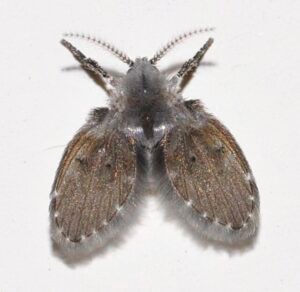 Among the many small insects that find their way indoors, few cause as much confusion as the drain fly (family Psychodidae), also called “moth flies” or “sewer gnats.” Their fuzzy wings and erratic flight make them resemble tiny moths, yet they are true flies. While they don’t bite like mosquitoes or chew on wood like powderpost beetles, they can still become a nuisance in bathrooms, kitchens, and basements.
The problem with drain flies is not just their presence—it’s what they represent. Their breeding grounds are typically inside drains, pipes, and areas of stagnant water. A sudden outbreak often points to underlying plumbing or sanitation issues. Left unchecked, populations can quickly multiply, covering sinks and walls.
This guide will walk through how to identify drain flies, understand their biology, recognize signs of infestation, and use both DIY and professional methods to eliminate them.
Identification
-
Size: Adults are tiny, usually 1.5–5 mm long.
-
Appearance:
-
Fuzzy, moth-like wings covered with hairs.
-
Gray or tan coloration.
-
Distinctive “fuzzy” outline in flight or at rest.
-
-
Flight: Weak fliers, often seen hopping or fluttering near drains.
-
Larvae: Slender, worm-like, living in the gelatinous film inside pipes and drains.
Field tip: Unlike fruit flies (which hover near fruit or vinegar), drain flies tend to stay close to sinks, toilets, and damp surfaces.
Biology and Lifecycle
-
Eggs: Females lay 30–200 eggs at a time inside moist organic matter, especially drain scum.
-
Larvae: Hatch within 48 hours, feeding on bacteria, fungi, and organic debris.
-
Pupae: Develop in the same habitat, often attached to gelatinous films.
-
Adults: Live about 1–3 weeks, spending most of their time resting on vertical surfaces.
The full lifecycle can complete in 1–3 weeks under warm, humid conditions, allowing populations to surge quickly.
Ecology and Distribution
-
Found worldwide, especially in urban areas.
-
Thrive indoors in kitchens, bathrooms, and basements.
-
Outdoors, they live in compost piles, sewage treatment plants, and septic tanks.
-
Particularly abundant in warm climates or during summer months.
Drain flies are not limited to homes—they are also a challenge for hotels, restaurants, hospitals, and food-processing facilities.
Risks and Concerns
-
Nuisance: Large swarms are unsightly, especially in bathrooms and kitchens.
-
Allergies: In rare cases, inhaling large numbers of dead flies may cause respiratory irritation.
-
Sanitation Indicator: Their presence signals buildup of organic matter in drains or plumbing.
-
Misidentification: Homeowners often confuse them with fungus gnats or fruit flies, delaying proper treatment.
Unlike cockroaches or carpet beetles, drain flies don’t cause direct structural or fabric damage. Their main impact is aesthetic and sanitary.
Signs of Infestation
-
Clouds of tiny, fuzzy flies near sinks, showers, or toilets.
-
Adult flies resting on walls, tiles, or mirrors.
-
Larvae visible in the drain film (rare, but possible under magnification).
-
Persistence: Flies reappear daily even after surface cleaning.
Household Control Strategies
-
Drain Cleaning
-
Scrub pipes with drain brushes to remove gelatinous buildup.
-
Use boiling water flushes to break down organic matter.
-
Enzyme-based cleaners are effective and safer than harsh chemicals.
-
-
Moisture Reduction
-
Repair leaks under sinks and behind toilets.
-
Ensure proper ventilation in bathrooms.
-
-
DIY Traps
-
Place clear tape sticky-side down over drains overnight; flies caught confirm breeding sites.
-
Apple cider vinegar traps may catch some adults, but won’t solve infestations.
-
-
Exclusion
-
Seal unused drains.
-
Keep floor drains covered with mesh.
-
Professional and Long-Term Control
-
Inspection: Pest control experts identify breeding sites (drains, sump pumps, septic systems).
-
Mechanical Removal: High-pressure flushing or steam cleaning of pipes.
-
Chemical Options: Foaming insecticides or biocides to reach deep into pipes.
-
IPM (Integrated Pest Management): Long-term prevention via sanitation and structural repairs.
In commercial settings (restaurants, hotels), regular drain maintenance contracts may be necessary.
Comparisons with Similar Pests
-
Fungus Gnats: Breed in soil of houseplants, not drains.
-
Fruit Flies: Attracted to ripe fruit, alcohol, and vinegar.
-
Mosquitoes: Require larger bodies of standing water, not slimy drains.
-
Silverfish: Thrive in dampness but do not fly; they feed on starch and paper.
-
Case-Bearing Clothes Moths: Found in closets, feeding on wool, not plumbing.
Understanding these differences is critical—misidentification often leads to failed treatments.
Final Thoughts
The drain fly (Psychodidae) is one of those pests that doesn’t destroy wood like the Old House Borer (Hylotrupes bajulus) or fabrics like the Case-Bearing Clothes Moth (Tinea pellionella), but it has its own way of creating frustration. Their sudden appearance in bathrooms or kitchens can be alarming, especially when dozens cluster on mirrors and tiles.
The good news is that drain flies are not dangerous in the same sense as cockroaches or disease-spreading mosquitoes. Instead, they serve as a biological red flag—warning of stagnant water, clogged drains, or moisture problems. When addressed properly, infestations can be eliminated relatively quickly.
For homeowners, the takeaway is simple: clean the drains, control the moisture, and eliminate breeding grounds. For businesses such as hotels, hospitals, and restaurants, regular maintenance and professional inspections are the most reliable long-term solution.
FAQs About Drain Flies
Q: Are drain flies dangerous?
A: Not directly. They don’t bite or spread diseases like mosquitoes, but their presence signals unsanitary conditions.
Q: How do I know if flies are coming from my drains?
A: Cover the drain with clear tape overnight. Flies stuck on the tape in the morning confirm activity below.
Q: Can I just use bleach to kill them?
A: Bleach kills some surface bacteria but doesn’t remove the organic sludge where larvae thrive. Mechanical cleaning or enzyme-based products are more effective.
Q: Why do they keep coming back after cleaning?
A: You likely missed a breeding site—check hidden drains, sump pumps, or unused floor drains.
Q: Do they live only indoors?
A: No. Outdoors they are common in compost piles, sewage plants, and septic systems. Indoors, they concentrate in bathrooms and kitchens.
For more on indoor pests like this one, see our full Urban & Indoor Pests guide.
Disclaimer
This article is for informational purposes only. Pest control laws and approved chemicals vary by country. For best results and legal safety, we strongly recommend contacting a licensed pest control professional in your local area. Always make sure that the pest control technician is properly certified or licensed, depending on your country’s regulations. It’s important to confirm that they only use approved products and apply them exactly as instructed on the product label. In most places in Europe, UK, or USA, following label directions is not just best practice—it’s the law.
Author
Nasos Iliopoulos
MSc Agronomist & Certified Pest Control Expert
Scientific Director, Advance Services (Athens, Greece)
Licensed Pest Control Business – Ministry of Rural Development & Food (GR)
References
-
Michigan state university – Moth flies Drain Flies
-
University of Centucky – Drain Flies or Moth Flies