Mealybugs – Identification, Damage, and Effective Control
 Mealybugs (Pseudococcidae family) are soft-bodied, sap-sucking insects that attack hundreds of plant species, from ornamental houseplants to fruit trees and greenhouse crops. Their cotton-like appearance makes them easy to spot, yet controlling them can be challenging once colonies establish.
While they rarely infest homes directly, they are a common indoor plant pest and a serious agricultural problem worldwide. Knowing how to identify, prevent, and control mealybugs helps protect both household plants and commercial crops.
Identification
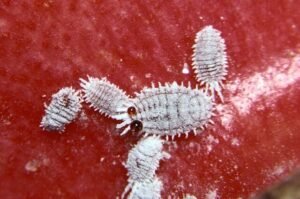
Adult mealybugs are white, oval-shaped, and covered with a powdery, waxy coating that gives them a cottony look. They are about 2–4 mm long and often found in clusters on stems, leaf joints, roots, and under leaves.
Key features:
-
White, wax-covered body.
-
Move slowly or appear immobile.
-
Females produce cottony egg sacs.
-
Sticky residue (honeydew) around infested areas.
The most common species include:
-
Citrus mealybug (Planococcus citri)
-
Longtailed mealybug (Pseudococcus longispinus)
-
Pink hibiscus mealybug (Maconellicoccus hirsutus)
-
Grape mealybug (Pseudococcus maritimus)
Mealybugs are often confused with aphids or scale insects, but they are more mobile and produce heavier waxy secretions.
Differential Diagnosis: Mealybugs vs Aphids vs Scale Insects
Mealybugs are frequently confused with aphids and scale insects, especially in early infestations. Correct identification is essential for effective control.
1. Mealybugs
Family: Pseudococcidae
-
White, cottony wax covering
-
Oval, segmented body
-
Slow movement
-
Produce visible honeydew
-
Often cluster in leaf axils, stems, and roots
2. Aphids
Family: Aphididae
-
Pear-shaped body
-
Usually green, black, yellow, or brown
-
Visible cornicles (small tailpipe-like structures)
-
Move more actively than mealybugs
-
Often found on soft new growth
3. Scale Insects
Superfamily: Coccoidea
-
Appear as immobile bumps
-
Hard or soft protective shell
-
Often mistaken for plant tissue
-
Minimal visible movement
Key difference:
Mealybugs retain mobility and produce heavy wax filaments, while scale insects are mostly immobile and aphids lack the cottony wax.
Biology & Ecology
Mealybugs prefer warm, humid environments and are common in greenhouses, gardens, and indoor plants.
-
Females lay 200–600 eggs in cotton-like sacs on plants.
-
Eggs hatch in 6–10 days; young nymphs (called “crawlers”) spread easily.
-
Adults and nymphs suck plant sap, weakening the host.
-
Most species reproduce parthenogenetically (without males).
They can complete several generations per year, especially indoors where temperature remains stable.
Can Mealybugs Live in Soil?
Yes. Certain species infest plant roots rather than aerial parts.
Root-infesting genera include:
Rhizoecus
These root mealybugs:
-
Live in potting soil or greenhouse substrates
-
Feed directly on roots
-
Cause unexplained wilting despite adequate watering
-
Are often discovered during repotting
Root infestations are harder to detect and require soil-level treatment or repotting.
Global Distribution
Mealybugs are cosmopolitan pests, present in:
-
Europe – affecting citrus, ornamentals, and grapes.
-
USA & Canada – major pests in greenhouses and indoor plants.
-
Australia – infest fruit crops and tropical plants.
-
Asia & Africa – cause serious damage in mango, papaya, and coffee plantations.
Because of their adaptability, they spread easily through plant trade and contaminated nursery stock.
Risks / Damage
1. Plant Stress – Mealybugs feed on sap, causing leaf yellowing, curling, and stunted growth.
2. Sooty Mold – Honeydew encourages black fungal growth, blocking light and photosynthesis.
3. Fruit & Flower Damage – Distorted fruits, reduced yield, and sticky surfaces.
4. Root Damage – Some species attack roots, causing sudden wilting and plant death.
5. Virus Transmission – Several species can transmit plant viruses in crops like grapes and citrus.
Why Do Ants Protect Mealybugs?
Mealybugs produce honeydew — a sugar-rich excretion that attracts ants.
Ant family involved:
Formicidae
This relationship is a classic mutualistic interaction:
-
Mealybugs provide carbohydrates (honeydew)
-
Ants protect them from predators such as lady beetles and lacewings
-
Ants may transport mealybugs to new feeding sites
Result: biological control becomes less effective when ants are present.
Ant management is often necessary to fully suppress infestations.
Signs of Infestation
-
White cotton-like clusters on stems and leaves.
-
Sticky honeydew or black mold on leaves.
-
Ants attracted to the sugary residue.
-
Slow plant growth or yellowing.
-
Deformed fruit or leaves dropping early.
Early detection is critical because infestations spread fast through contact between plants.
Do Mealybugs Bite Humans?
No.
Mealybugs possess piercing–sucking mouthparts adapted exclusively for plant tissue.
They do not bite humans, pets, or livestock.
However:
-
Heavy infestations can promote sooty mold growth.
-
Mold accumulation indoors may affect air quality in poorly ventilated environments.
The insects themselves pose no direct health risk to people.
How Long Do Mealybugs Live Indoors?
Under indoor conditions (22–30°C):
-
Egg stage: 5–10 days
-
Nymph stage: 2–4 weeks
-
Adult lifespan: several weeks
A full life cycle may be completed in 4–6 weeks.
Because indoor temperatures remain stable year-round, mealybugs can reproduce continuously without seasonal interruption. This makes early detection and repeated treatment essential.
Control & Prevention Methods
1. Physical Removal
-
Wipe insects off with a cotton swab dipped in alcohol.
-
Prune heavily infested parts.
-
Isolate infected plants to prevent spread.
2. Natural & Biological Control
-
Release lady beetles (Cryptolaemus montrouzieri) – also known as the “mealybug destroyer.”
-
Encourage lacewings and parasitic wasps (Anagyrus spp.).
-
Apply neem oil or insecticidal soap on affected areas.
3. Cultural Practices
-
Avoid overwatering and over-fertilizing, as lush growth attracts mealybugs.
-
Inspect new plants before introducing them indoors.
-
Clean pots, benches, and tools regularly.
4. Chemical Control
When infestations are large:
-
Use ready-to-use, legally approved insecticides for home application, always following the label directions carefully. Check your national regulations, as in some countries you may be required to hire a licensed pest control professional for chemical treatments.
-
Rotate products to avoid resistance.
-
Treat both foliage and root zones for full coverage.
Advanced / Professional Approaches
Professionals use Integrated Pest Management (IPM) combining:
-
Monitoring with yellow sticky traps and plant inspections.
-
Biological releases (e.g., Cryptolaemus montrouzieri).
-
Spot treatment with low-toxicity insecticides.
-
Sanitation protocols in greenhouses and plant nurseries.
Heat treatments or controlled fumigation may be required in severe infestations, especially in commercial operations.
Cultural or Historical Context
Mealybugs have been known since ancient times, originally described by early citrus growers around the Mediterranean. Their name comes from the powdery “meal-like” wax that covers their bodies. In modern horticulture, they are a persistent problem in decorative plants and are one of the main pests in the global houseplant trade.
FAQ Section
1. What are mealybugs?
Small, white, soft-bodied insects that suck plant sap and produce waxy, cotton-like coatings.
2. Are mealybugs harmful to humans?
No, they do not bite or cause health problems, but they harm plants and attract ants.
3. How do I know if my plant has mealybugs?
Look for white fuzzy clusters, sticky leaves, and black sooty mold.
4. How to get rid of mealybugs naturally?
Use rubbing alcohol, neem oil, or insecticidal soap.
5. Do mealybugs spread between plants?
Yes, crawlers and adults move easily between nearby plants or through shared tools.
6. What kills mealybugs instantly?
Direct application of isopropyl alcohol or contact insecticides.
7. Why do they keep coming back?
Hidden eggs or root infestations often cause reinfestation; repeat treatment is essential.
8. Are mealybugs common indoors?
Yes, especially on houseplants and in greenhouses where humidity is high.
Final Thoughts
Mealybugs are among the most persistent pests in both homes and agriculture. Their waxy coating and hidden egg sacs make them difficult to eliminate with one treatment. The secret to long-term success is persistence and prevention — regular inspection, isolation of new plants, and use of biological or natural solutions before populations grow.
For homeowners, combining alcohol wipes, neem oil, and biological predators like the mealybug destroyer beetle (Cryptolaemus montrouzieri) can solve most problems without chemicals. For professionals, Integrated Pest Management (IPM) ensures sustainable control through monitoring, hygiene, and targeted treatments. With proper action, even heavy infestations can be cleared safely and permanently.
Learn more about Agricultural & Garden Pests
Disclaimer
This article is for informational purposes only. Pest control laws and approved chemicals vary by country. For best results and legal safety, we strongly recommend contacting a licensed pest control professional in your local area. Always make sure that the pest control technician is properly certified or licensed, depending on your country’s regulations. It’s important to confirm that they only use approved products and apply them exactly as instructed on the product label. In most places in Europe, the UK, or the USA, following label directions is not just best practice—it’s the law.
Nasos Iliopoulos
BSc Agronomist & Certified Pest Control Expert
Scientific Director – Advance Services (Athens, Greece)
Licensed Pest Control Business – Ministry of Rural Development & Food (GR)
References
-
University of Minessota extension– Houseplant hitchhikers: Mealybugs
-
University of Maryland – Mealybugs on Indoor Plants