Apis mellifera (Honey Bee): Biology, Behavior and Importance Explained
 The Apis mellifera – honey bee is one of the most important insects for agriculture and ecosystems worldwide. It is not a pest in the traditional sense, but in my work as a pest control technician and beekeeper, I deal with honey bees often—either to protect them or to manage risks when they nest in buildings.
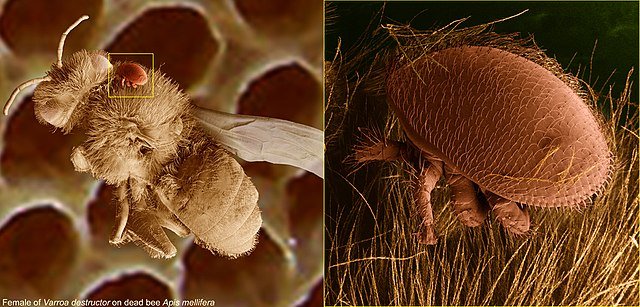
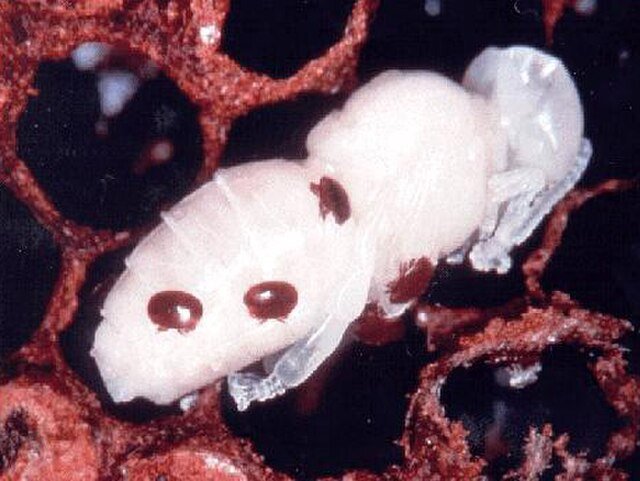
Understanding how honey bees live, reproduce, and interact with the environment is essential for farmers, homeowners, and businesses. At the same time, knowing their problems—like Varroa destructor (varroa mite) and Small Hive Beetle (Aethina tumida)—helps explain why colonies sometimes collapse.
Identification
Honey bees are easy to recognize but often confused with wasps.
Key characteristics:
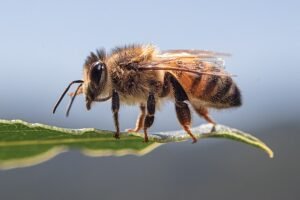
- Size: 12–15 mm
- Color: golden-brown with black bands
- Body: covered with fine hairs
- Wings: two pairs, translucent
- Legs: pollen baskets on hind legs
Differences from wasps:
- bees are hairy (for pollen collection)
- wasps are smooth and more aggressive
- bees are less likely to sting unless disturbed
Biology & Ecology
The honey bee colony is a highly organized social system.
Colony Structure
A colony includes:
- Queen – lays eggs (up to 1,500 per day)
- Workers – sterile females doing all tasks
- Drones – males for reproduction
Life Cycle
The honey bee life cycle has four stages:
- Egg (3 days)
- Larva (5–6 days)
- Pupa (sealed cell stage)
- Adult
Development time:
- workers: ~21 days
- drones: ~24 days
- queen: ~16 days
Behavior
Workers perform different roles depending on age:
- cleaning cells
- feeding larvae
- building comb
- guarding the hive
- foraging
In practice, colony health depends on balance between these roles.
Global Distribution
Apis mellifera is found worldwide:
- Europe (native origin)
- North and South America
- Asia
- Africa
- Australia
It has been introduced globally because of its value in:
- honey production
- crop pollination
Today, it is the main managed pollinator species.
Risks / Damage
Although honey bees are beneficial, they can also create problems.
Structural Risks
- nesting inside walls, roofs, or chimneys
- honeycomb causing structural damage
- honey leakage attracting other pests
Human Risks
- stings (especially for allergic individuals)
- aggressive behavior when disturbed
- risk in public areas (cafés, restaurants, schools)
Agricultural Risks
Main threats to bees include:
- Varroa destructor (varroa mite)
- Wax moths (Galleria mellonella, Achroia grisella)
- Small Hive Beetle (Aethina tumida)
- diseases such as American foulbrood
These reduce pollination efficiency and honey production.
Signs of Infestation
Honey bee presence is usually obvious.
Common signs:
- constant bee activity in one spot
- bees entering and exiting small openings
- buzzing sounds inside walls
- visible honeycomb or wax
- presence of honey or sticky residue
In buildings, infestations often start unnoticed and grow quickly.
Control & Prevention Methods
Honey bees should not be treated like typical pests. The goal is safe management, not elimination.
Prevention
- seal cracks and entry points in buildings
- remove old comb residues
- avoid leaving exposed sugary substances
Non-Chemical Control
- professional hive relocation
- beekeeper removal of colony
- use of traps (in some cases)
Important Rule
Do NOT use insecticides on honey bees unless absolutely necessary and legally permitted.
In most cases, relocation is the best option.
Advanced / Professional Approaches
In professional pest control, honey bee management requires experience.
Live Removal
- locating the nest
- removing comb and bees safely
- preventing re-infestation
Structural Intervention
- opening walls or ceilings if needed
- cleaning honey residues
- sealing entry points
Beekeeping Solutions
- transferring colony to hive
- managing pests like varroa mites
- maintaining colony health
In practice, improper removal leads to:
- returning bees
- secondary infestations
- structural problems
Cultural or Historical Context
Honey bees have been managed by humans for thousands of years. Ancient civilizations in Egypt and Greece used them for honey and wax production. Today, their importance is even greater due to modern agriculture, where pollination directly affects food supply.
What is Apis mellifera?
Apis mellifera is the common honey bee species used worldwide for honey production and crop pollination. It lives in organized colonies, produces honey and wax, and plays a critical role in maintaining ecosystems and agriculture.
FAQ Section
What is Apis mellifera?
It is the European honey bee, the most widely managed species for honey and pollination.
Are honey bees dangerous?
Generally no, but they can sting if threatened. They are dangerous mainly for allergic individuals.
How do honey bees choose nesting locations?
They prefer protected spaces like tree cavities, walls, roofs, and hollow structures.
Can honey bees damage a house?
Yes, mainly through honeycomb buildup, honey leakage, and attracting other pests.
Should I remove a honey bee colony myself?
No. Professional removal or a beekeeper is strongly recommended.
What are the main threats to honey bees?
The biggest threats include:
- Varroa destructor
- diseases
- pesticides
- habitat loss
Do honey bees always return after removal?
If not properly sealed and cleaned, yes. Residual wax and honey attract new swarms.
Learn more about Agricultural and outdoor pests
The Apis mellifera (honey bee) is not just another insect—it is one of the most important species for agriculture and food production. In practice, the goal is never to eliminate honey bees, but to manage situations where they create risks or conflicts with human activity.
When colonies are healthy, they provide value through pollination and honey production. When problems appear—such as nesting inside buildings or infestation by Varroa destructor—they require proper handling.
The key approach is simple:
- protect the bees
- manage the risks
- involve professionals when needed
Good management benefits both people and the environment.
Learn more about agricultural and outdoor insects. AdvancePestX is a knowledge hub for all the insects and pests we can find.
Disclaimer
This article is for informational purposes only. Pest control laws and approved chemicals vary by country. For best results and legal safety, we strongly recommend contacting a licensed pest control professional in your local area. Always make sure that the pest control technician is properly certified or licensed, depending on your country’s regulations. It’s important to confirm that they only use approved products and apply them exactly as instructed on the product label. In most places in Europe, the UK, or the USA, following label directions is not just best practice—it’s the law.
Author
Nasos Iliopoulos, BSc Agronomist & Certified Pest Control Expert
Scientific Director – Advance Services (Athens, Greece)
Licensed Pest Control Business – Ministry of Rural Development & Food (GR)
References
- NIH – Overwintering honey bees: biology and management
- University of Minnesota Bee Lab – Honey Bee Research