How Varroa Mites Spread Between Bee Colonies
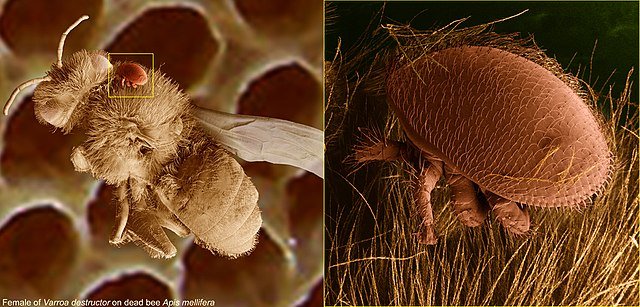
 Varroa destructor – the varroa mite – is the most destructive parasite of Apis mellifera (honey bee). It spreads quickly between colonies and, if not controlled, can lead to colony collapse.
In practice, most infestations do not start inside the hive. They usually come from external sources, meaning nearby colonies, abandoned hives, or drifting bees. Understanding how varroa spreads is critical if you want to protect your apiary.
Identification
Varroa mites are small external parasites that attach to bees and brood.
Key characteristics:
- Reddish-brown color
- Oval and flat body
- Size: about 1–1.5 mm
- Visible on adult bees or inside brood cells
In real conditions, you will often notice them on the thorax or between the abdominal segments of bees.
Biology & Ecology
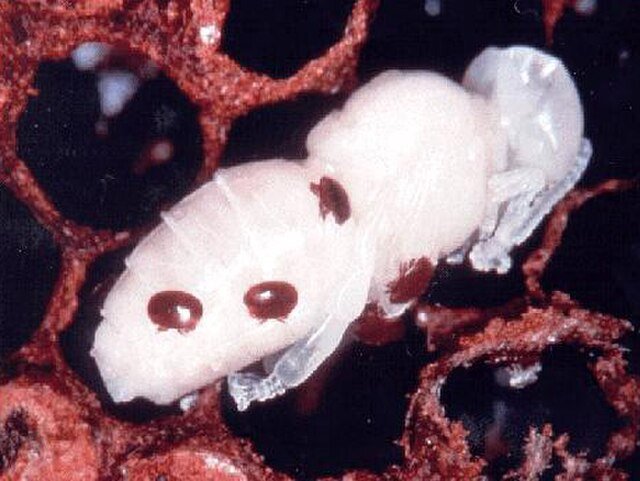
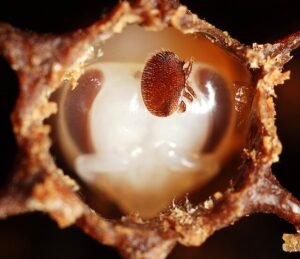
Varroa mites reproduce inside capped brood cells of Apis mellifera.
Basic cycle:
- Female mite enters a brood cell before sealing
- Lays eggs inside the cell
- Offspring feed on developing bee
- Mature mites emerge with the adult bee
This is why brood presence directly affects infestation levels.
Important: Varroa also acts as a vector for viruses like Deformed Wing Virus (DWV), making the problem much more serious.
Global Distribution
Varroa mites are now present in almost all regions where Apis mellifera is kept.
- Europe
- Asia
- North and South America
- Africa (increasing spread)
In Mediterranean regions, including Greece, mild winters allow continuous brood rearing, which helps varroa populations grow faster.
How Varroa Mites Spread Between Colonies
This is the most important part.
1. Drifting Bees
Worker bees often enter the wrong hive by mistake.
- Common in dense apiaries
- More frequent when hives look similar
These bees carry varroa mites with them, spreading infestation silently.
2. Robbing Behavior
Strong colonies steal honey from weak colonies.
- Happens during nectar dearth
- Weak or collapsing colonies are targeted
This is one of the fastest ways varroa spreads.
In practice: collapsing colonies are “varroa bombs.”
3. Swarming
When a colony divides, part of the population leaves with the queen.
- Mites travel with the swarm
- New colonies start already infested
4. Beekeeping Practices
Human activity is a major factor.
- Moving frames between hives
- Combining colonies
- Buying infected nuclei or queens
In practice, many infestations come from introduced colonies.
5. Drifting Drones
Drones move more freely between colonies.
- Not accepted as strictly as workers
- Can carry mites across apiaries
6. Abandoned or Collapsing Hives
This is one of the biggest hidden risks.
- Weak colonies collapse due to varroa
- Other bees rob them
- Mites spread rapidly to healthy colonies
This creates a chain reaction in the area.
Risks / Damage
Varroa spread leads to:
- Weakening of adult bees
- Reduced lifespan
- Deformed bees (linked to Deformed Wing Virus)
- Poor brood development
- Colony collapse
In real conditions, once infestation reaches a critical level, collapse can happen within weeks.
Signs of Infestation
Common signs include:
- Visible mites on bees
- Deformed or crawling bees
- Patchy brood pattern
- Reduced colony population
- Weak honey production
Often, by the time you see clear symptoms, infestation is already advanced.
Control & Prevention Methods
Prevention focuses on limiting spread.
Basic practices:
- Regular monitoring (alcohol wash or sugar roll)
- Keep strong colonies
- Avoid placing hives too close together
- Use different hive colors to reduce drifting
Management:
- Do not exchange frames between colonies without inspection
- Avoid buying bees from unknown sources
- Remove collapsing colonies quickly
Advanced / Professional Approaches
When pressure is high, stronger measures are needed.
- Integrated Pest Management (IPM)
- Coordinated treatments across apiaries
- Use of approved varroa treatments (organic acids or chemical strips)
- Seasonal treatment timing
In practice, treating only one hive is not enough. The entire apiary must be managed.
Cultural or Historical Context
Varroa mites originally parasitized Apis cerana (Asian honey bee), where they caused less damage. When they shifted to Apis mellifera, the lack of natural resistance led to widespread global infestations.
Today, varroa is considered the primary cause of colony losses worldwide.
FAQ
How do varroa mites spread so quickly?
Mainly through drifting bees and robbing behavior. A single collapsing hive can infect multiple colonies nearby.
Can varroa spread between apiaries?
Yes. Bees can travel several kilometers, and drones move freely between colonies.
What is the biggest source of infestation?
Collapsing or untreated colonies acting as “varroa reservoirs.”
Can I prevent varroa completely?
No. The goal is control, not elimination.
How often should I check for varroa?
At least every 1–2 months during active season, and before/after treatments.
Is treating one hive enough?
No. Varroa spreads between colonies, so all hives in an apiary must be managed together.
Conclusion
Varroa mites spread between bee colonies mainly through drifting bees, robbing behavior, and beekeeper activity. In practice, weak or collapsing colonies are often the main source of infestation in an apiary. Regular monitoring and timely treatment are essential to reduce losses and protect colony health.
Learn more about Agricultural and outdoor pests
About the Author
Nasos Iliopoulos, BSc Agronomist & Certified Pest Control Expert
Scientific Director – Advance Services (Athens, Greece)
Licensed Pest Control Business – Ministry of Rural Development & Food (GR)
Disclaimer
This article is for informational purposes only. Pest control laws and approved chemicals vary by country. For best results and legal safety, we strongly recommend contacting a licensed pest control professional in your local area. Always make sure that the pest control technician is properly certified or licensed, depending on your country’s regulations. It’s important to confirm that they only use approved products and apply them exactly as instructed on the product label. In most places in Europe, the UK, or the USA, following label directions is not just best practice—it’s the law.
References
- PubMed - Biology and control of Varroa destructor
- Science Direct - Biology and control of Varroa destructor