When to Treat Varroa Destructor: A Seasonal Guide Every Beekeeper Must Follow
The Varroa destructor (commonly known as the varroa mite) is the most serious parasite of honey bees worldwide. If you keep bees, sooner or later you will deal with it. The real question is not if, but when and how to treat it effectively.
Timing is everything. Many beekeepers fail not because they don’t treat, but because they treat at the wrong moment.
In this guide, we will break down exactly when to treat Varroa destructor, based on seasons, colony biology, and real field experience.
What is Varroa Destructor?
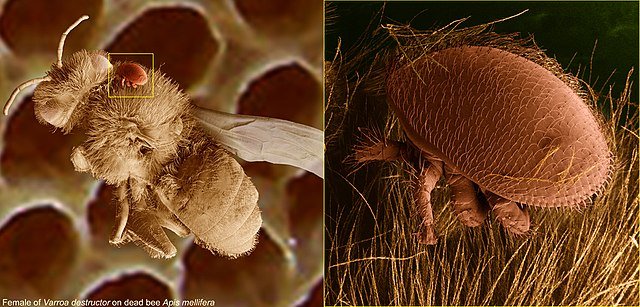
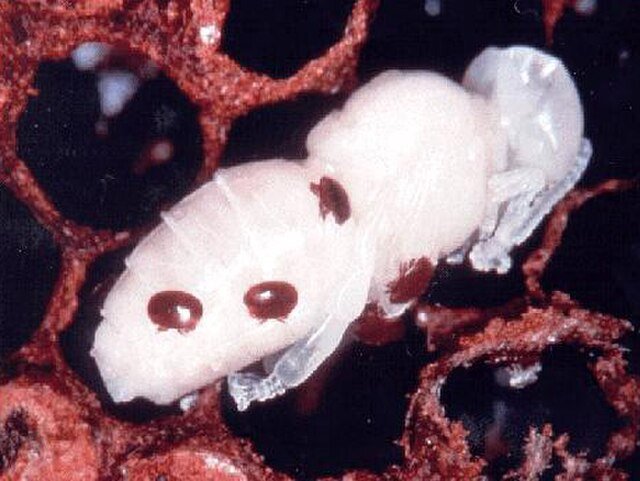
Varroa destructor is an external parasitic mite that attacks Apis mellifera (honey bees). It feeds on the fat bodies of both adult bees and developing brood, weakening the colony and spreading deadly viruses such as Deformed Wing Virus (DWV).
Without proper control, colonies usually collapse within 1–3 years.
Identification
Varroa mites are small, reddish-brown, oval-shaped parasites visible to the naked eye.
Key identification points:
- Size: about 1–1.8 mm
- Color: reddish-brown
- Found on:
- adult bees (especially on thorax or abdomen)
- inside brood cells
In practice, many beekeepers first notice them during mite drop counts or when deformed bees appear.
Biology & Ecology
Understanding the biology of Varroa is essential for proper timing.
- Female mites enter brood cells before capping
- They reproduce inside the sealed cell
- Prefer drone brood (more time to reproduce)
- Population grows exponentially in spring and summer
Important:
Varroa population peaks after the bee population peak.
This mismatch is exactly why late treatment often fails.
Global Distribution
Varroa destructor is now present almost everywhere bees exist:
- Europe
- North America
- Asia
- Africa (increasing spread)
- Oceania (recent introductions in some regions)
It has become a universal beekeeping challenge.
Risks / Damage
Varroa is not just a parasite. It is a vector of disease.
Main risks include:
- Transmission of Deformed Wing Virus (DWV)
- Weakening of adult bees
- Reduced lifespan of winter bees
- Colony collapse
In practice, colonies often look “fine” until late summer — and then suddenly crash.
Signs of Infestation
Recognizing the signs of Varroa infestation early is critical.
Common signs:
- Bees with deformed wings
- Spotty brood pattern
- Weak colony population
- Presence of mites on bees
- Increased mite drop in monitoring
If you see symptoms, the infestation is already advanced.
Control & Prevention Methods
Effective control combines monitoring and timely treatments.
Basic methods include:
- Regular mite monitoring (alcohol wash or sugar roll)
- Drone brood removal
- Use of approved acaricides
- Organic treatments (oxalic acid, formic acid, thymol)
But the key question remains:
When is the best treatment for Varroa destructor?
Seasonal Treatment Guide (When to Treat Varroa Destructor)
Early Spring (March – April)
Goal: Keep mite levels low before population growth
- Monitor mite levels
- Light treatment only if infestation is high
In practice:
Avoid aggressive treatments if brood is increasing rapidly.
Late Spring – Early Summer (May – June)
Goal: Prevent exponential mite growth
- Continue monitoring
- Use biotechnical methods (drone brood removal)
This is a critical prevention phase.
Mid to Late Summer (July – August)
Goal: MAIN TREATMENT PERIOD
This is the most important window.
Why?
- Bee population starts declining
- Varroa population is peaking
Recommended:
- Apply full treatment (formic acid, thymol, or approved products)
If you miss this window, winter losses are very likely.
Early Autumn (September)
Goal: Protect winter bees
- Follow-up treatment if needed
- Ensure low mite levels before winter generation develops
Winter bees must be healthy — otherwise the colony won’t survive.
Late Autumn – Winter (November – December)
Goal: Eliminate remaining mites
- Apply oxalic acid treatment (when brood is minimal or absent)
This is one of the most effective treatments.
Advanced / Professional Approaches
Professional pest management and advanced beekeepers use integrated strategies:
- Rotation of treatments to avoid resistance
- Precise mite threshold monitoring
- Combination of chemical and non-chemical methods
In commercial operations, timing is strictly scheduled — not reactive.
Cultural or Historical Context
Varroa destructor originally parasitized Apis cerana (Asian honey bee), where it caused limited damage. However, after shifting to Apis mellifera, it became highly destructive due to lack of natural defenses.
Today, it is considered the main threat to global beekeeping.
FAQ Section
When is the best time to treat Varroa destructor?
The most critical treatment is in mid to late summer (July–August), followed by a winter treatment.
How often should I treat for Varroa?
Typically:
- 1 major summer treatment
- 1 winter treatment
Additional treatments depend on infestation levels.
Can I treat Varroa in winter?
Yes, winter (broodless period) is ideal for oxalic acid treatment.
What happens if I don’t treat Varroa?
The colony will likely collapse within 1–2 years due to viruses and weakened bees.
How do I know if treatment is needed?
Use monitoring methods like alcohol wash. Do not rely only on visual signs.
What is the best treatment for Varroa destructor?
There is no single best solution. Effective control requires:
- correct timing
- rotation of treatments
- proper application
Final Thoughts
Controlling Varroa destructor is not about applying a product — it’s about understanding timing.
In practice, the difference between success and colony loss is often just a few weeks.
Treat too early, and mites return.
Treat too late, and the damage is already done.
A well-timed summer treatment, followed by a winter cleanup, remains the most reliable strategy for healthy colonies.
Learn more about agricultural and outdoor pests
Disclaimer
This article is for informational purposes only. Pest control laws and approved chemicals vary by country. For best results and legal safety, we strongly recommend contacting a licensed pest control professional in your local area. Always make sure that the pest control technician is properly certified or licensed, depending on your country’s regulations. It’s important to confirm that they only use approved products and apply them exactly as instructed on the product label. In most places in Europe, the UK, or the USA, following label directions is not just best practice—it’s the law.
Author Bio
Nasos Iliopoulos:
BSc Agronomist & Certified Pest Control Expert
Scientific Director – Advance Services (Athens, Greece)
Licensed Pest Control Business – Ministry of Rural Development & Food (GR)
References
FAO – Honey bee diseases and pests
European Commission – Bee health
NCBI – Varroa destructor biology and control
University of Minnesota Extension – Managing Varroa mites