
Nutria or Coypu (Myocastor coypus – nutria)
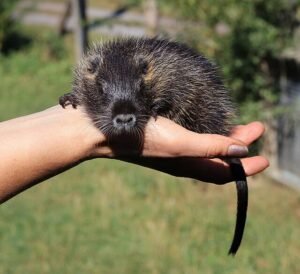 Nutria, also called coypu, are large semi-aquatic rodents that live close to water. They are not native to many of the regions where they are now found. Because of this, they are widely classified as an invasive wildlife pest.
Most people do not notice nutria at first. They usually live quietly along rivers, wetlands, drainage canals, and lakes. The problem appears slowly. Over time, their feeding and burrowing activity starts to damage land, water systems, and vegetation. In many countries, nutria management is no longer a wildlife issue but an environmental and economic one.
As an agronomist working with pest management topics, I rely on field reports, environmental studies, and government data to understand how nutria affect landscapes and human activity.
Identification
The nutria (Myocastor coypus) is a large rodent strongly adapted to life near water.
Key identification features include:
-
Large body, much bigger than a rat
-
Weight usually between 5 and 9 kg
-
Brown to dark brown fur
-
Long, round tail with very little hair
-
Large orange front teeth
-
Webbed hind feet
-
Small ears and eyes placed high on the head
Nutria are often confused with rats, muskrats, or beavers. The orange teeth, tail shape, and body size are the easiest ways to tell them apart.
Biology & Ecology
Nutria are semi-aquatic animals. They spend most of their lives near water and are excellent swimmers. They usually rest during the day and are more active at night or early in the morning like all rodents do, especially in quiet areas.
Their diet is mainly plant-based and includes:
-
Aquatic plants
-
Reeds and grasses
-
Roots and tubers
-
Crops growing close to water
One of the biggest problems caused by nutria is burrowing. They dig tunnels and nesting chambers into riverbanks, lake edges, and canal walls. These burrows weaken the soil and increase erosion.
Like mouses and rats Nutria reproduce quickly. In suitable environments, populations can grow fast, especially where natural predators are limited.
Global Distribution
Nutria are native to South America. They were introduced to other regions mainly through fur farming during the 20th century.
Today, they are established in many parts of the world:
-
Europe: France, Italy, Spain, Germany, and Eastern Europe
-
United States: Especially common in Louisiana and other southern states
-
Asia: Present in some wetland and agricultural regions
-
Australia: Closely monitored due to invasive risk
In most areas outside their native range, nutria are officially classified as invasive.
Risks / Damage
Nutria do not damage buildings directly, but the damage they cause to land and water systems can be serious.
Main types of damage include:
-
Riverbank and canal erosion
-
Collapse of embankments due to burrowing
-
Destruction of wetland vegetation
-
Loss of crops near water edges
-
Increased flood risk in managed water systems
Most of the damage is environmental and economic. Even small nutria populations can create long-term problems for agriculture, infrastructure, and ecosystems.
Signs of Activity
Typical signs of nutria activity include:
-
Burrow openings along riverbanks or canals
-
Collapsing or weakened soil near water
-
Chewed aquatic plants and exposed roots
-
Clear paths between water and feeding areas
-
Large rodent droppings close to water
Because nutria are cautious animals, they are often seen only early in the morning or late in the evening.
Control & Prevention Methods
Nutria control focuses mainly on habitat management and prevention.
Common preventive actions include:
-
Reinforcing riverbanks and canal edges
-
Managing vegetation near water
-
Reducing access to crops close to wetlands
-
Monitoring areas with known burrowing activity
Simple deterrents usually do not work long-term. Nutria adapt quickly to changes in their environment.
Advanced / Professional Approaches
In most countries, nutria pest management is not handled at an individual level. It is usually managed by professionals, local authorities, or government-backed programs. This is because nutria are classified as wildlife and, in many regions, as protected or regulated furbearers.
Professional approaches are based on long-term impact, not quick fixes.
Professional management may include:
-
Population monitoring programs
Regular surveys are used to track population size, breeding activity, and expansion. This data helps decide when and where action is needed. -
Habitat assessment and mapping
Professionals identify burrowing zones, weak riverbanks, wetlands at risk, and agricultural areas affected by feeding activity. -
Use of repellents (limited effectiveness)
Repellents may be tested in specific locations, but they are generally considered short-term and unreliable for nutria. They are used only as a supportive measure, not a solution. -
Trapping under strict legal control
Trapping is only allowed under the law, as nutria are protected as furbearers in many countries.
When permitted, trapping is carried out by licensed operators following strict animal welfare and reporting rules. -
Coordinated regional control plans
Nutria management is rarely effective when done on a single property. Successful programs involve coordination between landowners, water authorities, and local governments. -
Long-term wetland and water-system management
This includes reinforcing riverbanks, managing vegetation, improving drainage, and reducing conditions that allow burrowing and feeding.
Legal considerations
Legal rules vary widely between countries and even between regions of the same country. In many areas, nutria control without authorization can lead to serious legal penalties. For this reason, professional and governmental involvement is essential before any active control is attempted.
Cultural or Historical Context
Nutria were introduced outside South America mainly for fur production. When fur markets declined, many animals escaped or were released. Over time, they adapted very well to wetlands and river systems, leading to large invasive populations in many countries.
Frequently Asked Questions (FAQ)
Is nutria the same as a rat?
No. Nutria are much larger and live mainly near water.
Why are nutria considered invasive?
Because they damage wetlands, riverbanks, and crops, and disrupt ecosystems.
Do nutria live only near water?
Yes. They depend heavily on aquatic environments.
Are nutria dangerous to people?
They usually avoid humans but can defend themselves if threatened.
Do nutria damage buildings?
Not directly, but their burrows can weaken land near structures.
When is professional management needed?
When erosion, crop loss, or flooding risk becomes visible.
Nutria are not a problem that appears suddenly. In most cases, their presence goes unnoticed until damage becomes visible. By that point, erosion, vegetation loss, or crop damage is already happening. This is why nutria are considered a long-term environmental and economic issue rather than a simple wildlife nuisance.
The key lesson from regions that deal with nutria successfully is early awareness. Monitoring wet areas, understanding the signs of activity, and acting before populations grow too large can reduce long-term costs and damage. Because nutria management often involves legal restrictions and coordinated action, professional guidance is usually the safest and most effective path.
Disclaimer
This article is for informational purposes only. Pest control laws and approved chemicals vary by country. For best results and legal safety, we strongly recommend contacting a licensed pest control professional in your local area. Always make sure that the pest control technician is properly certified or licensed, depending on your country’s regulations. It’s important to confirm that they only use approved products and apply them exactly as instructed on the product label. In most places in Europe, the UK, or the USA, following label directions is not just best practice—it’s the law.
Author
Nasos Iliopoulos
BSc Agronomist & Certified Pest Control Expert
Scientific Director – Advance Services (Athens, Greece)
Licensed Pest Control Business – Ministry of Rural Development & Food (GR)
References
-
European Commission – Invasive Alien Species: Myocastor coypus
-
University of California Agriculture and Natural Resources – Nutria Biology and Environmental Impact