What Are Pantry Beetles and How Do You Identify Them
You open a bag of flour and notice tiny brown beetles crawling inside. That is a pantry beetle infestation. These small insects invade stored food products in kitchens, pantries, warehouses, and grocery stores. They feed on grains, cereals, spices, dried fruit, and many other dry goods.
Pantry beetles are among the most common stored product pests worldwide. They can enter your home inside packaged food bought from a store. A single contaminated bag of rice or oats can start a full-blown infestation within weeks.
What Exactly Are Pantry Beetles?
Pantry beetles are a group of beetle species that infest stored food. They belong to several different families, but they all share one habit — they breed inside dry food products. Adults lay eggs directly on or near food. The larvae then feed on the food as they grow.
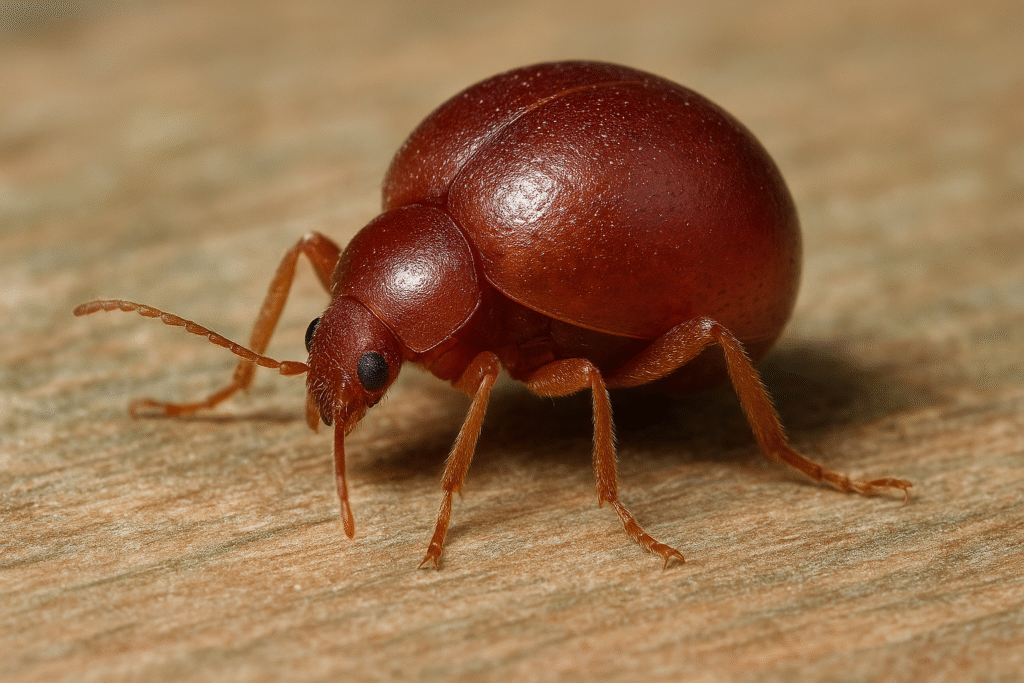
Most pantry beetles are small, between 2 mm and 5 mm long. They range in color from reddish-brown to dark brown or black. Some species fly, while others do not. They are not dangerous to humans, but they contaminate food with their bodies, eggs, larvae, and droppings.
Most Common Types of Pantry Beetles
Accurate pantry beetles identification starts with knowing the most common species. Here are the ones you are most likely to find in your home or business.
1. Red Flour Beetle (Tribolium castaneum)
This is one of the most widespread pantry pests. It is about 3–4 mm long with a reddish-brown body. The red flour beetle has a flat shape and clubbed antennae that end in a three-segmented club. It feeds on flour, cereal, pasta, cake mix, and crackers. It cannot bore into whole grains, so it feeds on broken kernels and processed products.
2. Confused Flour Beetle (Tribolium confusum)
This species looks nearly identical to the red flour beetle. The key difference is in the antennae. The confused flour beetle has antennae that gradually thicken toward the tip, without a distinct three-segmented club. It prefers the same foods. Both species are about the same size and color.
3. Drugstore Beetle (Stegobium paniceum)
The drugstore beetle is about 2–3.5 mm long, oval-shaped, and light brown. Its wing covers have rows of fine parallel lines. It feeds on an unusually wide range of items — flour, spices, pet food, dried herbs, and even pharmaceutical products. It can bore through packaging, which makes it especially hard to contain.
4. Cigarette Beetle (Lasioderma serricorne)
Very similar to the drugstore beetle in size and shape. The cigarette beetle is about 2–3 mm long and light brown. The main visual difference is that its wing covers are smooth, without the parallel lines found on the drugstore beetle. It feeds on tobacco, spices, dried flowers, cereals, and pet food.
5. Sawtoothed Grain Beetle (Oryzaephilus surinamensis)
This beetle is easy to identify with a magnifying glass. It is about 2.5–3 mm long, flat, and dark brown. It has six saw-like tooth projections on each side of the thorax (the section behind the head). It feeds on cereals, bread, pasta, dried fruit, and sugar. It does not fly.
6. Warehouse Beetle (Trogoderma variabile)
The warehouse beetle is about 2–4 mm long, oval, and dark brown with lighter mottled patches on its wing covers. The larvae are covered in tiny hairs. It feeds on grain, cereal, pet food, spices, and dried milk. The hairy larvae can cause allergic reactions in some people.
How to Identify a Pantry Beetle Infestation
Spotting the beetles themselves is one sign, but there are others. Look for these clues:
- Live or dead beetles inside food packages, on pantry shelves, or near windows.
- Small cream-colored larvae (worm-like) inside flour, cereal, or grain products.
- Fine dust or powder at the bottom of food containers — this is often frass (beetle droppings and chewed food).
- Tiny holes in packaging — some species like the drugstore beetle can chew through cardboard, plastic wrap, and foil.
- Webbing or clumped food particles — though more common with pantry moths, some beetle larvae produce silk-like webbing.
- An unpleasant smell — red and confused flour beetles release chemicals called quinones that give flour a bad odor and taste.
Where to Check for Pantry Beetles
Do not limit your inspection to obvious places like the flour bag. Check all of these:
- Bags and boxes of flour, rice, oats, and cereal
- Spice jars and dried herb containers
- Pet food and birdseed bags
- Dried fruit, nuts, and chocolate
- Powdered milk, cake mixes, and baking ingredients
- Shelf liners, cracks, and crevices where food dust collects
- Unopened packages — beetles can infest food before you buy it
Quick Identification Tips
Use a magnifying glass or your phone camera on zoom mode. Focus on three features:
- Antennae shape: Clubbed (flour beetles), serrated (cigarette beetle), or thread-like (sawtoothed grain beetle).
- Body shape: Flat and elongated (flour beetles, sawtoothed grain beetle) or oval and rounded (drugstore beetle, cigarette beetle).
- Wing cover texture: Smooth (cigarette beetle) or lined (drugstore beetle).
If you are still unsure, place a few specimens in a sealed plastic bag and bring them to a local extension office or pest control company for identification.
Why Correct Identification Matters
Different beetle species behave differently. Some fly and spread fast. Others cannot fly but bore through packaging. Knowing the exact species helps you choose the right treatment. For example, pheromone traps like the Storgard Dome Trap work for specific beetles. Insect growth regulators like Gentrol IGR can disrupt larvae development. But you need to know what you are dealing with first.
Get Professional Pest Control Help
If the infestation is severe or keeps coming back, it is time to call a professional. AdvancePestX offers fast, effective pest control treatments for homes and businesses. Contact us today and get rid of the problem for good.
Frequently Asked Questions
Are pantry beetles harmful to humans?
Pantry beetles are not toxic or venomous. They do not bite or sting. However, eating food contaminated with beetles, larvae, eggs, or droppings can cause digestive discomfort. Warehouse beetle larvae have tiny hairs that can trigger allergic reactions in sensitive individuals.
Can pantry beetles spread to other rooms?
Yes. Adult beetles often leave food sources to fly or crawl toward light. You may find them on windowsills, walls, and ceilings far from the pantry. This does not mean the infestation is everywhere — it usually means the population in the food source has grown large.
How do pantry beetles get into sealed packages?
Some species like the drugstore beetle and cigarette beetle can chew through thin plastic, cardboard, and foil. Others enter through tiny existing openings in packaging. In many cases, the food was already infested at the factory or warehouse before it reached the store shelf.
What is the fastest way to get rid of pantry beetles?
Throw away all infested food immediately. Remove everything from the pantry and vacuum all shelves, cracks, and corners. Wipe shelves with white vinegar. Store all remaining dry goods in airtight glass or thick plastic containers. Place pantry beetle pheromone traps to monitor for survivors. For heavy infestations, apply a residual insecticide like Alpine WSG along shelf edges.
How can I tell the difference between pantry beetles and pantry moths?
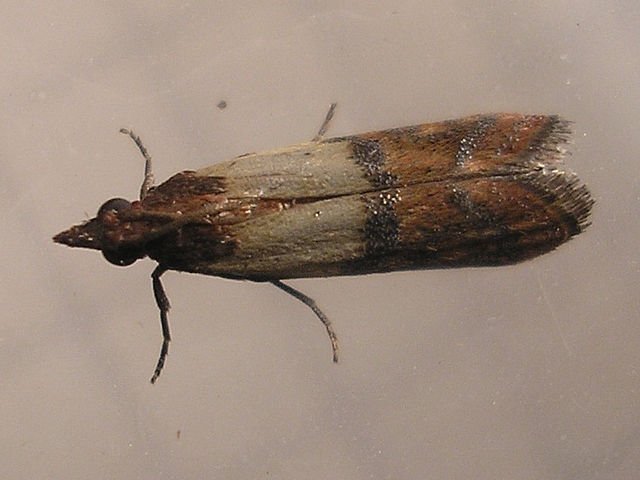
Pantry moths (like the Indian meal moth) have wings and leave behind visible webbing and silk-like threads in food. Pantry beetles have hard wing covers, no visible webbing in most cases, and a distinct rounded or elongated body shape. Moth larvae are usually larger and more caterpillar-like, while beetle larvae are smaller and worm-like.
Do pantry beetles only infest old food?
No. Pantry beetles can infest brand-new, freshly purchased food. Infestations often start at food processing plants or storage facilities. Always inspect new dry goods before putting them in your pantry, especially bulk items like flour, rice, and spices.
References
- University of California IPM – Stored Product Pests: Beetles. https://ipm.ucanr.edu/PMG/PESTNOTES/pn7452.html
- Purdue University Extension – Stored Product Pests. https://extension.entm.purdue.edu/publications/E-237/E-237.html
- NPMA (National Pest Management Association) – Pantry Pests Guide. https://www.pestworld.org/pest-guide/pantry-pests/
- CDC – Health Effects of Pests in Food. https://www.cdc.gov/nceh/publications/books/housing/cha07.htm
- EFSA – Scientific Opinion on Pest Risk Analysis for Stored Product Insects. https://www.efsa.europa.eu
Learn more about store product pests
Disclaimer
This article is for informational purposes only. Food safety (HACCP) and pest control requirements vary by country, authority, and type of food business. For legal compliance and audit readiness, always consult a qualified HACCP professional and a licensed pest control operator in your area.
All pest control measures must use approved products and be applied strictly according to the product label, as required by law in most jurisdictions (including the EU, UK, and USA). Improper use of pesticides, lack of documentation, or absence of a structured pest monitoring program may lead to non-compliance, fines, or business closure.
A compliant system must include documented procedures, monitoring records, corrective actions, and verification. Pest control is not optional—it is a core prerequisite program under HACCP and must be properly implemented, recorded, and reviewed.
Author Bio
Nasos Iliopoulos: https://advancepestx.com/nasos-iliopoulos/
BSc Agronomist & Certified Pest Control Expert
Scientific Director – Advance Services (Athens, Greece)
Licensed Pest Control Business – Ministry of Rural Development & Food (GR)