Soldier Beetle
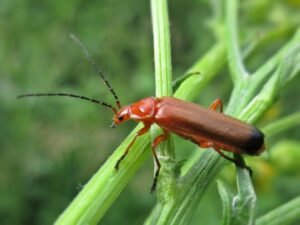
The Soldier Beetle (family Cantharidae) is one of the most beneficial insects commonly found in gardens, agricultural fields, meadows, and natural landscapes. While adult Soldier Beetles are frequently seen visiting flowers for nectar and pollen, both adults and larvae contribute to natural pest control by feeding on soft-bodied insects and their eggs.
Because Soldier Beetles help suppress pest populations while also supporting pollination, they are considered valuable allies in Integrated Pest Management (IPM) and sustainable agriculture. Their presence often indicates a healthy, balanced ecosystem where beneficial insects thrive.
What Is the Soldier Beetle?
The Soldier Beetle (family Cantharidae) belongs to a large family of soft-bodied beetles found throughout much of the world. Unlike many beetles that feed on plants, Soldier Beetles are primarily beneficial insects. Adults consume nectar, pollen, aphids, and other small insects, while the larvae are active predators that hunt numerous soil-dwelling pests.[1]
Identification
Adult Soldier Beetles typically measure between 8 and 15 mm in length. They have soft, elongated bodies that are usually yellow, orange, red, or black, depending on the species.
Their flexible wing covers give them a softer appearance than many other beetles. They also possess long legs and thread-like antennae that help them move easily among flowers and vegetation.
Larvae are elongated, dark brown to black, and covered with short velvety hairs. They are commonly found beneath leaf litter, mulch, or within the upper layers of soil where they actively search for prey.
Because of their bright colors, Soldier Beetles are sometimes mistaken for pests, but they are harmless and highly beneficial.
Biology & Ecology
Soldier Beetles undergo complete metamorphosis through egg, larva, pupa, and adult stages.
Females lay eggs in moist soil, mulch, or leaf litter. After hatching, the larvae spend several months feeding on insects and other small invertebrates before pupating.
Adults emerge during late spring and summer when flowering plants are abundant. They are frequently observed feeding on nectar and pollen while simultaneously hunting small insects found on flowers.[2]
Most species complete one generation each year, although development may vary depending on climate.
Global Distribution
Soldier Beetles are widely distributed throughout:
- North America
- Europe
- Asia
- South America
- Australia
- Temperate regions worldwide
They are commonly found wherever flowering vegetation and suitable prey are available.
Where Are Soldier Beetles Found?
These beneficial beetles are commonly seen in:
- Flower gardens
- Vegetable gardens
- Fruit orchards
- Wildflower meadows
- Agricultural fields
- Roadside vegetation
- Grasslands
- Natural landscapes
Adults spend much of their time on flowers, while larvae remain hidden in soil, mulch, compost, and leaf litter.
Benefits of Soldier Beetles
Soldier Beetles provide two important ecological services: biological pest control and pollination.
The larvae commonly prey upon:
- Aphids
- Caterpillars
- Insect eggs
- Small beetle larvae
- Fly larvae
- Soft-bodied insects
- Grasshopper eggs
Adult Soldier Beetles also consume aphids and other small insects while feeding on pollen and nectar, making them beneficial both as predators and pollinators.
See our guides on Lady Beetles, Green Lacewings, and Minute Pirate Bugs to learn about other beneficial insects that naturally protect crops and gardens.
How Soldier Beetles Help Control Crop Pests
Soldier Beetle larvae spend much of their lives hunting beneath the soil surface and among plant debris where many agricultural pests develop.
Adults patrol flowers and surrounding vegetation, feeding on aphids and other small insects whenever the opportunity arises. At the same time, they transfer pollen between flowers, supporting crop pollination.
Because different life stages occupy different habitats, Soldier Beetles contribute to natural pest management both above and below ground.
In practice… gardeners often notice Soldier Beetles covering flowers during midsummer and mistakenly assume they are damaging ornamental plants. In reality, these beetles are feeding on pollen, nectar, and small pest insects while also helping pollinate nearby flowers.
How to Encourage Soldier Beetles
Creating diverse habitats with flowering plants helps maintain healthy Soldier Beetle populations throughout the growing season.
- Plant nectar-rich flowers.
- Maintain native flowering vegetation.
- Leave some leaf litter and mulch in garden beds.
- Avoid unnecessary broad-spectrum insecticides.
- Encourage biodiversity in the landscape.
- Practice Integrated Pest Management.
A common mistake is… removing Soldier Beetles because large numbers gather on flowers. These insects are not harming the plants. Instead, they are providing valuable pollination while helping reduce populations of aphids and other soft-bodied pests.
Role in Integrated Pest Management (IPM)
Soldier Beetles support sustainable agriculture by combining biological pest control with pollination services.
- Natural suppression of aphids
- Predation of insect larvae and eggs
- Support for pollination
- Reduced pesticide dependence
- Greater biodiversity
- Long-term ecosystem stability
What most people don't realize is… the greatest pest control benefits come from Soldier Beetle larvae rather than the adults. While adults are highly visible on flowers, the larvae spend months beneath the soil actively feeding on pests that many growers never even see.
Frequently Asked Questions
Are Soldier Beetles beneficial?
Yes. They are highly beneficial insects that provide both biological pest control and pollination.
What do Soldier Beetles eat?
Adults feed on nectar, pollen, aphids, and other small insects, while larvae prey on insect eggs, caterpillars, fly larvae, aphids, and other soft-bodied pests.
Do Soldier Beetles damage plants?
No. They do not feed on healthy plants and are considered valuable beneficial insects.
Are Soldier Beetles pollinators?
Yes. Adults regularly visit flowers for nectar and pollen, helping transfer pollen between blooms.
Can Soldier Beetles reduce pest populations?
Yes. Both larvae and adults contribute to natural pest suppression by feeding on numerous agricultural and garden pests.
How can I attract Soldier Beetles?
Grow a variety of flowering plants, preserve natural habitats, reduce insecticide use, and maintain healthy garden biodiversity.
Final Thoughts
The Soldier Beetle is one of nature's most versatile beneficial insects. Its larvae help control soil and garden pests, while adults contribute to both natural pest management and pollination. Encouraging Soldier Beetles in gardens and agricultural landscapes supports healthier ecosystems, stronger biodiversity, and more sustainable crop production with reduced reliance on chemical pesticides.
Learn more about Agricultural & Outdoor Pests
Disclaimer
This article is for informational purposes only. Food safety (HACCP) and pest control requirements vary by country, authority, and type of food business. For legal compliance and audit readiness, always consult a qualified HACCP professional and a licensed pest control operator in your area.
All pest control measures must use approved products and be applied strictly according to the product label, as required by law in most jurisdictions (including the EU, UK, and USA). Improper use of pesticides, lack of documentation, or absence of a structured pest monitoring program may lead to non-compliance, fines, or business closure.
A compliant system must include documented procedures, monitoring records, corrective actions, and verification. Pest control is not optional—it is a core prerequisite program under HACCP and must be properly implemented, recorded, and reviewed.
Author Bio
BSc Agronomist & Certified Pest Control Expert
Scientific Director – Advance Services (Athens, Greece)
Licensed Pest Control Business – Ministry of Rural Development & Food (GR)