Tachinid Fly
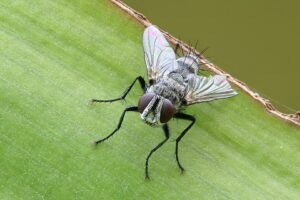
The Tachinid Fly (family Tachinidae) is one of the most valuable beneficial insects in agriculture, gardens, orchards, and natural ecosystems. Unlike common nuisance flies, Tachinid Flies are parasitoids whose larvae develop inside harmful insects, helping suppress populations of destructive crop pests naturally.
Many species attack caterpillars, stink bugs, beetle larvae, sawflies, grasshoppers, and other economically important pests. Because of their unique life cycle and broad host range, Tachinid Flies are considered essential biological control agents and play a major role in Integrated Pest Management (IPM).
What Is the Tachinid Fly?
The Tachinid Fly (family Tachinidae) belongs to one of the largest families of flies, with more than 8,500 described species worldwide. Most adult Tachinid Flies feed on nectar and pollen, while their larvae develop as internal parasitoids of other insects. Unlike predators that immediately consume their prey, Tachinid larvae develop inside a host insect before eventually killing it.[1]
Identification
Adult Tachinid Flies vary considerably in appearance depending on the species, typically measuring between 4 and 15 mm in length.
Most species have gray, black, or brown bodies covered with noticeable bristles. Many resemble common house flies, although they are generally stockier and more heavily bristled.
The abdomen may display black, gray, orange, or reddish markings depending on the species.
Larvae are cream-colored, legless maggots that develop entirely inside their insect hosts, making them rarely visible in nature.
Biology & Ecology
Tachinid Flies undergo complete metamorphosis through egg, larva, pupa, and adult stages.
Females use different strategies to locate suitable hosts. Some deposit eggs directly on caterpillars or beetles, while others place eggs on foliage where they are later consumed by feeding insects.
Once inside the host, the larva feeds internally while allowing the insect to remain alive for much of its development. Eventually, the host dies, and the mature larva leaves the body to pupate in the soil.
Several generations may occur each year depending on climate and host availability.[2]
Global Distribution
Tachinid Flies are found throughout:
- North America
- Europe
- Asia
- South America
- Africa
- Australia
They occur in nearly every terrestrial ecosystem where suitable insect hosts are available.
Where Are Tachinid Flies Found?
These beneficial insects are commonly found in:
- Vegetable gardens
- Fruit orchards
- Agricultural fields
- Flower gardens
- Wildflower meadows
- Forests
- Grasslands
- Natural landscapes
Adults are frequently seen visiting flowering plants where they feed on nectar and pollen while searching for suitable insect hosts.
Benefits of Tachinid Flies
Tachinid Flies naturally suppress many of the world's most destructive agricultural pests by parasitizing their immature or adult stages.
Common hosts include:
- Caterpillars
- Armyworms
- Cutworms
- Stink bugs
- Japanese beetles
- Sawfly larvae
- Grasshoppers
- Leaf-feeding beetles
- Various moth larvae
Because each developing larva ultimately kills its host, Tachinid Flies help reduce pest populations naturally without damaging crops.
See our guides on Parasitic Wasps, Braconid Wasps, and Minute Pirate Bugs to learn about other beneficial insects used in biological pest management.
How Tachinid Flies Help Control Crop Pests
Adult females actively search crops for suitable hosts using visual and chemical cues. Once a host is located, eggs are deposited either directly on the insect or nearby, depending on the species.
After hatching, the developing larva enters the host and feeds internally without immediately killing it. This unique strategy allows the parasitoid to complete its development while naturally reducing pest populations.
Because many Tachinid species attack important agricultural pests, they contribute significantly to long-term biological control.
In practice… growers often mistake Tachinid Flies for ordinary house flies and overlook their importance. During field inspections, however, parasitoid eggs can sometimes be seen attached to caterpillars or stink bugs, indicating that natural biological control is already occurring.
How to Encourage Tachinid Flies
Healthy populations of Tachinid Flies can be encouraged by creating habitats that provide food for adults and protection from unnecessary pesticide exposure.
- Grow nectar-rich flowering plants.
- Maintain diverse flowering habitats.
- Reduce unnecessary broad-spectrum insecticide use.
- Preserve natural vegetation around fields.
- Support pollinator-friendly landscapes.
- Follow Integrated Pest Management practices.
A common mistake is… removing caterpillars immediately after finding them. Some may already contain developing Tachinid larvae that will emerge naturally and continue suppressing future pest populations.
Role in Integrated Pest Management (IPM)
Tachinid Flies are among the most important naturally occurring parasitoids used in sustainable agriculture.
- Natural suppression of caterpillars
- Biological control of stink bugs
- Reduced pesticide dependence
- Improved biodiversity
- Long-term ecological balance
- Sustainable crop protection
What most people don't realize is… adult Tachinid Flies rarely cause direct pest control themselves. Their greatest contribution comes from their developing larvae, which eliminate destructive insects from the inside while remaining almost completely hidden.
Frequently Asked Questions
Are Tachinid Flies beneficial?
Yes. They are among the world's most important beneficial parasitoids and naturally control numerous agricultural pests.
What insects do Tachinid Flies attack?
They commonly parasitize caterpillars, armyworms, cutworms, stink bugs, grasshoppers, beetles, sawflies, and many other insect pests.
Do Tachinid Flies bite people?
No. They do not bite humans or feed on blood and are completely harmless to people and pets.
How do Tachinid Flies control pests?
Their larvae develop inside host insects, eventually killing them before emerging to complete their own life cycle.
Are Tachinid Flies pollinators?
Adults regularly visit flowers to feed on nectar and pollen, contributing to pollination while searching for hosts.
How can I attract Tachinid Flies?
Plant nectar-rich flowers, encourage biodiversity, preserve natural habitats, and minimize unnecessary insecticide applications.
Final Thoughts
The Tachinid Fly is one of nature's most effective biological control agents. By parasitizing caterpillars, stink bugs, beetles, grasshoppers, and many other destructive pests, these beneficial insects help maintain healthier crops while reducing the need for chemical insecticides. Encouraging Tachinid Flies through diverse habitats and Integrated Pest Management supports sustainable agriculture and long-term ecological balance.
Learn more about Agricultural & Outdoor Pests
Disclaimer
This article is for informational purposes only. Food safety (HACCP) and pest control requirements vary by country, authority, and type of food business. For legal compliance and audit readiness, always consult a qualified HACCP professional and a licensed pest control operator in your area.
All pest control measures must use approved products and be applied strictly according to the product label, as required by law in most jurisdictions (including the EU, UK, and USA). Improper use of pesticides, lack of documentation, or absence of a structured pest monitoring program may lead to non-compliance, fines, or business closure.
A compliant system must include documented procedures, monitoring records, corrective actions, and verification. Pest control is not optional—it is a core prerequisite program under HACCP and must be properly implemented, recorded, and reviewed.
Author Bio
BSc Agronomist & Certified Pest Control Expert
Scientific Director – Advance Services (Athens, Greece)
Licensed Pest Control Business – Ministry of Rural Development & Food (GR)