Winter Moth (Operophtera brumata): Identification, Damage, and Control
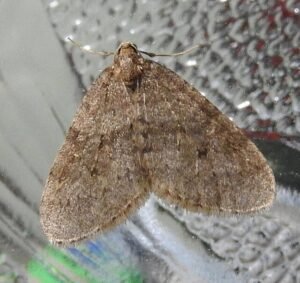 Winter Moth (Operophtera brumata). During late autumn and winter, one insect that creates major concern is the winter moth. While most insects slow down or disappear when temperatures drop, this species stays active even in freezing conditions and can cause heavy damage to trees and ornamental plants. Many people confuse it with pantry moths or clothes moths and call me to check, but winter moth is an outdoor problem. It does not infest houses or businesses in the same way as indoor moth pests.
This guide explains how to identify winter moths, why they appear in cold weather, what risks they bring to gardens and landscapes, and how to control them safely and effectively.
Identification
Winter moths are unusual compared to typical household moth pests like Indian meal moths (Plodia interpunctella) or clothes moths (Tineola bisselliella). Operophtera brumata is mainly an outdoor pest affecting trees, shrubs, and fruit crops.
Key identification features:
-
Adult males have light brown or grey wings with faint patterns; wingspan 20–30 mm are much bigger than the indoor moths.
-
Adult females are mostly wingless and cannot fly. They crawl up tree trunks to lay eggs.
-
Larvae are green caterpillars with a looping movement, often confused with cankerworms and inch worms.
-
Eggs are tiny, round, and usually deposited on tree bark or around buds.
Winter moths are active at a time when most insects—including cockroaches, and ants—are inactive, making them easy to identify in the cold season.
Biology & Ecology
Operophtera brumata has a life cycle specially adapted for winter conditions:
-
Adults emerge from late November to January, depending on climate.
-
Females climb trees and lay clusters of eggs in protected cracks near buds.
-
Eggs overwinter and hatch in early spring.
-
Larvae feed aggressively on new leaves, buds, and flowers, often causing total defoliation.
-
After feeding, larvae drop to the soil to pupate and remain dormant until next winter, when it comes out as an adult.
Global Distribution
-
In Europe, they are widespread and feed on oak, apple, maple, cherries, and many ornamentals.
-
In the USA (especially New England and the Pacific Northwest), outbreaks can be severe.
-
In Canada, they survive very cold winters without difficulty.
-
In Australia, activity is more limited but possible in cooler climates with imported trees.
-
In Asia, they are present mainly in northern and temperate regions.
Their success comes from high egg survival in cold temperatures and early spring feeding before birds and predators become active.
Risks / Damage
Winter moths do not damage structures or indoor areas like termites, and they do not infest food like pantry moths. Their main impact is on vegetation.
Typical damage:
-
Heavy feeding on young buds and leaves
-
Complete defoliation of trees in severe outbreaks
-
Reduced fruit production in apples, pears, cherries, plums
-
Stress on ornamental trees and shrubs
-
Long-term decline in weak or newly planted trees
Severe infestations can kill young trees, especially when combined with drought or poor soil conditions.
Signs of Infestation
Common indicators include:
-
Small male moths flying around outdoor lights in November–January
-
Wingless females crawling up tree trunks
-
Green inchworm-like larvae appearing on trees in early spring
-
Holes or skeletonized leaves on fruit trees
-
Webbing or silk threads from larvae dropping to soil
-
Poor flowering or reduced fruit set
Visual signs during winter mainly involve adults. Spring signs indicate larval feeding damage.
Control & Prevention Methods
Managing winter moths requires focusing on the correct stage of the life cycle.
Winter and Early Spring
-
Sticky bands around tree trunks trap wingless females as they climb, stopping most of them before they reach the branches.
Protective trunk wraps create a physical barrier that blocks crawling insects from reaching young buds, especially when used on smooth bark or newly planted trees.
-
Manual removal of egg clusters reduces spring populations.
Spring Larval Stage
-
Bacillus thuringiensis is highly effective against young caterpillars and safe for beneficial insects.
-
Horticultural oils can help target eggs if applied at the correct timing.
-
Pruning heavily infested branches reduces damage.
General Prevention
-
Keep trees healthy with proper watering and pruning.
-
Remove leaf litter and debris where pupae may hide.
-
Encourage natural predators like birds, ground beetles, and parasitic wasps if possble.
-
Monitor outdoor lights for early signs of flying males.
These methods also help reduce issues from other outdoor pests like aphids, scale insects, and spider mites.
Advanced / Professional Approaches
Professional pest control or arborist services may use:
-
Integrated Pest Management (IPM) to combine monitoring, biological controls, and precise treatment timing.
-
Winter banding programs for large orchards or commercial landscapes.
-
Targeted biological releases, such as parasitic wasps used in North America to slow outbreaks.
-
Systemic insect applications in severe cases where trees face repeated defoliation.
Professional help is especially important for fruit businesses, nurseries, and properties with high-value ornamental trees.
FAQ
1. Why are winter moths active in cold weather?
Their life cycle is adapted to low temperatures, allowing adults to emerge during late fall and winter.
2. Are winter moths dangerous to humans or pets?
No. They do not bite, sting, or spread diseases.
3. Do winter moths enter houses?
Rarely. They may be attracted to outdoor lights but do not infest indoor areas like pantry moths.
4. How do I get rid of winter moth caterpillars in spring?
BT treatments and early detection during the larval stage are the most effective methods.
5. What trees do winter moths attack?
Apple, cherry, oak, maple, birch, and many ornamental and fruit trees.
6. Can winter moth damage kill a tree?
Yes, repeated defoliation over several years can weaken or kill young or stressed trees.
7. Are winter moth an invasive species?
In North America, yes. They cause widespread ecological and agricultural damage.
8. How do I prevent winter moths every year?
Use sticky bands, monitor for early adults, and treat larvae early in spring.
Final Thoughts
Winter moth (Operophtera brumata) is one of the few insects that can stay active during freezing temperatures. Most homeowners first notice male moths flying around outdoor lights in November or December, but the real damage happens later when larvae feed heavily on fresh spring leaves. In my experience, the most successful control programs combine winter monitoring, early spring treatment, and good tree care throughout the year. When these steps are followed consistently, even severe winter moth pressure can be reduced to safe levels. For orchards, nurseries, and commercial landscapes, professional support is often necessary to protect high-value trees and prevent long-term decline.
Disclaimer
This article is for informational purposes only. Pest control laws and approved chemicals vary by country. For best results and legal safety, we strongly recommend contacting a licensed pest control professional in your local area. Always make sure that the pest control technician is properly certified or licensed, depending on your country’s regulations. It’s important to confirm that they only use approved products and apply them exactly as instructed on the product label. In most places in Europe, the UK, or the USA, following label directions is not just best practice—it’s the law.
Learn more about other agricultural and outdoor pests that affect gardens and crops.
Author Bio
Nasos Iliopoulos, BSc Agronomist & Certified Pest Control Expert
Scientific Director – Advance Services (Athens, Greece)
Licensed Pest Control Business – Ministry of Rural Development & Food (GR)
References
-
University of Massachusetts Amherst – Winter Moth Identification and Management
-
Royal Horticultural Society (RHS, UK) – Winter Moth Caterpillar Damage