Corn Earworm
The corn earworm (Helicoverpa zea), also known as the cotton bollworm, tomato fruitworm, or sorghum headworm depending on the crop it attacks, is one of the most destructive agricultural pests in North America. It feeds on more than 100 plant species and can cause severe economic damage to corn, tomatoes, cotton, peppers, beans, and many other valuable crops. In Europe, the closely related Helicoverpa armigera fills a similar ecological role and is responsible for significant crop losses across the continent.
For farmers, gardeners, and food producers, understanding how to identify, monitor, and manage corn earworm infestations is essential for protecting yields and reducing crop damage.
What Is a Corn Earworm?
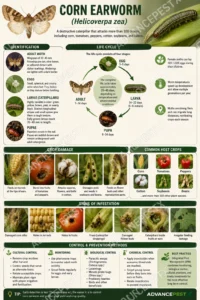
The corn earworm is a moth, but the real damage is caused by its larvae. The caterpillars feed directly on ears, fruits, seeds, flower buds, and other reproductive parts of the plant. As soon as they bore inside the crop, they become much harder to reach with insecticides and are also better protected from natural predators.
Although it is best known for damaging sweet corn by feeding on the kernels at the tips of the ears, the corn earworm is a highly polyphagous pest. It also attacks tomatoes, peppers, cotton, soybeans, beans, and dozens of other economically important crops.
Identification
Adult Moth
Adult corn earworm moths have a wingspan of about 32–45 mm. Their forewings are usually tan, olive-brown, or yellowish-brown with darker markings, while the hindwings are much lighter and have a characteristic dark border. Although adults are active at night, they are not responsible for crop damage. Their main role is reproduction and laying eggs on suitable host plants.
Eggs
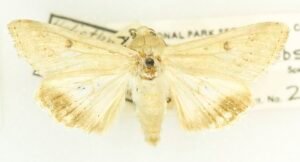
The eggs are tiny, round, and creamy white when freshly laid. As the embryo develops, they gradually darken before hatching. Females usually lay eggs individually rather than in clusters, placing them on fresh silks, flower buds, young leaves, or developing fruits where newly hatched larvae can begin feeding immediately.
Larvae (Caterpillars)
The larval stage causes almost all of the economic damage. Caterpillars are highly variable in color and may be green, yellow, brown, reddish, pink, or almost black. They have several longitudinal stripes running along the body, while the skin is covered with numerous small spines that give them a rough texture.
Fully grown larvae reach 35–40 mm in length. Shortly after hatching, they begin feeding on reproductive plant parts and quickly bore into ears, fruits, pods, or flower buds, where they remain protected from many predators and pesticide applications.
Pupae
When feeding is complete, mature larvae leave the plant and burrow into the soil to pupate. The pupae are smooth, reddish-brown, and remain underground until the adult moth emerges. In colder regions, this stage can also serve as the overwintering stage.
Biology & Ecology
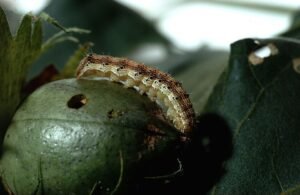
Like all moths, the corn earworm has a complete life cycle consisting of four stages:
- Egg
- Larva (caterpillar)
- Pupa
- Adult moth
Female moths are highly fertile and can lay 500–1,500 eggs during their lifetime, depending on environmental conditions. Eggs are deposited on fresh plant growth, corn silks, flower buds, or developing fruits, ensuring that newly hatched larvae have an immediate food source.
After hatching, the caterpillars begin feeding almost immediately. This is the only stage responsible for significant crop damage. As they grow, they often tunnel deep inside ears, fruits, and seed heads, making them difficult to detect and much harder to control with insecticides.
Development depends largely on temperature. Under warm conditions, the entire life cycle can be completed in about 25–45 days, allowing several generations to develop each year. In warmer regions, populations can build up rapidly during the growing season, which is why infestations often become progressively more severe as the season advances.
Global Distribution
The corn earworm is found throughout North America, Central America, South America, and the Caribbean. It thrives in areas with long, warm growing seasons, where it can produce several generations every year.
If you live in colder northern regions, don't assume you're safe. Adult moths are excellent fliers and migrate hundreds of kilometers from southern areas where the pest survives year-round. This ability to spread over long distances is one of the reasons corn earworm remains such a serious agricultural pest.
Risks & Damage
The larvae are responsible for almost all of the damage.
After hatching, they immediately start feeding on the most valuable parts of the plant. In corn, they enter through the silks and feed on the developing kernels. In tomatoes and peppers, they bore directly into the fruit. In cotton, they attack flower buds, flowers, and bolls.
The damage doesn't stop there. Feeding wounds often allow fungi and bacteria to enter the plant, making the problem even worse.
Typical damage includes:
- Reduced crop yield
- Lower fruit quality
- Secondary fungal infections
- Frass contamination
- Premature fruit drop
- Significant economic losses
One of the biggest problems with corn earworm is that the caterpillars don't stay exposed for long. Once they tunnel inside the fruit or corn ear, they become much harder to reach with insecticides and are also protected from many natural enemies.
In my experience, most growers don't notice the infestation until they see damaged fruits or corn ears. Unfortunately, by then the larvae are usually already hidden inside the crop, where control becomes much more difficult.
Signs of Infestation
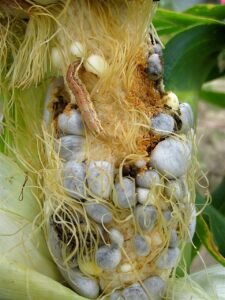
If you catch corn earworm early, you'll have a much better chance of controlling it.
Look for:
- Damaged corn silks
- Missing or chewed kernels near the tip of the ear
- Small holes in tomatoes or peppers
- Frass (caterpillar droppings) around the feeding holes
- Damaged flower buds
- Caterpillars hidden inside fruits or corn ears
- Irregular feeding damage on leaves and reproductive parts of the plant
Many people never see the caterpillar at first. What they usually notice is the frass around the entry hole, while the larva stays hidden inside the crop.
Control & Prevention
Cultural Control
Good farming practices won't eliminate corn earworm, but they can greatly reduce the pressure.
You should:
- Remove crop residues after harvest.
- Control weeds that may act as alternative hosts.
- Rotate susceptible crops whenever possible.
- Keep your plants healthy with proper irrigation and fertilization.
Healthy crops are always better able to tolerate pest pressure.
Monitoring
If you're serious about protecting your crop, don't wait until you see damaged fruits.
Pheromone traps are widely used to monitor adult moth activity and help predict when egg laying is about to begin.
Regular field inspections are just as important. Finding eggs or very young larvae is much easier than trying to control large caterpillars already feeding inside the crop.
Biological Control
Nature already provides several predators and parasitoids that attack corn earworm, including:
- Parasitic wasps
- Lacewings
- Minute pirate bugs
- Predatory beetles
- Birds
These natural enemies help keep populations lower, although they are usually not enough to stop a heavy infestation on their own.
Chemical Control
Sometimes insecticides are necessary, especially in commercial crops.
The key is timing.
If you wait until the caterpillars have already bored into the fruit or the corn ear, most insecticides become much less effective. The best results are achieved when treatments target very young larvae before they become protected inside the plant.
Because corn earworm has developed resistance to several insecticide groups in some areas, always rotate products and follow your local Integrated Pest Management (IPM) recommendations.
Advanced / Professional Approaches
Professional growers rarely rely on insecticides alone.
Instead, they combine pheromone traps, regular scouting, biological control, resistant varieties when available, and carefully timed treatments. This Integrated Pest Management (IPM) approach provides better long-term control while reducing unnecessary pesticide use.
One mistake I see quite often is waiting until the caterpillars become large enough to notice easily. By then, they've already caused most of the damage and are much harder to control.
Frequently Asked Questions
What is the corn earworm?
Corn earworm (Helicoverpa zea) is the larval stage of a moth. It attacks more than 100 plant species, including corn, tomatoes, peppers, cotton, soybeans, and beans.
How does corn earworm spread?
Adult moths are strong fliers and can migrate long distances. Females lay their eggs directly on suitable host plants, allowing new infestations to develop quickly.
Which crops are most affected?
Sweet corn, field corn, tomatoes, peppers, cotton, soybeans, beans, and sorghum are among the most commonly affected crops.
Is corn earworm dangerous to people?
No. Corn earworm does not bite people or spread diseases. Its importance comes from the serious damage it causes to agricultural crops.
How can I recognize an infestation?
Look for feeding holes, frass around entry points, damaged kernels or fruits, and caterpillars hidden inside the crop.
What's the best way to control corn earworm?
There isn't a single solution. The best results come from early monitoring, regular inspections, biological control, and well-timed treatments before the larvae enter the fruit or corn ear.
Can home gardeners control corn earworm?
Yes. Regular inspections, hand-picking caterpillars when possible, removing damaged fruits, and treating infestations early can greatly reduce damage in home gardens.
Final Thoughts
Corn earworm is one of the most destructive caterpillar pests you can encounter in the garden or the field. Its wide host range, high reproductive capacity, and ability to migrate long distances make it a constant challenge for growers.
The good news is that you don't have to wait until the damage becomes obvious. If you monitor your plants regularly, recognize the early signs, and act while the larvae are still exposed, you'll have a much better chance of protecting your crop. That's exactly why early detection is always the most effective form of control.
Disclaimer
This article is for informational purposes only. Food safety (HACCP) and pest control requirements vary by country, authority, and type of food business. For legal compliance and audit readiness, always consult a qualified HACCP professional and a licensed pest control operator in your area.
All pest control measures must use approved products and be applied strictly according to the product label, as required by law in most jurisdictions (including the EU, UK, and USA). Improper use of pesticides, lack of documentation, or absence of a structured pest monitoring program may lead to non-compliance, fines, or business closure.
A compliant system must include documented procedures, monitoring records, corrective actions, and verification. Pest control is not optional—it is a core prerequisite program under HACCP and must be properly implemented, recorded, and reviewed.
Author Bio
BSc Agronomist & Certified Pest Control Expert
Scientific Director – Advance Services (Athens, Greece)
Licensed Pest Control Business – Ministry of Rural Development & Food (GR)