Russian Wheat Aphid
Diuraphis noxia, commonly known as the Russian wheat aphid, is one of the most destructive aphid species affecting wheat, barley, rye, oats, and other cereal crops. Unlike many other aphids that simply remove plant sap, Russian wheat aphids inject toxic saliva while feeding, causing severe leaf distortion, reduced photosynthesis, and significant yield losses. Since its spread outside its native range in Central Asia, this pest has become a major concern for cereal producers worldwide.
What is the Russian wheat aphid?
The Russian wheat aphid (Diuraphis noxia) is a small sap-feeding insect belonging to the Aphididae family. It feeds deep inside young cereal leaves, causing distinctive white streaks, tightly rolled leaves, and stunted plant growth. It also acts as a vector of several economically important plant viruses.
Identification of Russian Wheat Aphids
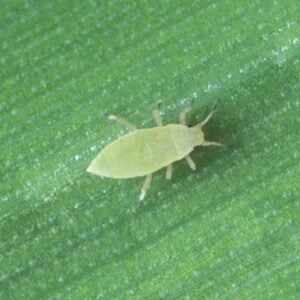
Adult Russian wheat aphids are small, spindle-shaped insects measuring approximately 1.5–2.5 mm long. Their body is pale green with a waxy appearance, making them difficult to detect among cereal foliage.
Key identification features include:
- Elongated spindle-shaped body.
- Pale green to yellow-green coloration.
- Very short cornicles compared to other aphid species.
- Distinctive double-tail appearance caused by an elongated cauda.
- Winged adults develop when populations become crowded.
Colonies are usually found hidden inside tightly rolled leaves, making infestations difficult to identify during early development.
Biology & Ecology
The Russian wheat aphid reproduces rapidly through parthenogenesis during favorable weather conditions, allowing females to produce live offspring without mating. Multiple generations develop each growing season.
Development is fastest between 15°C and 25°C, although populations remain active under cooler conditions than many other aphid species.
The life cycle includes:
- Live-born nymphs.
- Four immature stages.
- Wingless or winged adults.
Winged adults disperse naturally by wind, enabling rapid colonization of new cereal fields over long distances.
Dry weather, moderate temperatures, and vigorous cereal growth often favor rapid population increases.
Global Distribution
Originally native to Central Asia, the Russian wheat aphid has spread across much of the world's cereal-producing regions.
It is now established in:
- Europe
- North America
- South America
- South Africa
- Australia
- Middle East
- Central Asia
Global trade, wind-assisted migration, and movement of infested plant material have contributed to its worldwide distribution.
Damage Caused by Russian Wheat Aphids
Unlike many aphid species, Russian wheat aphids inject toxic saliva while feeding. This disrupts normal plant growth and produces symptoms that are highly characteristic.
Typical damage includes:
- White, yellow, or purple longitudinal streaks on leaves.
- Tightly rolled leaves that trap aphid colonies.
- Stunted plant growth.
- Reduced tillering.
- Deformed seed heads.
- Poor grain filling.
- Reduced grain yield and quality.
Severe infestations during early crop development can result in significant yield losses, particularly under drought conditions.
Russian wheat aphids may also transmit several cereal viruses, increasing the economic impact beyond direct feeding damage.
In practice, many growers first suspect nutrient deficiencies because of the white streaking visible across wheat leaves. However, when the rolled leaves are carefully opened, dense colonies of Russian wheat aphids are often hidden inside, protected from both predators and pesticide sprays.
Signs of Russian Wheat Aphid Infestation
Early detection greatly improves management success.
Typical signs include:
- Long white or yellow leaf streaks.
- Tightly rolled leaves.
- Curled flag leaves.
- Trapped aphid colonies inside leaves.
- Purple discoloration in stressed plants.
- Stunted cereal growth.
- Deformed wheat heads.
Regular scouting should focus on young leaves, especially during tillering and stem elongation.
How to Get Rid of Russian Wheat Aphids
Effective management relies on Integrated Pest Management (IPM), combining resistant varieties, monitoring, biological control, and selective insecticide applications when necessary.
Field Monitoring
Inspect fields frequently throughout the growing season. Open rolled leaves to detect hidden colonies before populations expand.
Resistant Wheat Varieties
Planting resistant cereal varieties remains one of the most effective long-term management strategies in regions where Russian wheat aphids are established.
Natural Enemies
Lady beetles, lacewings, hoverflies, parasitoid wasps, and predatory bugs help suppress aphid populations naturally.
Crop Management
Healthy crop establishment, balanced fertilization, and good irrigation practices reduce plant stress and improve crop tolerance to aphid feeding.
Chemical Control
If economic thresholds are exceeded, registered insecticides may be applied according to local recommendations. Proper timing is essential because aphids hidden inside rolled leaves are less exposed to spray droplets.
A common mistake is assuming that aphids are absent because none are visible on the leaf surface. Russian wheat aphids spend much of their life protected inside rolled leaves, making careful scouting essential before deciding whether treatment is necessary.
Advanced Professional Approaches
Professional crop consultants increasingly combine economic thresholds, resistant cultivars, weather forecasting, and beneficial insect conservation to reduce unnecessary pesticide use.
Modern monitoring programs frequently include regional aphid migration forecasts that help growers anticipate infestations before visible symptoms appear.
What most people don't realize is that much of the damage occurs because the aphid's saliva alters normal plant development rather than simply removing sap. As a result, relatively small populations may still produce severe symptoms if feeding begins early in crop development.
Growers should also monitor for other cereal pests such as grain aphids, bird cherry-oat aphids, cereal leaf beetles, and Hessian flies, since multiple pest species often occur simultaneously in wheat fields.
Frequently Asked Questions
Are Russian wheat aphids harmful to humans?
No. They feed exclusively on cereal plants and do not bite humans or livestock.
Which crops do Russian wheat aphids attack?
They primarily infest wheat, barley, rye, oats, triticale, and several wild grasses.
Can Russian wheat aphids spread plant diseases?
Yes. They can transmit several economically important cereal viruses in addition to causing direct feeding damage.
When are Russian wheat aphids most active?
Populations typically increase during cool to moderate temperatures in spring and autumn.
Do beneficial insects control Russian wheat aphids?
Yes. Lady beetles, lacewings, hoverflies, parasitoid wasps, and predatory bugs provide important natural control.
Should every infestation be treated with insecticides?
No. Management decisions should be based on field scouting, economic thresholds, crop growth stage, and the presence of natural enemies.
Final Thoughts
The Russian wheat aphid remains one of the most economically important cereal pests worldwide because of its unique feeding behavior and ability to severely reduce grain yield. Successful management depends on early detection, resistant crop varieties, conservation of beneficial insects, and carefully timed interventions when necessary. An integrated pest management approach provides the most sustainable long-term protection for cereal production.
Learn more about Agricultural & Outdoor Pests
Disclaimer
This article is for informational purposes only. Food safety (HACCP) and pest control requirements vary by country, authority, and type of food business. For legal compliance and audit readiness, always consult a qualified HACCP professional and a licensed pest control operator in your area.
All pest control measures must use approved products and be applied strictly according to the product label, as required by law in most jurisdictions (including the EU, UK, and USA). Improper use of pesticides, lack of documentation, or absence of a structured pest monitoring program may lead to non-compliance, fines, or business closure.
A compliant system must include documented procedures, monitoring records, corrective actions, and verification. Pest control is not optional—it is a core prerequisite program under HACCP and must be properly implemented, recorded, and reviewed.
Author Bio
BSc Agronomist & Certified Pest Control Expert
Scientific Director – Advance Services (Athens, Greece)
Licensed Pest Control Business – Ministry of Rural Development & Food (GR)