Wasps: When Are They Actually Dangerous, and When Should You Just Leave Them Alone?
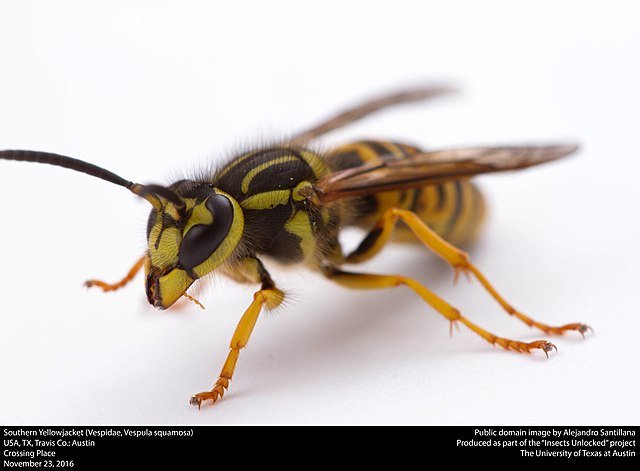
Wasps get a terrible reputation. Most people see one and the first thought is "kill it." Honestly, most of the time there's no reason to.
Wasps are actually some of the most useful predatory insects out there. They hunt huge numbers of caterpillars, flies, aphids, and other insects, keeping those populations in check naturally. If wasps disappeared, we'd have a lot more problems with other pests, not less.
That's why I personally don't touch a wasp nest just because I find one on a tree. If it's not bothering anyone, it's not on a house, and it's not a risk to people, I don't see a reason to destroy it. It's doing its job in the ecosystem.
The main exception is when there are beehives nearby. Wasps can become a real problem for beekeepers, especially toward the end of summer when they're hunting for protein for their colony.
The real problem starts when they decide to build the nest in or on a building. Roller shutter boxes, attics, storage rooms, false ceilings, AC units, balconies, and all kinds of cavities in buildings — these are the spots I run into constantly on the job. That's when coexisting with people gets difficult, and often dangerous.
Why are wasps actually useful?
Everyone knows the bee. Almost nobody realizes wasps are just as important as natural pest controllers.
Adult wasps mainly feed on sugars, nectar, and honeydew. But their larvae need protein. So every day the workers hunt down large numbers of other insects, chop them up, and carry them back to the nest to feed the larvae.
In plain terms, they work like a free natural pest control system — no human intervention needed.
At the same time, since they visit flowers to feed on nectar, they carry pollen from plant to plant too. Not as efficient as bees, but they still play a part in pollination.
What do wasps actually eat?
One of the most common mistakes people make is thinking wasps eat the insects they kill.
They don't.
Most of those insects go to feed the larvae. The adults themselves mainly want carbs and sugar, while the larvae need protein to develop.
That's why in summer you'll see them constantly hunting caterpillars, flies, grasshoppers, spiders, and dozens of other arthropods.
Where do wasps go in winter?
Most of the worker wasps don't survive the winter.
As temperatures drop they die off gradually, and only the newly mated queens make it through, tucked away in cracks, attics, basements, hollow trees, or other sheltered spots.
The following spring, each queen starts a new colony on her own, builds the first cells of the nest, and raises the first batch of workers. From there, the colony's growth speeds up right through to the end of summer.
Where do we usually find wasp nests?
Most of the nests I get called out for are in:
- roller shutter boxes
- attics
- storage rooms
- false ceilings
- AC units
- roofs
- balconies
- wall cavities
Outdoors, you'll also find them in trees, bushes, or under overhangs.
But just because there's a nest doesn't automatically mean it has to go. If it's not creating a risk, often the best call is to leave it alone until it finishes its natural cycle.
Why Do Wasps Sting?
Wasps aren't out looking for people to attack. We're not food to them.
They sting when they think the nest is under threat, or when they get trapped with no way out.
The problem is people usually don't even know they're standing next to a nest. You're mowing the lawn, opening a shutter, moving something around, doing work on a roof — and suddenly you've got dozens of workers coming at you to defend the colony.
Unlike a bee, a wasp doesn't lose its stinger when it stings. It can sting multiple times and keep on defending itself.
The Major Wasp Species Worldwide
The two you'll run into most often on pest control jobs are the common wasp (Vespula vulgaris) and the German wasp (Vespula germanica). They look almost identical and it takes a close look to tell them apart.
Then there's the European hornet (Vespa crabro), the largest wasp in Europe. Impressive size, and the sting is genuinely painful — but that doesn't mean it attacks without reason. Same as any social species, it's just defending the nest.
Outside Europe, the one that gets the most attention is the Asian giant hornet (Vespa mandarinia) — media nicknamed it the "murder hornet" after it showed up in North America. It's a serious threat to honeybee colonies, though actual danger to people is often overstated.
In North America you'll also come across the bald-faced hornet (Dolichovespula maculata), which isn't a true hornet but a yellowjacket relative, and paper wasps (Polistes spp.), which build the open umbrella-shaped combs you see under eaves.
Then there are the solitary wasps, like mud daubers (Sceliphron spp.), which build small nests out of mud. These almost never cause problems and usually don't need any treatment at all.
Beyond the Usual Suspects: Lesser-Known Wasp Families
Yellowjackets, hornets, and paper wasps get all the attention because they're the ones that actually cause problems for homeowners. But the wasp world is a lot bigger than that. Spider wasps (family Pompilidae) hunt spiders almost exclusively — they paralyze them with a sting and drag them back to a burrow as live food for their larvae. ichneumon wasps (family Ichneumonidae) are parasitic — they lay eggs inside caterpillars, beetle larvae, and other pest insects, and the wasp larvae basically eat their host from the inside out. Sounds brutal, but they're some of the most effective natural pest control agents in agriculture, no spraying required. Chalcid wasps (superfamily Chalcidoidea) work the same way on an even smaller scale — many are barely a few millimeters long, and some species are actually bred commercially as biological control agents for greenhouse pests. None of these build the paper nests you'd find in an attic or a shutter box, and none of them behave anything like the social wasps this article is about — but if you're trying to understand the full picture of what "wasp" actually covers, they're worth knowing.
Found a Wasp Nest? Here's What to Do
First thing — don't panic.
If the nest is in a tree, away from people, and not causing any trouble, I'd personally leave it alone. Wasps are beneficial insects, and there's no reason to destroy every nest you come across.
But if the nest is inside a house — a shutter box, attic, storage room, false ceiling, AC unit, or anywhere people pass through daily — that changes things, and it needs a proper assessment.
The biggest mistake I see is someone spraying blindly into a hole, or sealing up the entrance with foam, silicone, or filler. Usually all that does is trap the wasps inside the building, or force them to find another way out.
Can I Deal With Wasps Myself?
My recommendation is no.
I wouldn't recommend anyone handle a wasp nest on their own, under any circumstances. If the nest is on a house or somewhere it puts people at risk, the safest move is to call a licensed pest control professional in your area.
If someone decides to go ahead anyway, against my advice, they need to understand they're taking on a real risk.
Only a product approved for that specific use should be used, matching whether you're a professional or a private user, following the label instructions to the letter.
Proper protective equipment is also required — a beekeeping suit, gloves, and anything else the product label calls for. Going near an active wasp nest without the right protection can end badly.
And if you know you're allergic to wasp or bee stings, there's nothing to think about. Don't attempt anything.
FAQ
How do I keep wasps off my balcony?
Don't leave sweets, drinks, or food scraps out. Keep trash bins closed and check if there's a nest nearby.
How do I find the nest?
Watch where the workers are flying in and out. Don't get close just to get a better look.
Wasps inside the shutter box or the AC unit?
This is one of the most common calls I get. Don't spray blindly and don't seal the entrances. First you need to actually locate the nest.
When are they genuinely dangerous?
When the nest is very close to people — especially homes with small kids, pets, or anyone with a known allergy. That's not a situation worth risking.
Bottom Line
Wasps aren't an enemy that needs to be wiped out on sight. They're an important part of the ecosystem and do a lot more good than most people realize.
That said, when they decide to build a nest inside your house, or somewhere that's a genuine risk, there's no need to play hero.
Respect the insect, don't underestimate it, and don't take unnecessary risks. That's the right way to handle it.
Learn about other urban & indoor pests
Disclaimer
This article is for informational purposes only. Food safety (HACCP) and pest control requirements vary by country, authority, and type of food business. For legal compliance and audit readiness, always consult a qualified HACCP professional and a licensed pest control operator in your area.
All pest control measures must use approved products and be applied strictly according to the product label, as required by law in most jurisdictions (including the EU, UK, and USA). Improper use of pesticides, lack of documentation, or absence of a structured pest monitoring program may lead to non-compliance, fines, or business closure.
A compliant system must include documented procedures, monitoring records, corrective actions, and verification. Pest control is not optional—it is a core prerequisite program under HACCP and must be properly implemented, recorded, and reviewed.
Author Bio
BSc Agronomist & Certified Pest Control Expert
Scientific Director – Advance Services (Athens, Greece)
Licensed Pest Control Business – Ministry of Rural Development & Food (GR)
References
1. University of Minessota - Wasps are a gardeners friend
2. Britannica - Wasp